


An antler pendant can work far beyond a lodge-style room. The key is to judge its outline, drop and finish against...
No featured images
1 Review(s) 
An antler pendant can work far beyond a lodge-style room. The key is to judge its outline, drop and finish against...
An antler pendant can bring character to a modest room without overwhelming it. The right choice depends on its...
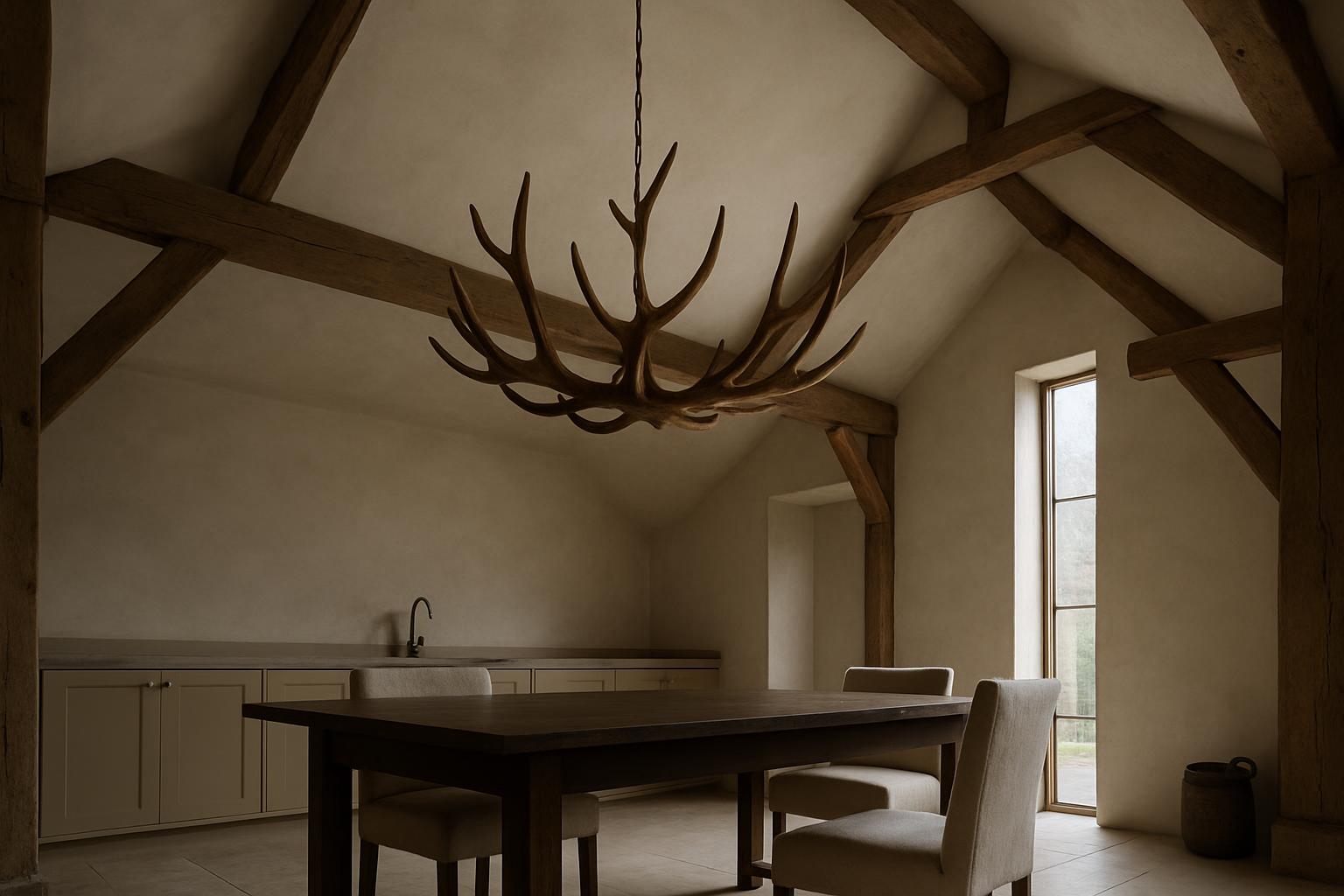
An antler pendant can look sculptural rather than rustic when its scale, outline and position respond carefully to...
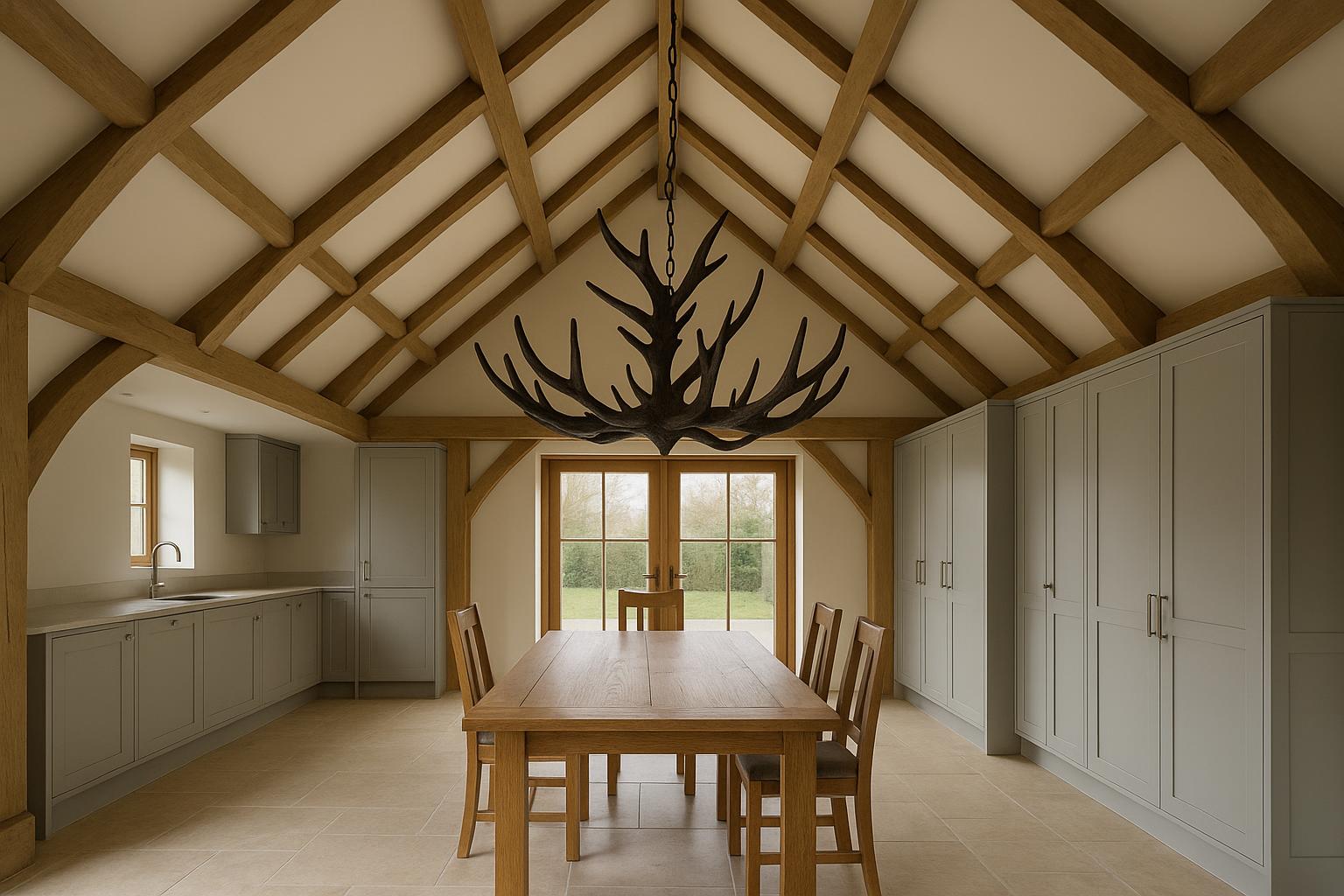
A practical approach to choosing the width, visual weight and drop of an antler pendant while respecting furniture,...
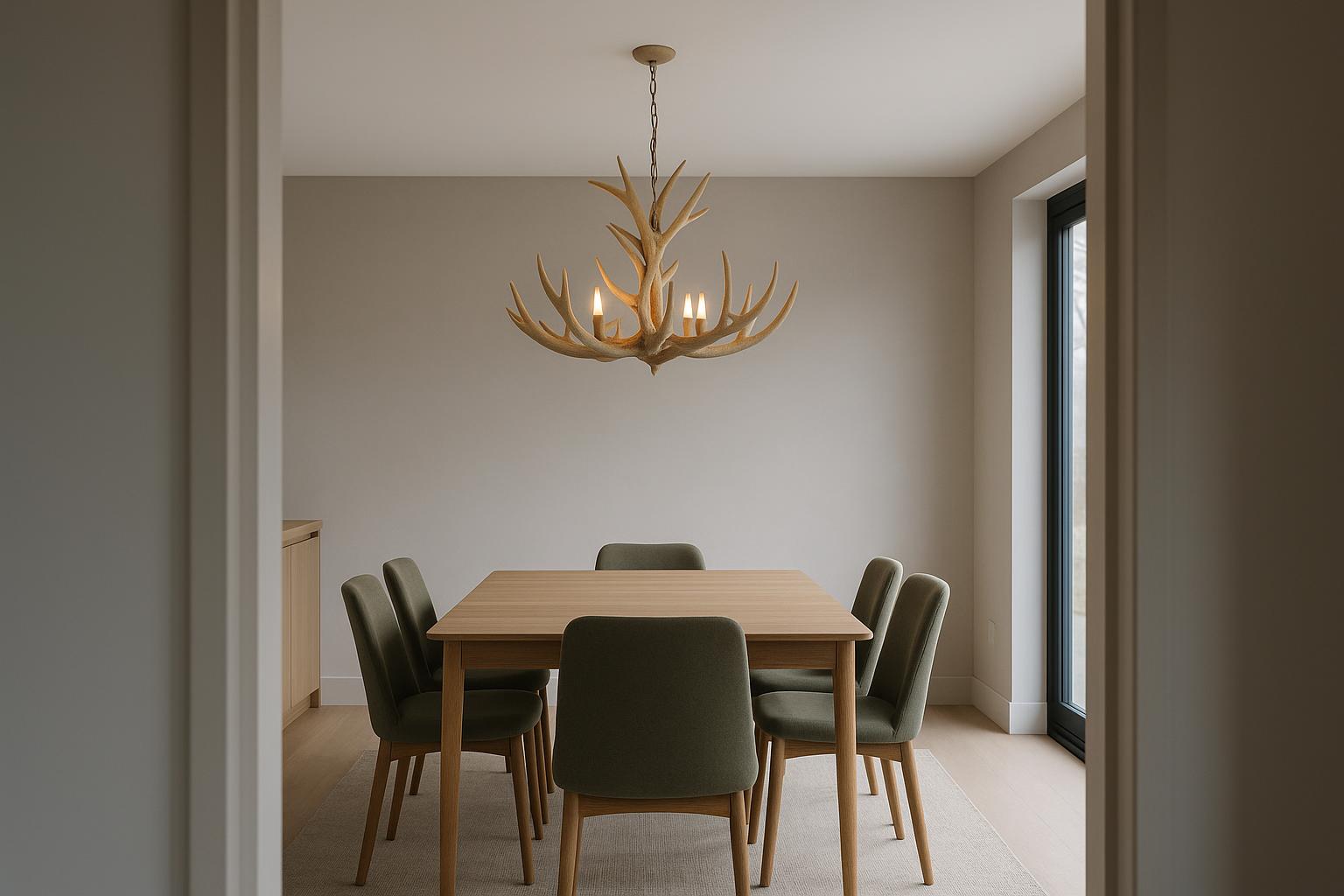
Antler pendant lights can bring sculptural character to a room without dictating a rustic theme. The key is to...
No featured images
statement antler pendant lights are not background fittings. Their branching outlines remain noticeable in daylight, when switched off and from the next room, so choosing one involves more than matching a finish to the furniture. The pendant has to sit comfortably within the architecture and leave the room easy to use.
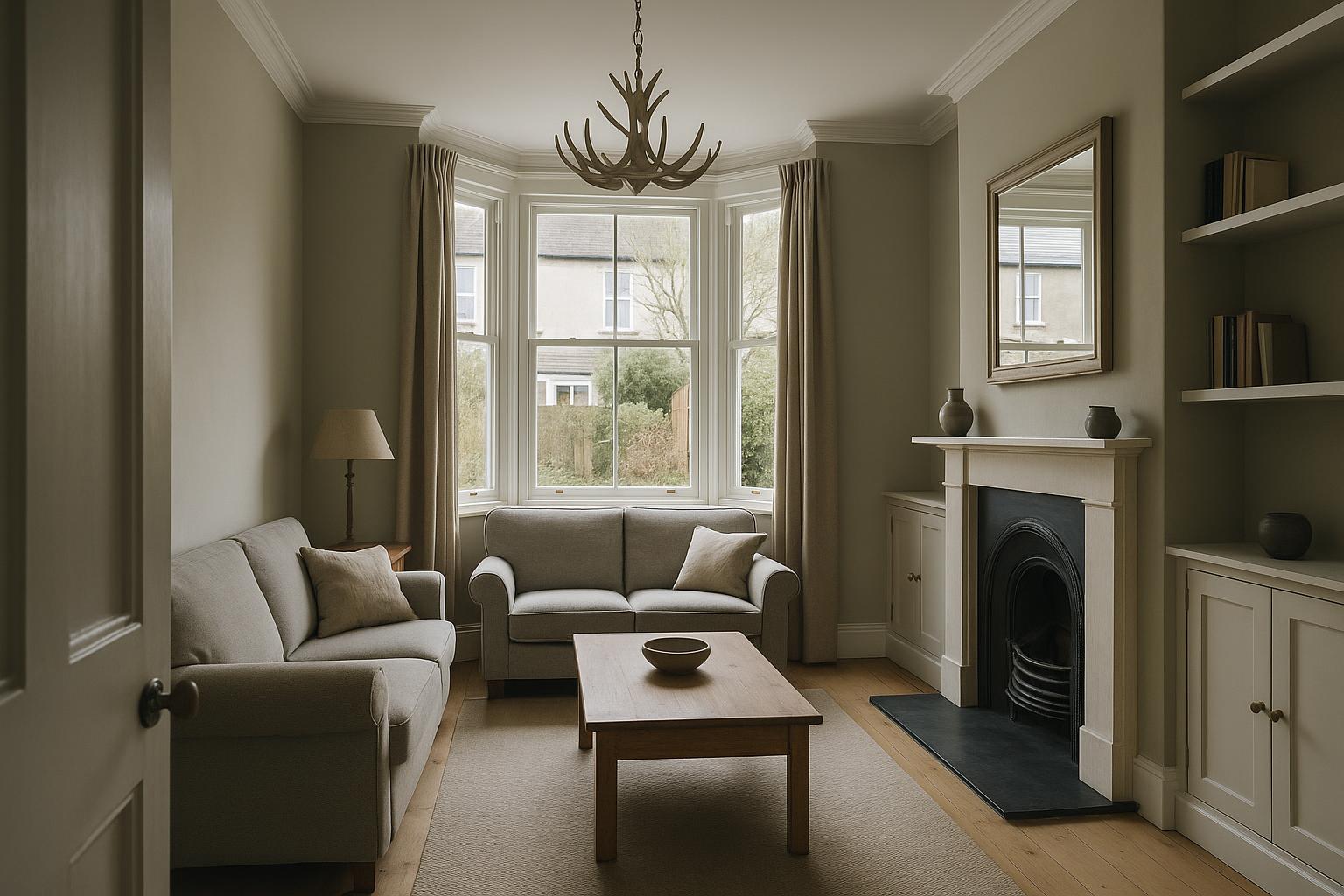
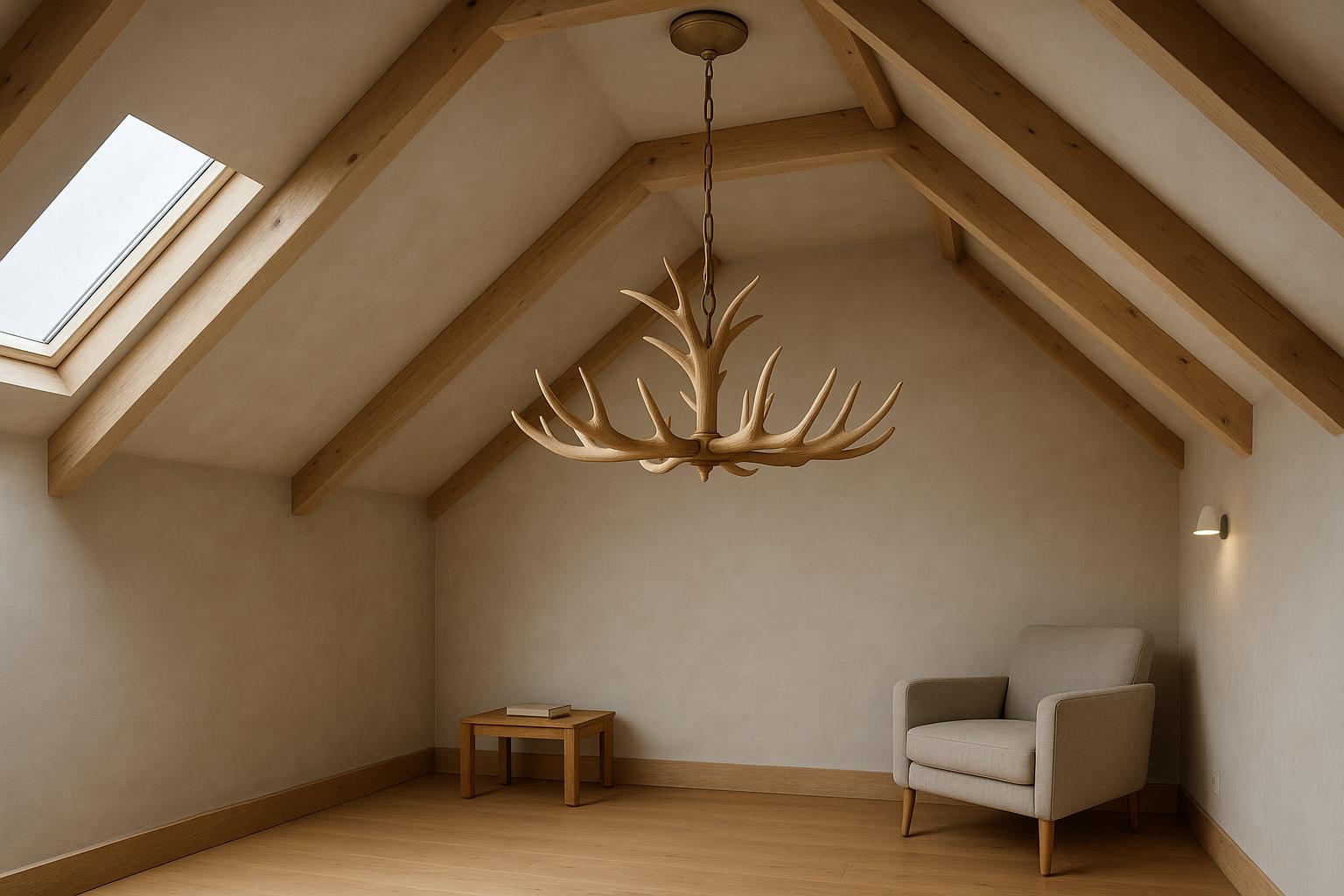
That does not limit antler lighting to cottages, hunting-lodge schemes or vaulted rural houses. A carefully scaled design can bring movement to a plain new-build kitchen-diner, add an unexpected counterpoint to Victorian plasterwork or occupy the height of a converted loft. Success depends on the relationship between the fitting, the room and the view through it.
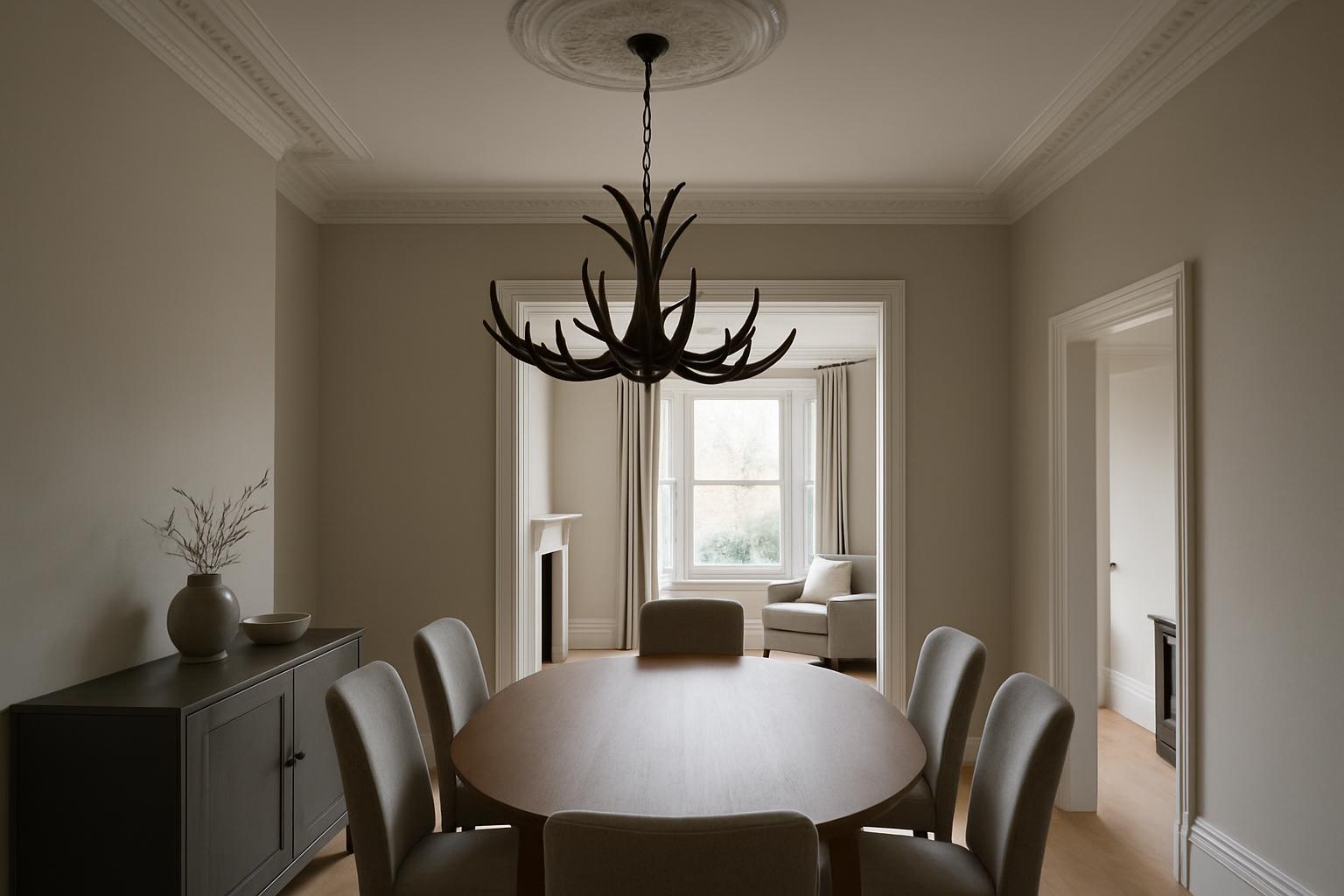
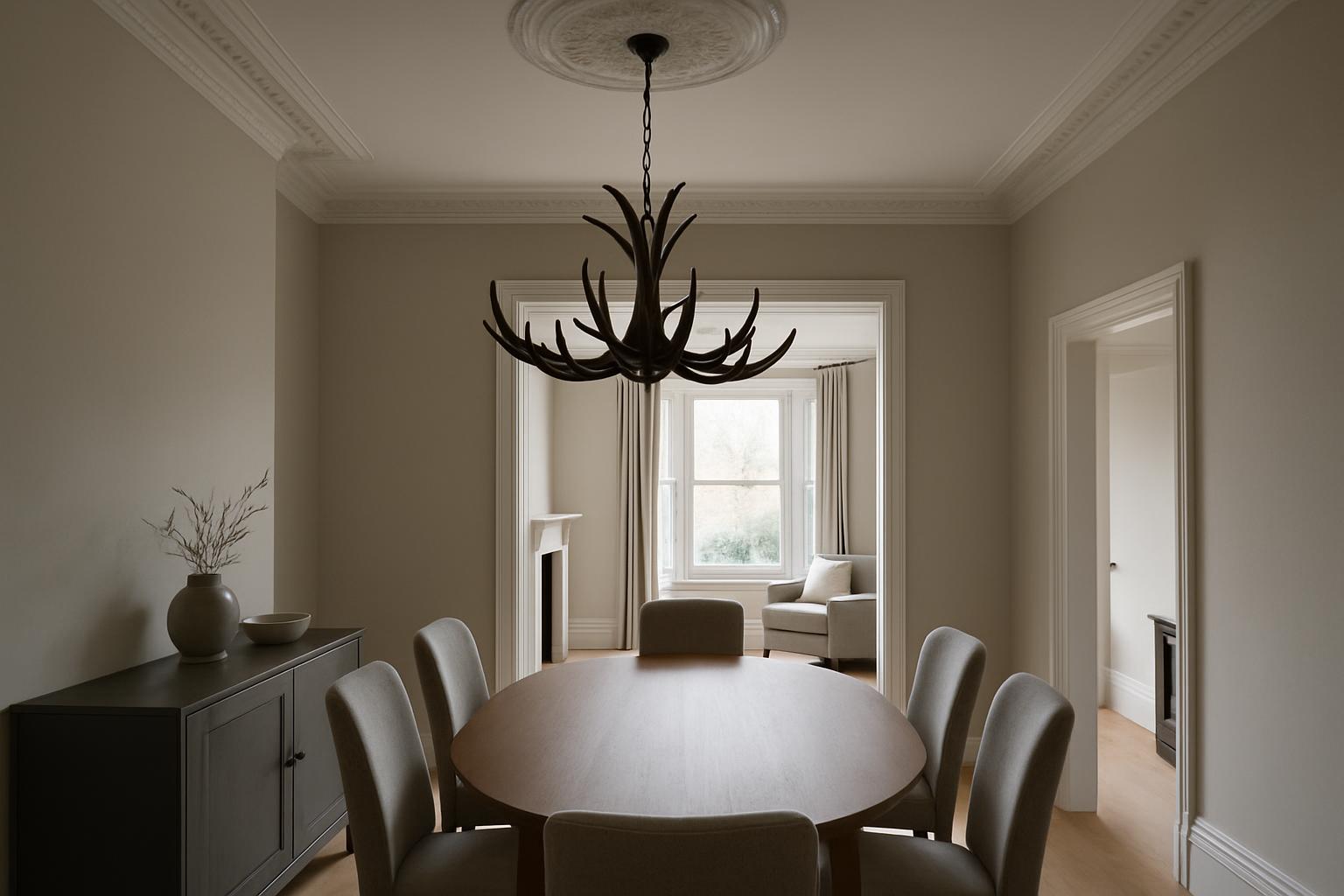
Begin with the fixed features. Ceiling roses, beams, cornices, chimney breasts, roof lanterns and changes in ceiling height create lines that a pendant will either reinforce or interrupt. In a period room, the original ceiling rose may appear to offer the obvious position. If the dining table has moved away from the centre, however, suspending the fitting over the furniture can produce a more settled composition.

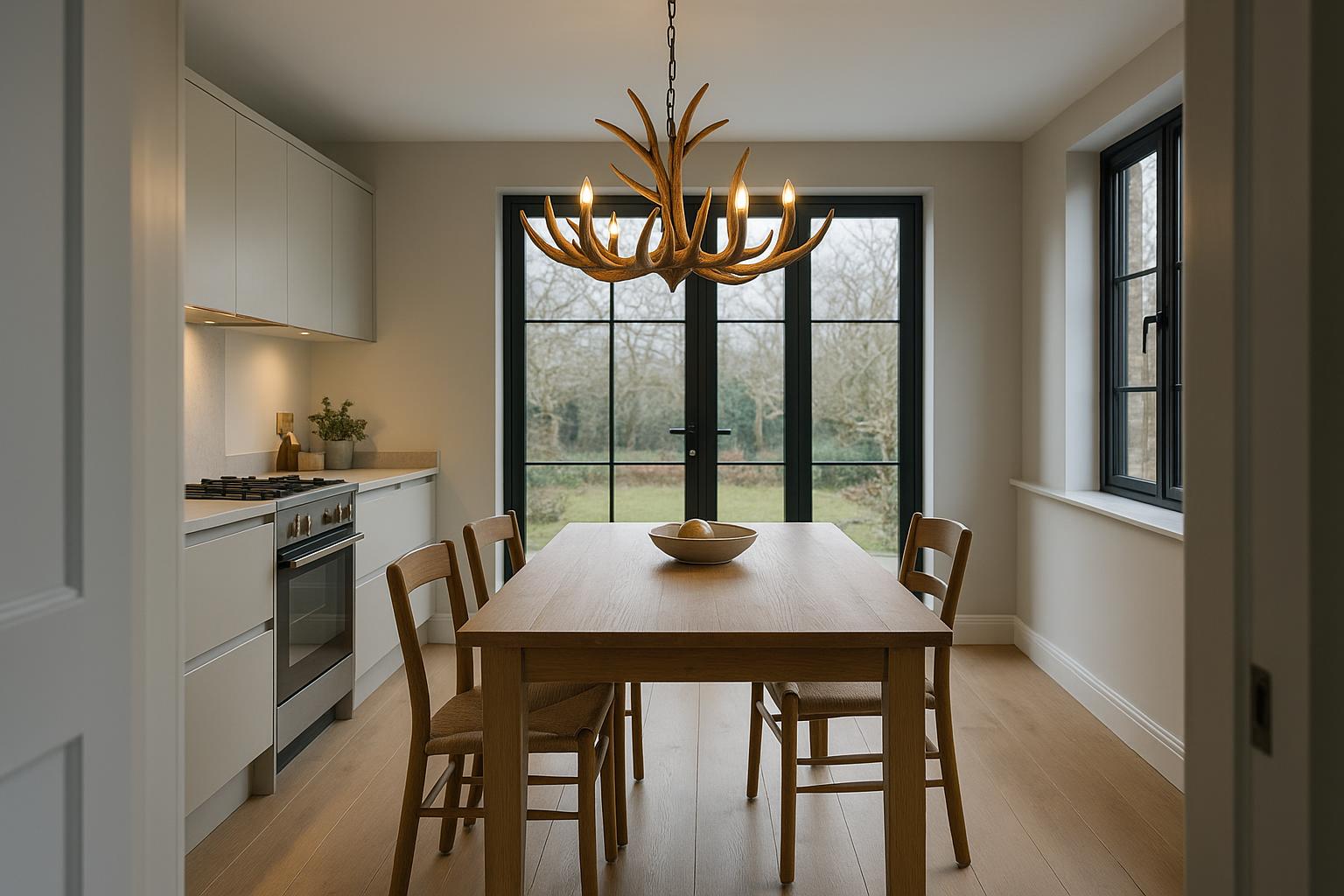
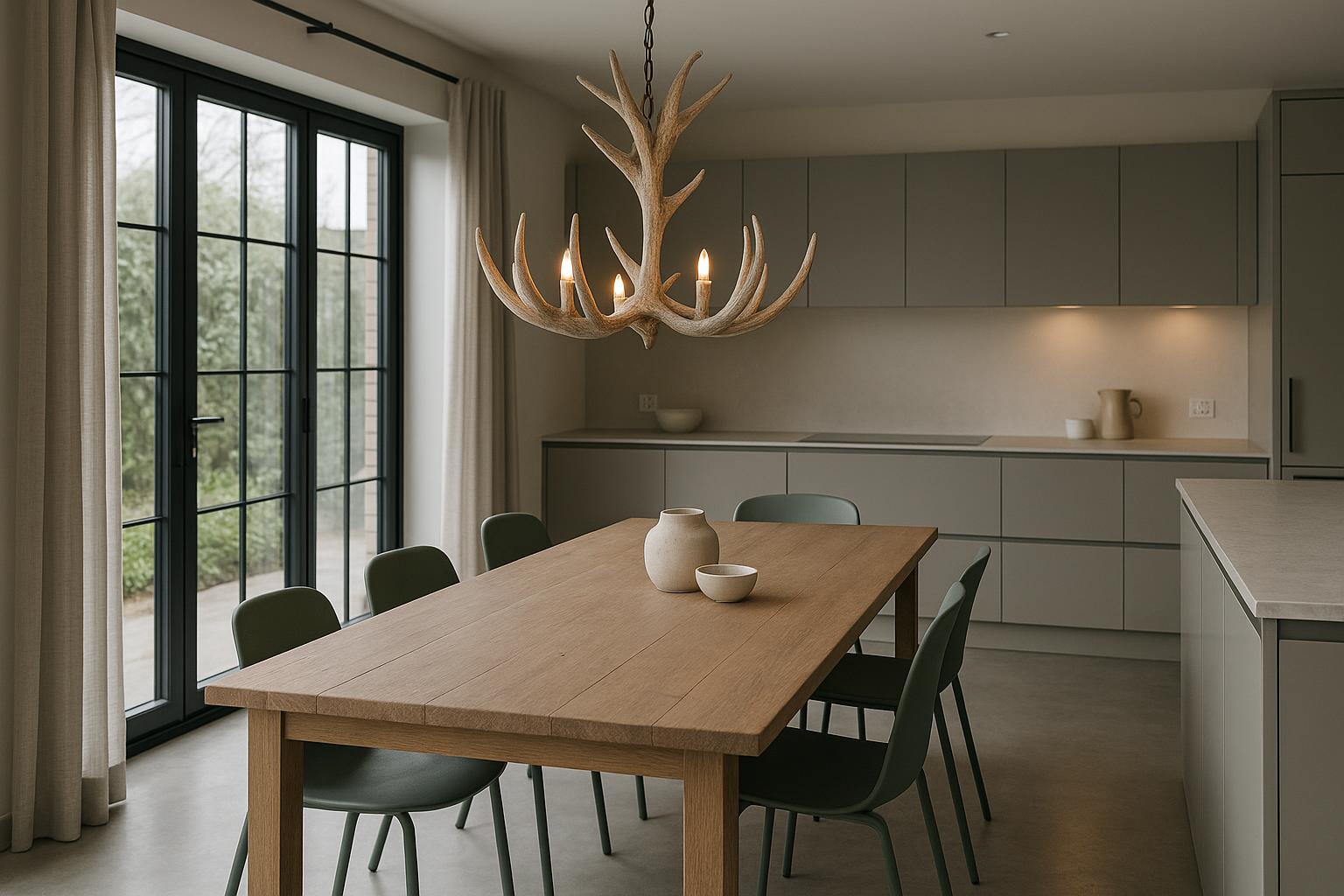
An open-plan extension presents a different opportunity. Here, a pendant can mark the dining area without a screen or change of flooring. It should align convincingly with the table rather than the entire room, particularly where kitchen cabinets occupy one side and glazed doors the other.
Consider daylight as part of this first assessment. Against a bright roof light, a dense arrangement of branches may become a strong silhouette. In a north-facing sitting room, the same design could feel heavier. Looking at the ceiling from the doorway, the main seats and the garden-facing end of the room will reveal more than studying the space from directly underneath.
Product dimensions are essential, but the stated diameter does not describe the whole visual effect. Antlers may spread horizontally, rise above the lamps or project at irregular angles. Two fittings of equal width can therefore occupy a room very differently.
Make a simple full-size test before ordering. Mark the width in centimetres on the table or floor with removable tape, then use string or a light cardboard outline to indicate the proposed lowest point. The mock-up need not reproduce every branch. Its purpose is to show how much space the pendant claims when seen from the side as well as from below.
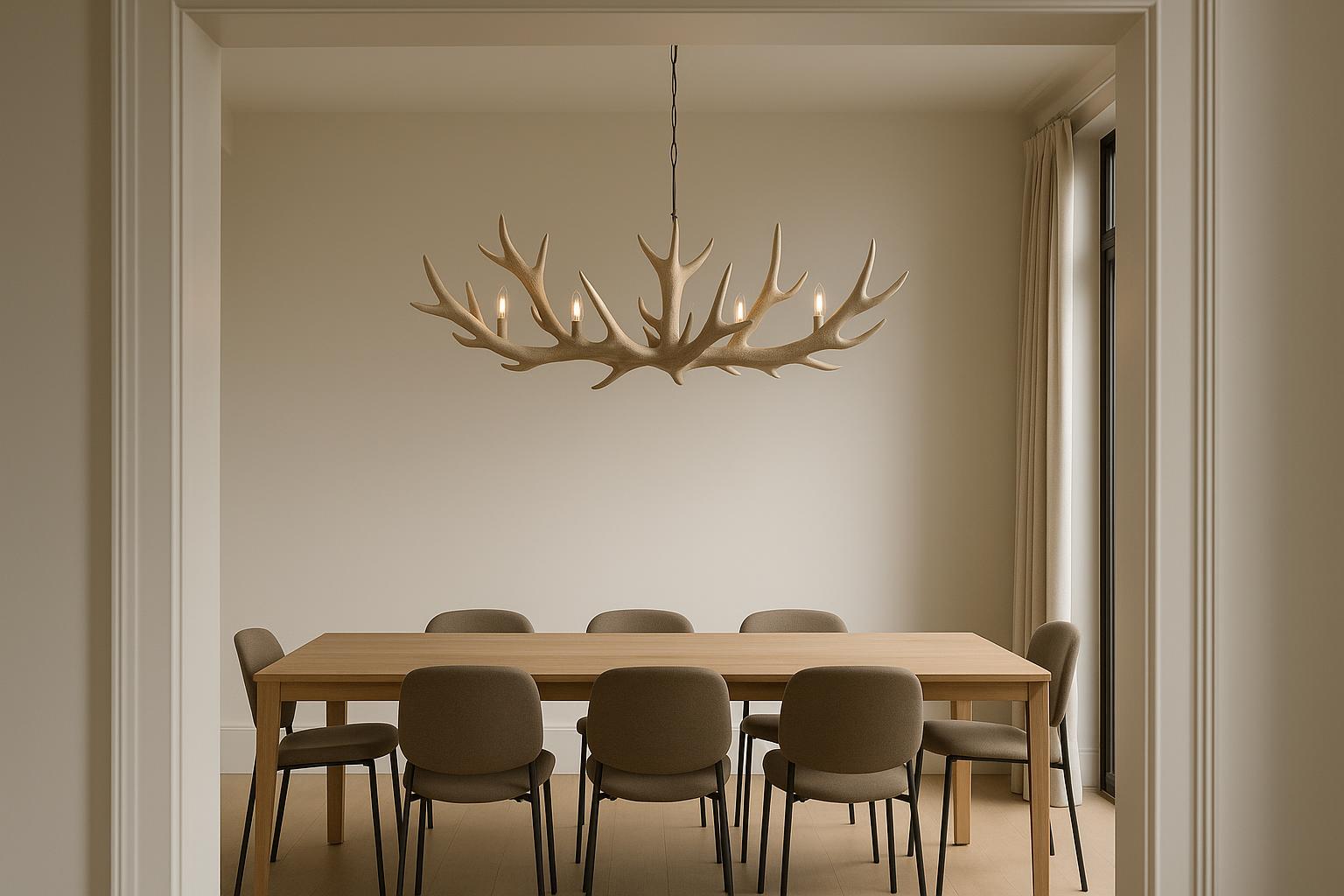
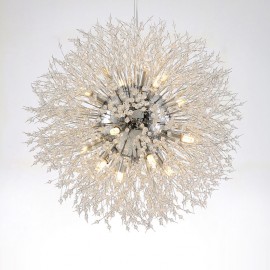
In a compact cottage dining room, a modest but well-defined outline will often have more presence than an oversized fitting squeezed between a beam and a doorway. A broad design is better suited to a long table, a generous kitchen-diner or a room with enough ceiling height for clear space above and below it. Multi-lamp antler chandeliers also tend to feel more substantial than open designs with fewer light sources, even when their overall measurements are similar.
Position and hanging height cannot be decided separately. Above a dining table, the pendant can hang lower because the furniture prevents anyone walking underneath. It still needs to leave a comfortable view between seated people and across the room. Test the proposed drop while sitting down, and account for occupants of different heights rather than relying on a single standing viewpoint.
To complement this topic, you can also read Fitting Small Antler Pendant Lights into Everyday Rooms.
Where a pendant hangs over open floor, circulation takes priority. Check the branches from every approach, including the side nearest a door or route into the kitchen. An irregular fitting may extend beyond the point that first catches the eye. This is one reason expansive lodge lighting rarely suits a narrow hallway or busy landing, even if the ceiling itself is high enough.
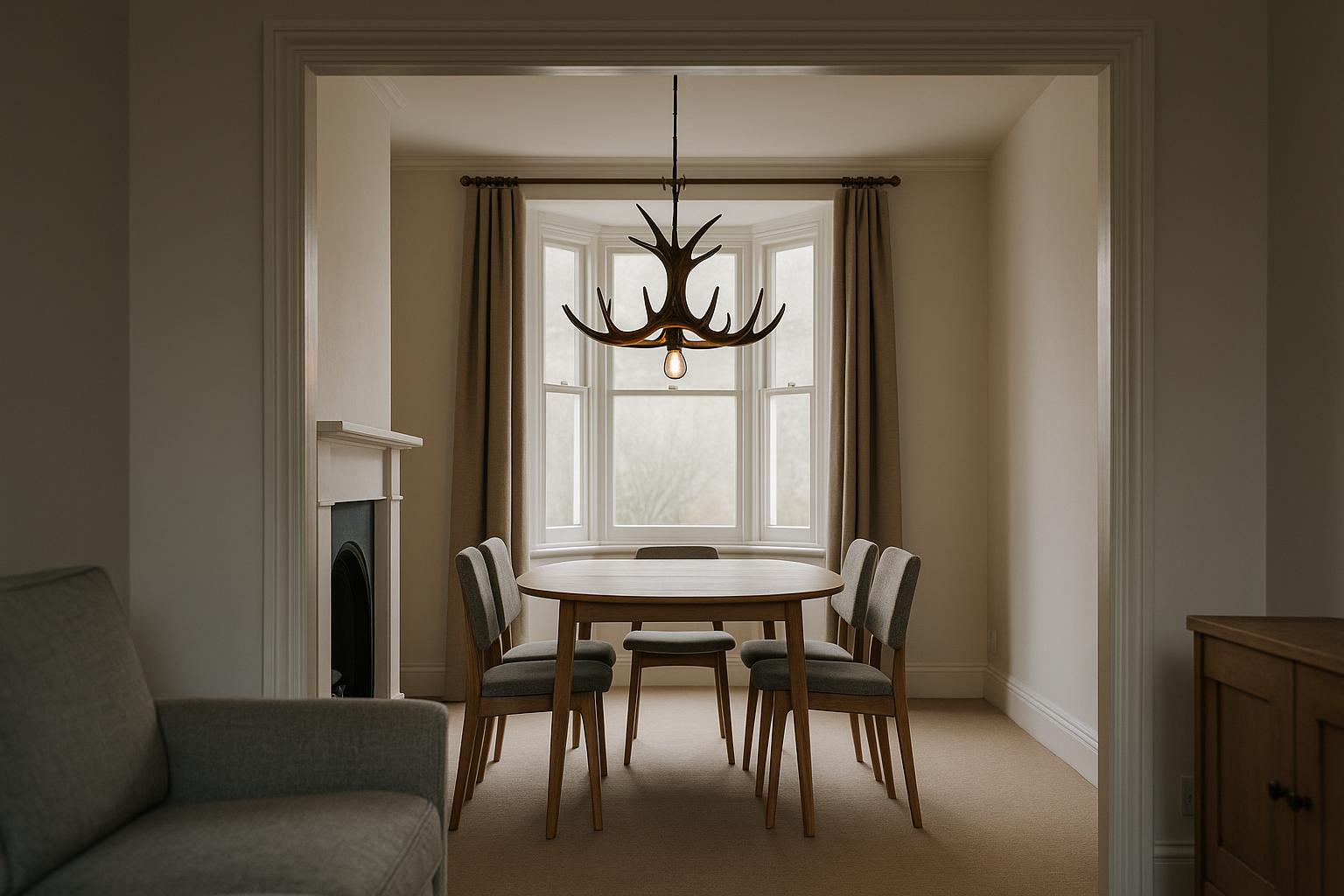
Long views deserve particular attention. In a glazed extension, lowering the pendant may make the dining area feel intimate but obscure the garden doors. In a Victorian terrace, a wide fitting can fill the view through two connected rooms. Raising it slightly or selecting a shallower form may preserve the focal point without creating a visual barrier.
Antler forms already supply pattern, texture and a strong reference to nature. They seldom need tartan, fur effects and heavy timber added around them. A quieter setting gives the fitting room to look deliberate rather than themed.

Warm white, soft grey, muted green and chalky neutral walls provide useful backgrounds. Dark rustic antler lighting will read crisply against pale plaster, while a weathered or light-toned finish has a softer effect beneath a low ceiling. In a modern extension, the organic outline can relieve the straight lines of handleless cabinetry and large windows. In a cottage, restrained furniture prevents old beams, stonework and the pendant from competing for attention.
Repeat one material or colour rather than every detail. A dark fitting might relate to iron cabinet handles or a charcoal sideboard. A pale design may connect with limewashed walls, linen upholstery or a scrubbed timber table. The room does not need a complete matching set, and a country-style chandelier often looks stronger when the connection is subtle.
Do not infer construction from an image alone. Antler-style fittings may use different materials and surface treatments. Read the individual description so that the colour, texture and composition are understood before they become part of the scheme.
In the same direction, How to Make an Antler Pendant Feel Architectural, Not Themed offers useful ideas for choosing home lighting more confidently.
A sculptural pendant can look impressive without providing all the light a room needs. Branches may cast complex shadows, while exposed lamps can appear bright at eye level even if worktops and corners remain dim. Plan the useful light separately from the decorative effect.
Visible bulbs become part of the appearance, so check the specified cap and maximum rating in the product information. If a dimmer is intended, the light fitting, bulbs and control must be compatible with one another. Colour temperature should also be consistent across connected areas; noticeably different whites can make an otherwise calm scheme feel disjointed.
One expressive ceiling light is usually enough within a connected sightline. Repeating antlers above the dining table, in the sitting area and through the hallway weakens the effect of each fitting. It can also make a modest terrace or open-plan flat feel busier than it is.
Let the main pendant lead and choose simpler forms nearby. Discreet kitchen lighting, a plain fabric-shaded floor lamp and a compact hallway fitting can share a finish or similar quality of light without copying the antler shape. This creates hierarchy: the eye knows where to settle, while every area still has the illumination it needs.
Keep the room measurements to hand when comparing products. Confirm the overall width, body height and total drop, noting whether the listed height includes the chain, cable or ceiling plate. Check whether the suspension can be shortened and whether the ceiling fixing is appropriate for the intended location.
For more consistent lighting throughout the home, the article Room to Breathe: Siting a Large Antler Pendant may also be helpful.
Weight and support requirements vary. Decorative plasterwork, sloping ceilings and old ceiling positions may need closer inspection before installation. A suitably qualified electrician can assess the fixing point and install the fitting in accordance with its supplied instructions.
Maintenance matters too. Branching forms collect dust on more surfaces than a plain shade, and a high fitting can be awkward to reach. Decide how it will be cleaned safely before choosing an especially intricate design for a stairwell or lofty ceiling.
To compare dimensions, lamp arrangements and finishes, browse Lighting Go's antler pendant lights with your ceiling height, available width and preferred drop beside you.
An antler pendant works best when it has a clear job: defining a dining table, bringing shape to a tall ceiling or introducing an organic line into a rectilinear room. It does not need a lodge-style interior built around it.

Judge the full silhouette, protect movement and important views, and provide quieter lighting where practical tasks take place. With those decisions made, the fitting can be distinctive without dominating the home around it.
Will It Fit the View? Choosing Antler Pendants for a Country Home
Will It Work Over Dinner? A Practical Antler Pendant Guide
Room to Branch Out: Sizing an Antler Pendant for a Hallway
Before You Hang It: Antler Pendants and Living-Room Sightlines
How to Style an Antler Pendant Without Overdoing It
Hot Tags: Wood Lights, Glass Pendant Lights, Discount Pendant Lights, Pendant Lights UK, Pendant Drop Lights, Discount Chandeliers UK, Flush Mount Fans, Huge Chandeliers, Ceiling Lights Sale, Glass Wall Sconces, Antler Chandeliers, Modern Bathroom Design, Dimmable Ceiling Lights, Bedroom Lights, Bathroom Lights, Kitchen Lighting, Modern Chandeliers, Lighting Ideas
Copyright © 2030 LightingGo. All rights reserved.