


An antler pendant can work far beyond a lodge-style room. The key is to judge its outline, drop and finish against...
No featured images
1 Review(s) 
An antler pendant can work far beyond a lodge-style room. The key is to judge its outline, drop and finish against...
An antler pendant can bring character to a modest room without overwhelming it. The right choice depends on its...
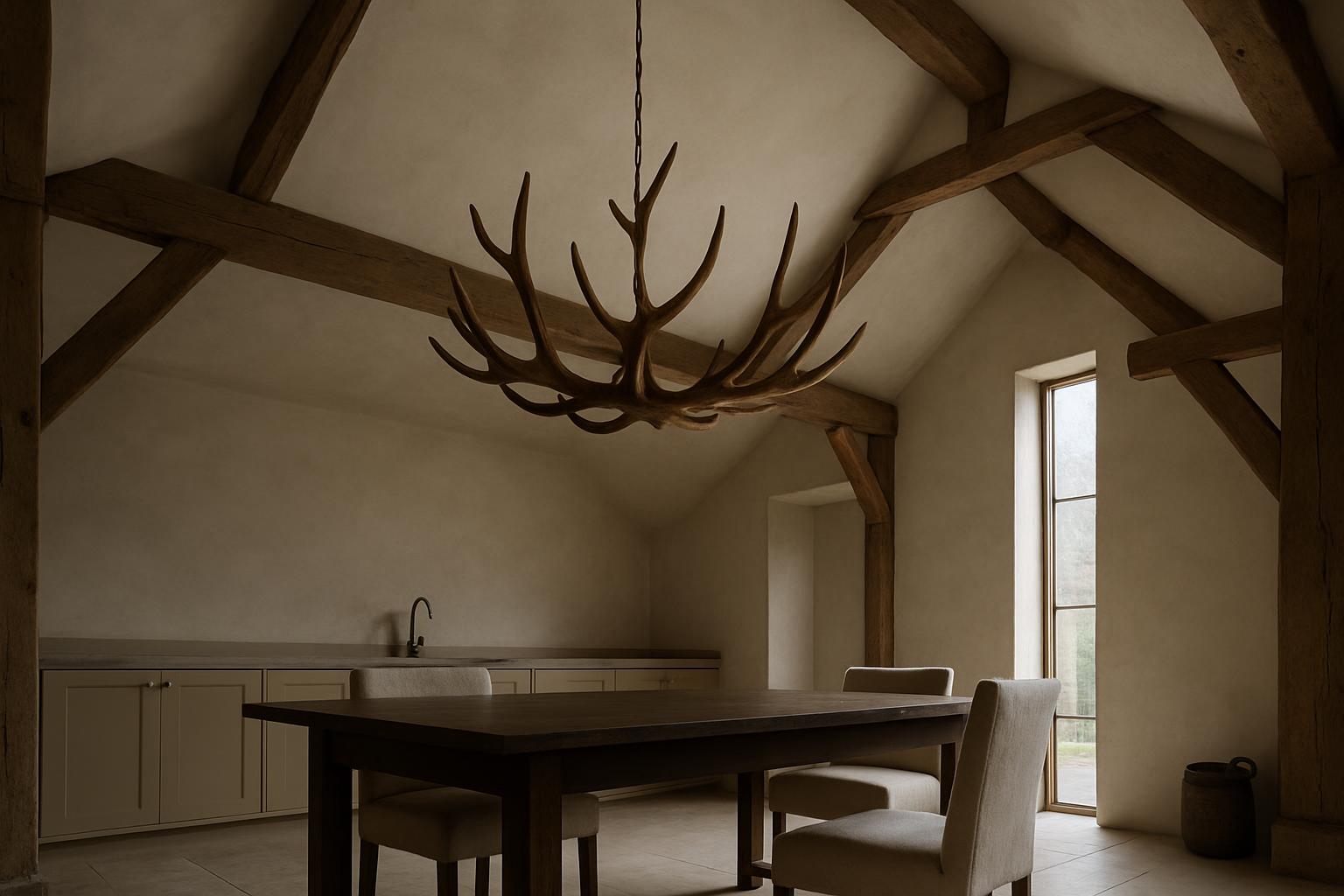
An antler pendant can look sculptural rather than rustic when its scale, outline and position respond carefully to...
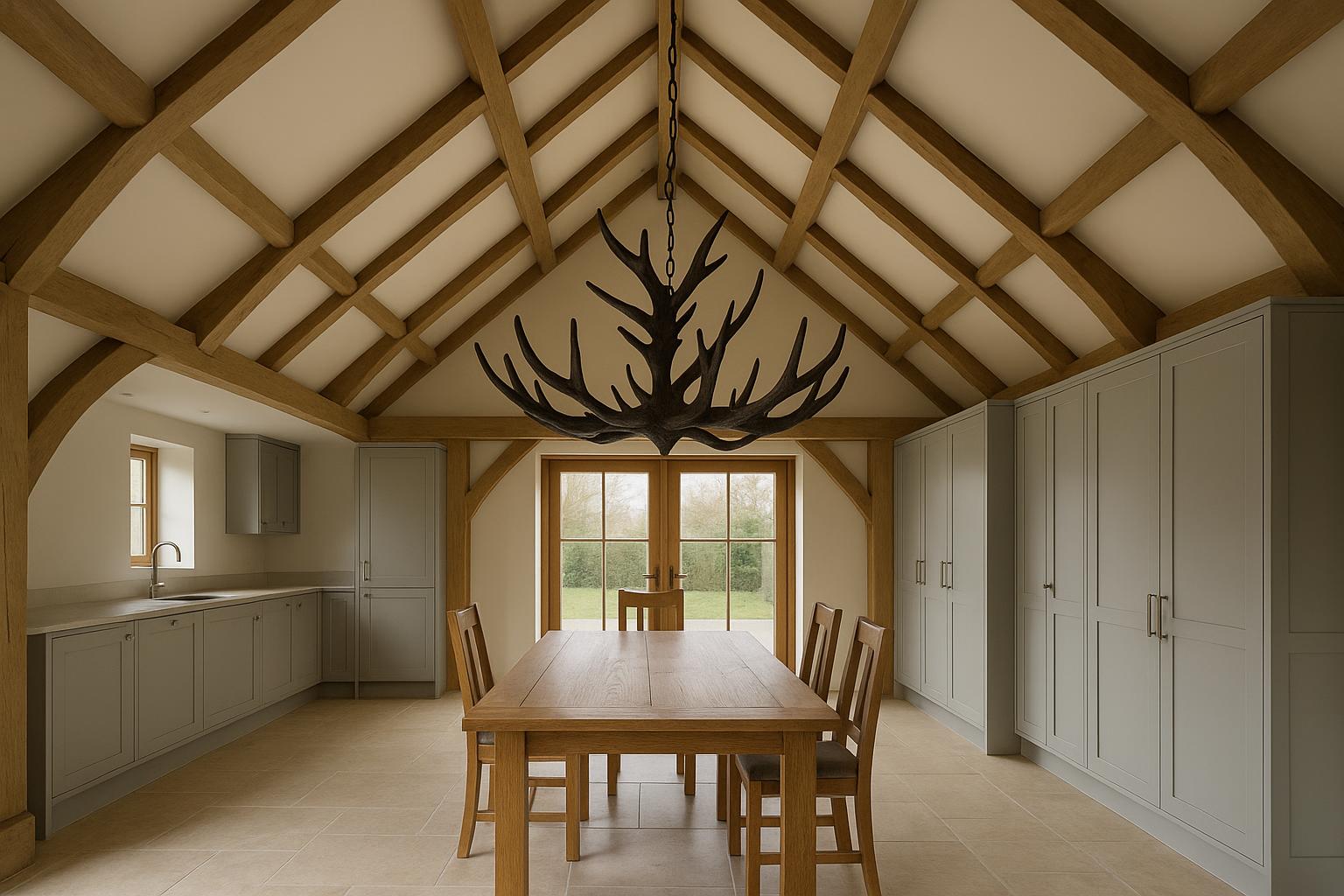
A practical approach to choosing the width, visual weight and drop of an antler pendant while respecting furniture,...
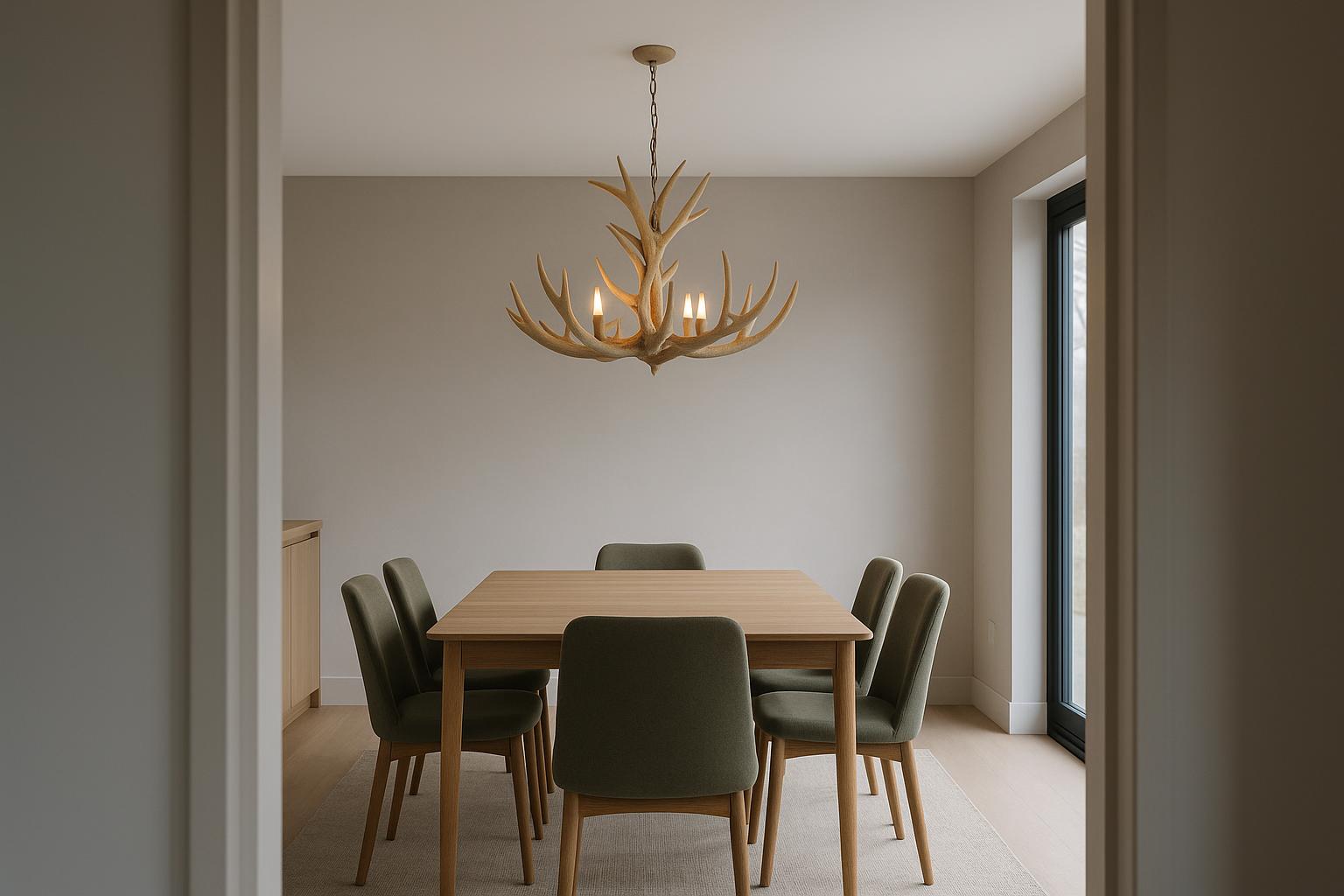
Antler pendant lights can bring sculptural character to a room without dictating a rustic theme. The key is to...
No featured images
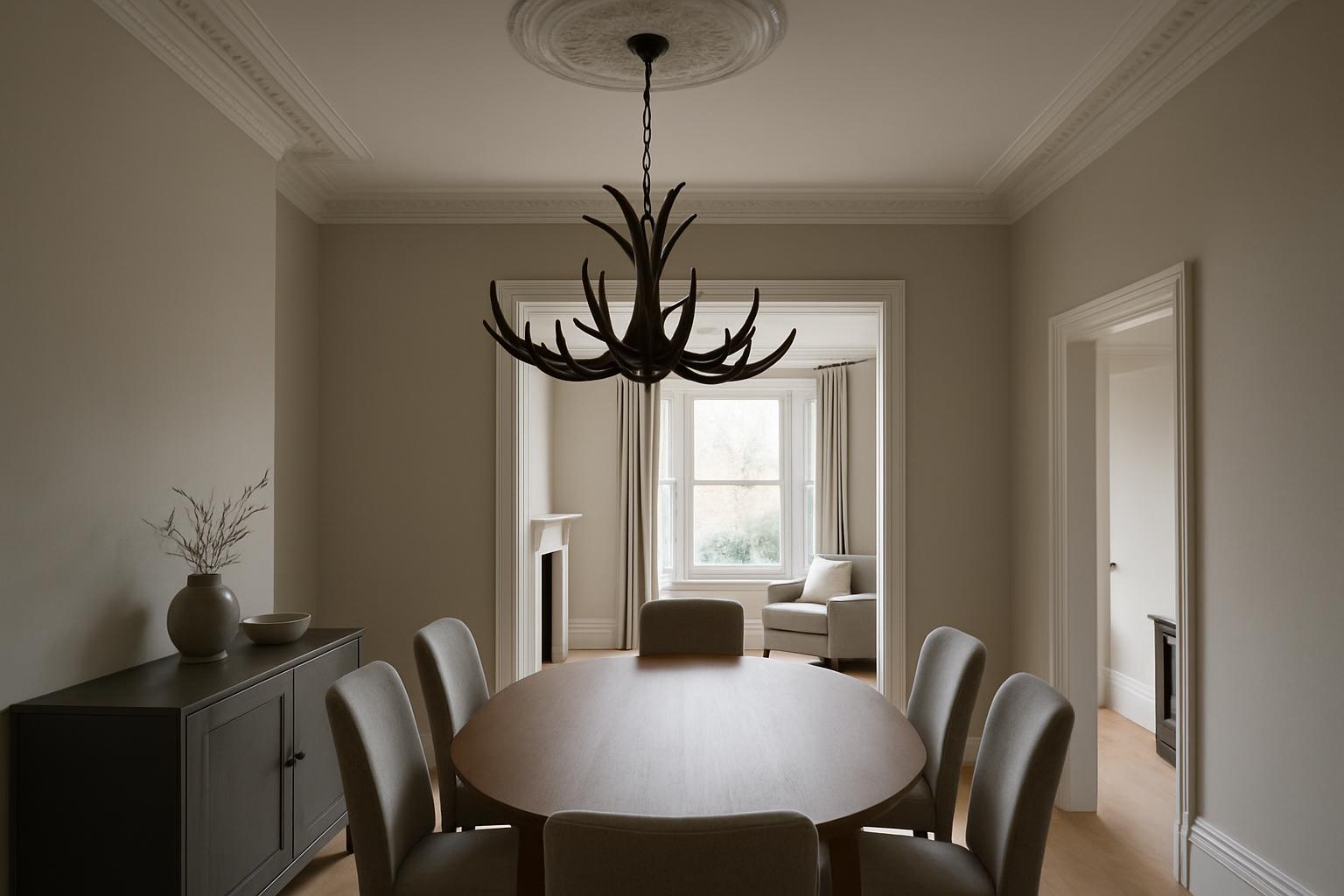
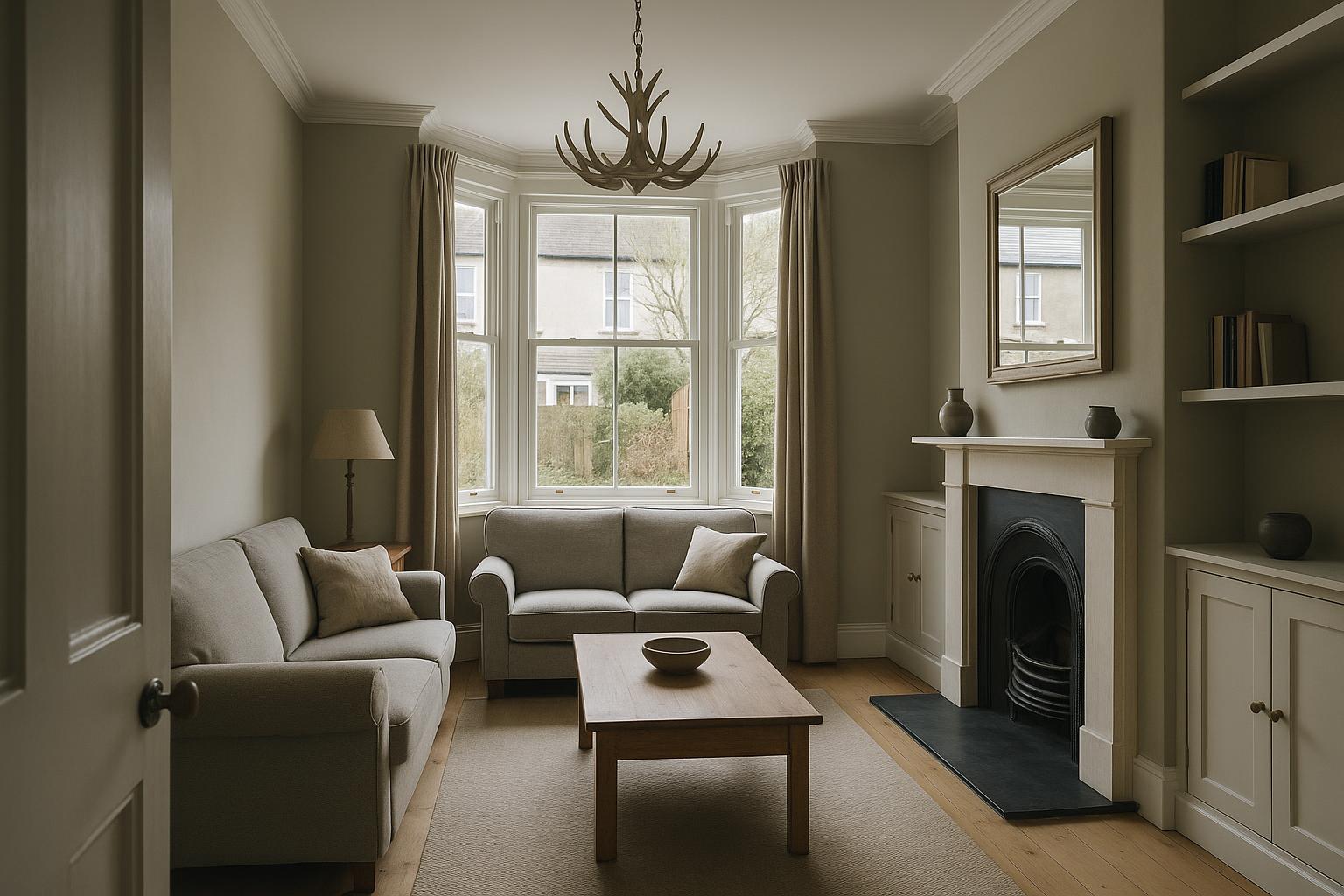
An antler pendant is never going to disappear politely into the ceiling. Its branching shape catches the eye even when the light is off, which is why it can give an otherwise restrained room so much character. Knowing how to style antler pendant lights is less about adding more countryside references and more about controlling what surrounds them.
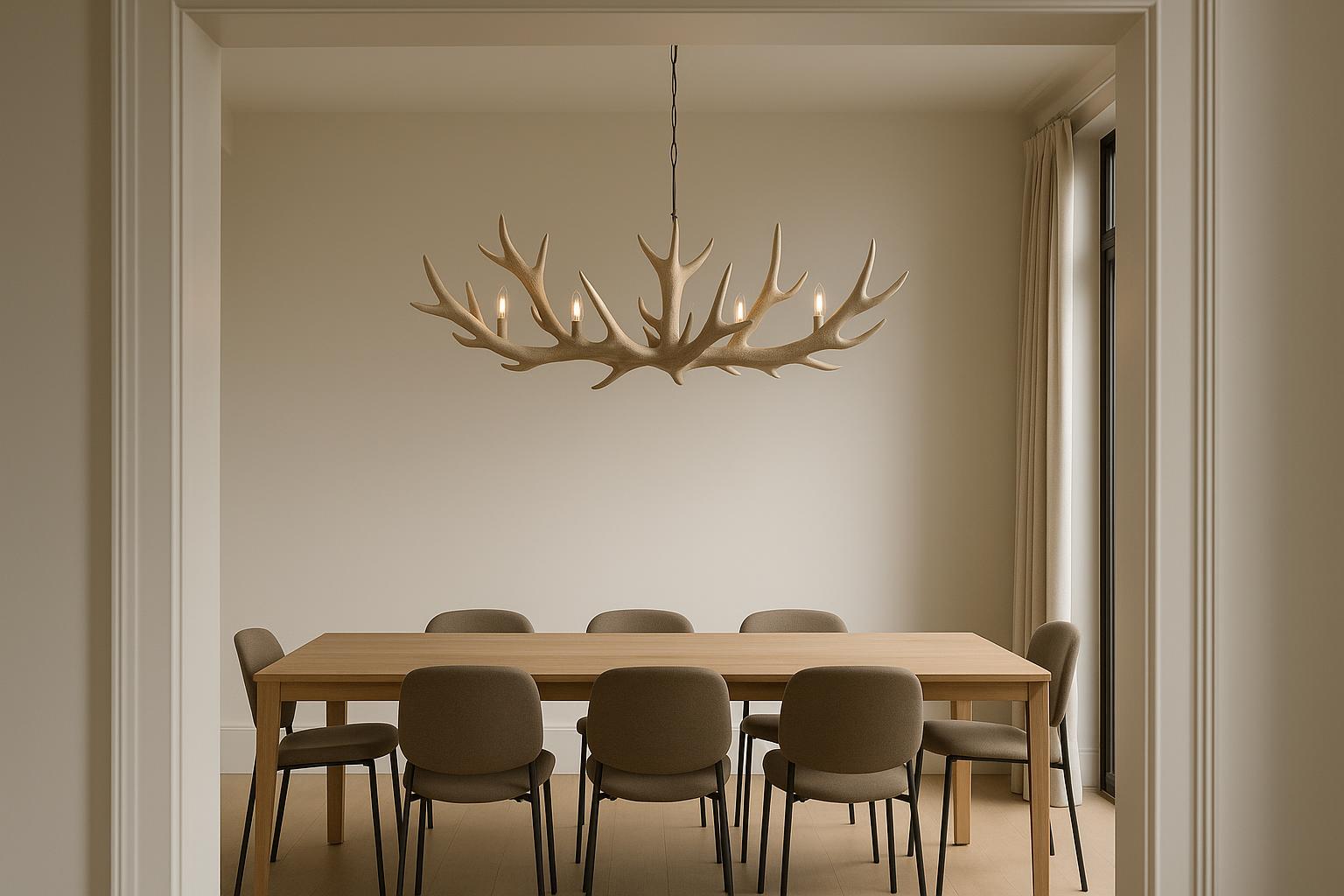
The strongest schemes treat the fitting as a piece of sculpture. A pale antler form can interrupt the straight lines of a new-build kitchen-diner, while a darker design can bring definition to a softly decorated cottage. Neither room needs tartan, hide prints or a collection of woodland ornaments to make the idea coherent.
Before considering paint or accessories, look at the room from its main entrance. Note the ceiling height, the position of windows and doors, and any features already competing for attention. Cornicing, beams, a ceiling rose, a chimney breast or tall kitchen units can all affect how clearly the pendant will read.

An elaborate fitting generally benefits from a calm upper half of the room. Closely hung pictures, deep curtain pelmets and furniture that almost reaches the ceiling may make the branches look tangled rather than expressive. Keeping some clear wall and ceiling space around the light gives its outline more authority.
This does not mean the rest of the room must be minimal. Pattern and colour can sit lower down through a rug, upholstered chair or painted cabinet, leaving the pendant with a cleaner visual background.
Product photographs can make antler chandeliers appear smaller or lighter than they will in a typical British room. Check the complete width and drop, including the ceiling canopy, chain or flex and the lowest branch. The number of lamp holders is not a reliable guide to physical size.
A simple paper or cardboard template can help. Mark the fitting's widest span on the floor beneath the proposed position, then use masking tape on a wall to indicate its lowest point. View those marks from the doorway, from a chair and from the adjoining room. This rough mock-up often reveals whether a design will dominate a modest Victorian dining room or look lost in a tall extension.
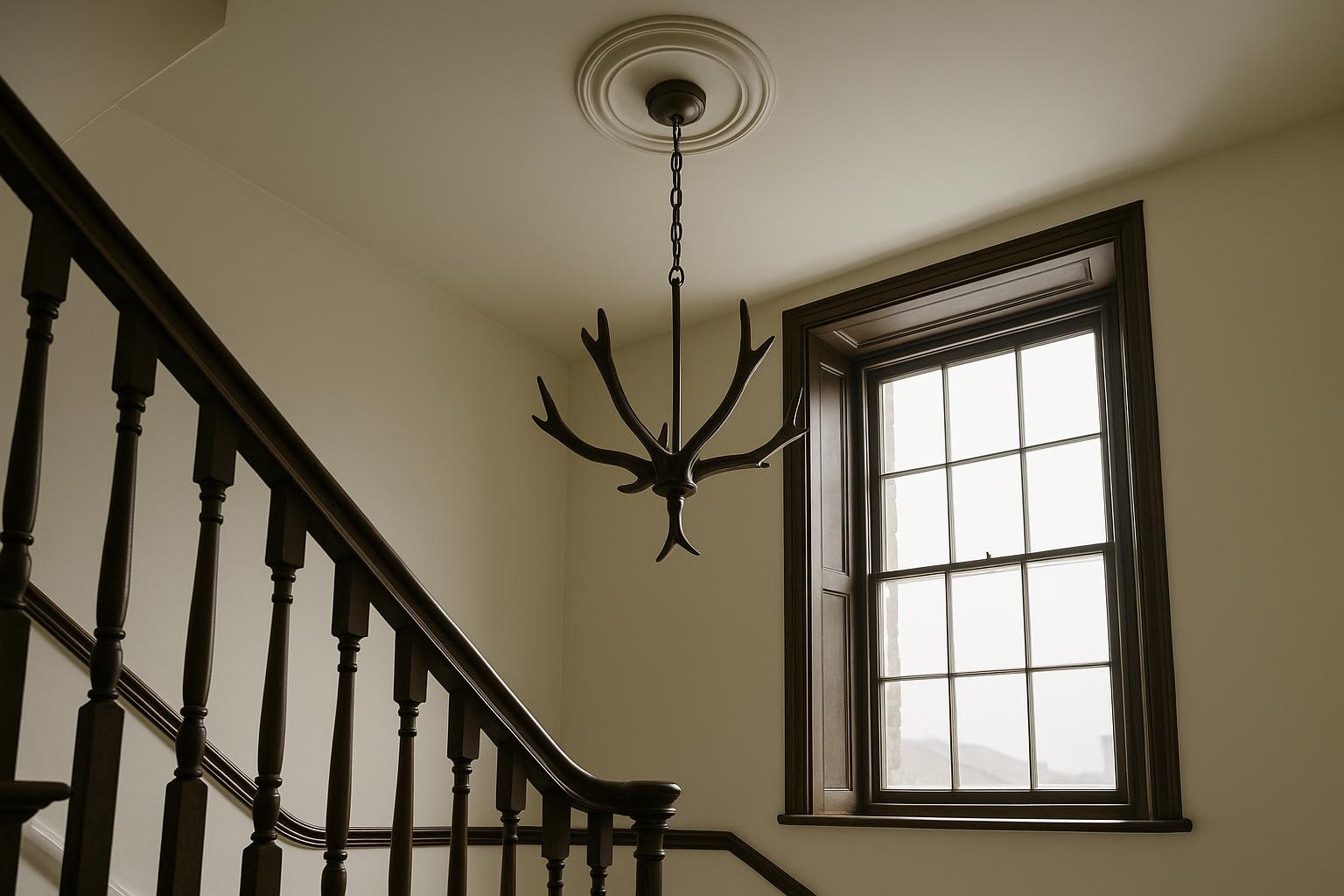
Low ceilings call for particular care. A compact, shallow design can retain the antler silhouette without making everyone conscious of the ceiling. A broad fitting with open space between its branches is better suited to a stairwell, vaulted room or converted barn where it has room to be seen from several angles.
Rustic antler lighting becomes easier to live with when it is placed beside materials that do not repeat the same message. Smooth painted cabinetry, plain plaster, honed stone and simple black metal all provide a useful counterweight to an irregular branching form.
To complement this topic, you can also read The Room Test for Antler Pendant Lights: Scale, Drop and Glare.
Limit overtly rustic companions. Timber may be enough on the dining table, leaving the chairs, curtains and flooring quieter. In a room with exposed beams or old floorboards, there may be no need to add further reclaimed wood at all. Linen and wool introduce softness without turning the scheme into a lodge interior.
Colour can also change the reading of the fitting. Chalky off-white, muted olive and warm grey create a gentle background, while deep blue or earthy red can make a pale antler finish feel more graphic. Exact matching is rarely necessary. Related tones usually look more natural than repeating one brown or metal finish throughout the room.
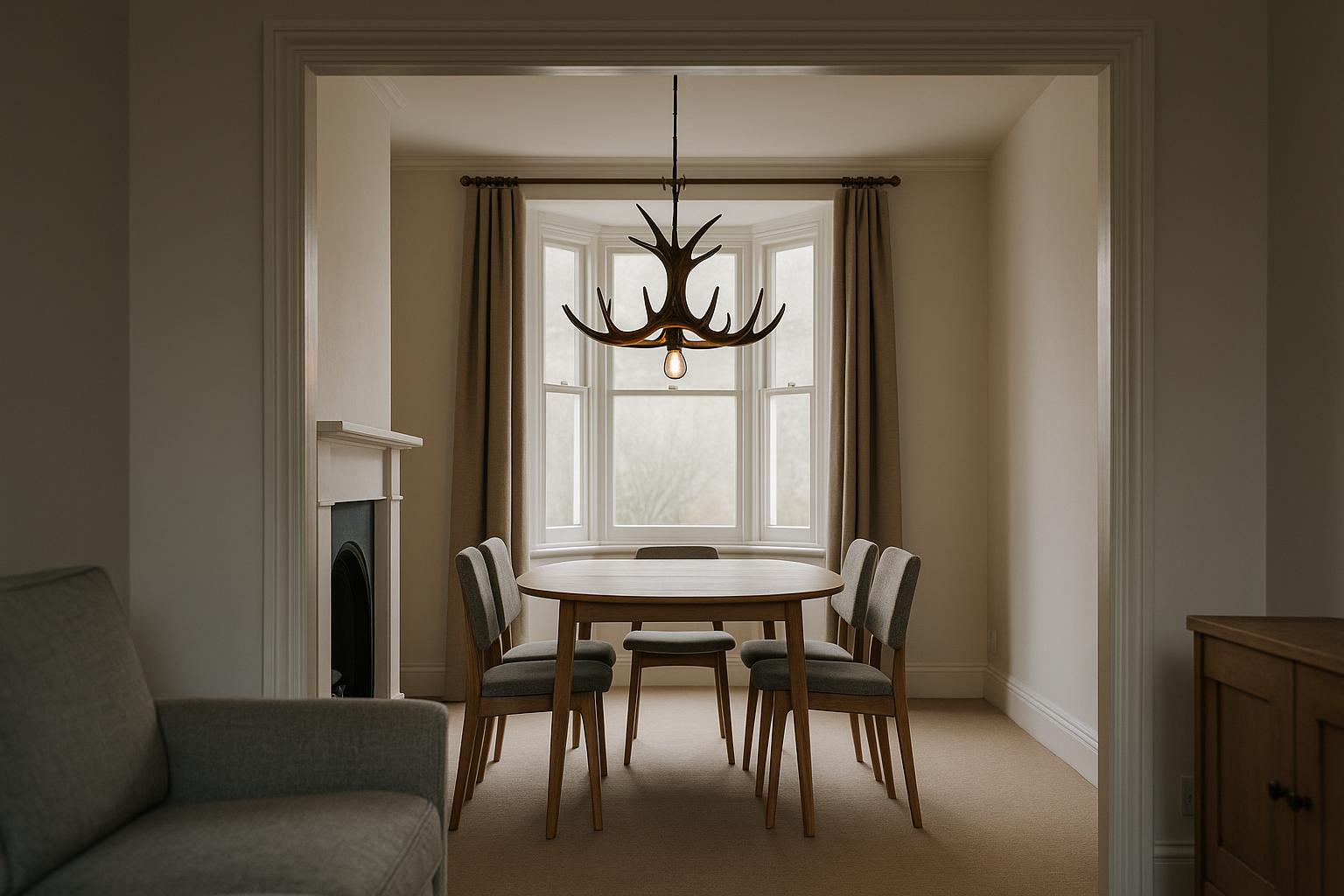
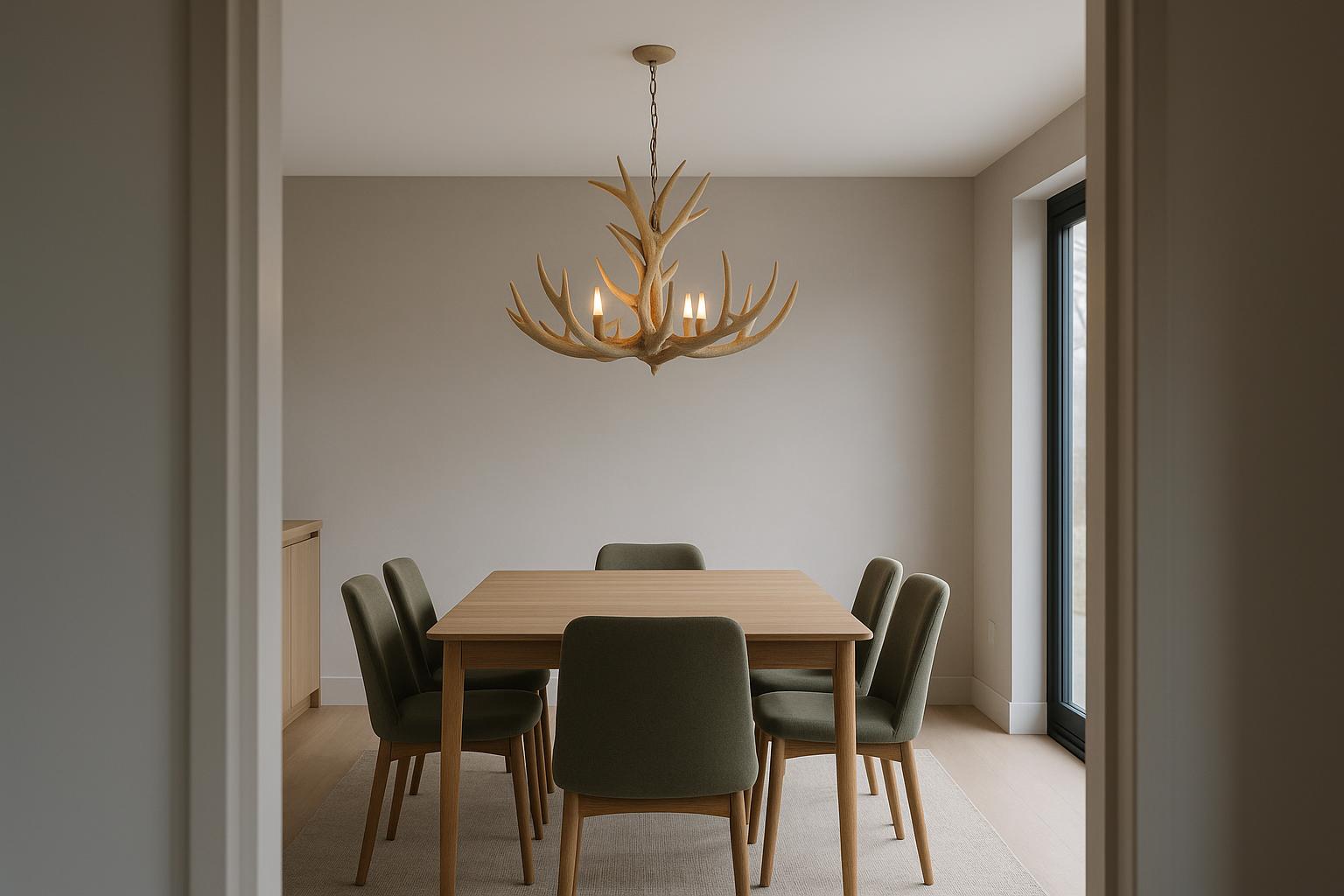
A branching pendant feels most settled when it belongs to a piece of furniture or a defined zone below. In a dining room, centre it over the table rather than automatically using the middle of the ceiling. This is especially useful in bay-window rooms and open-plan layouts, where the furniture may sit off-centre.
The table also protects the space beneath a lower fitting from through-traffic. Check the view across the table before fixing the final drop: diners should be able to see one another without a cluster of branches or bright bulbs sitting directly in their sightline.
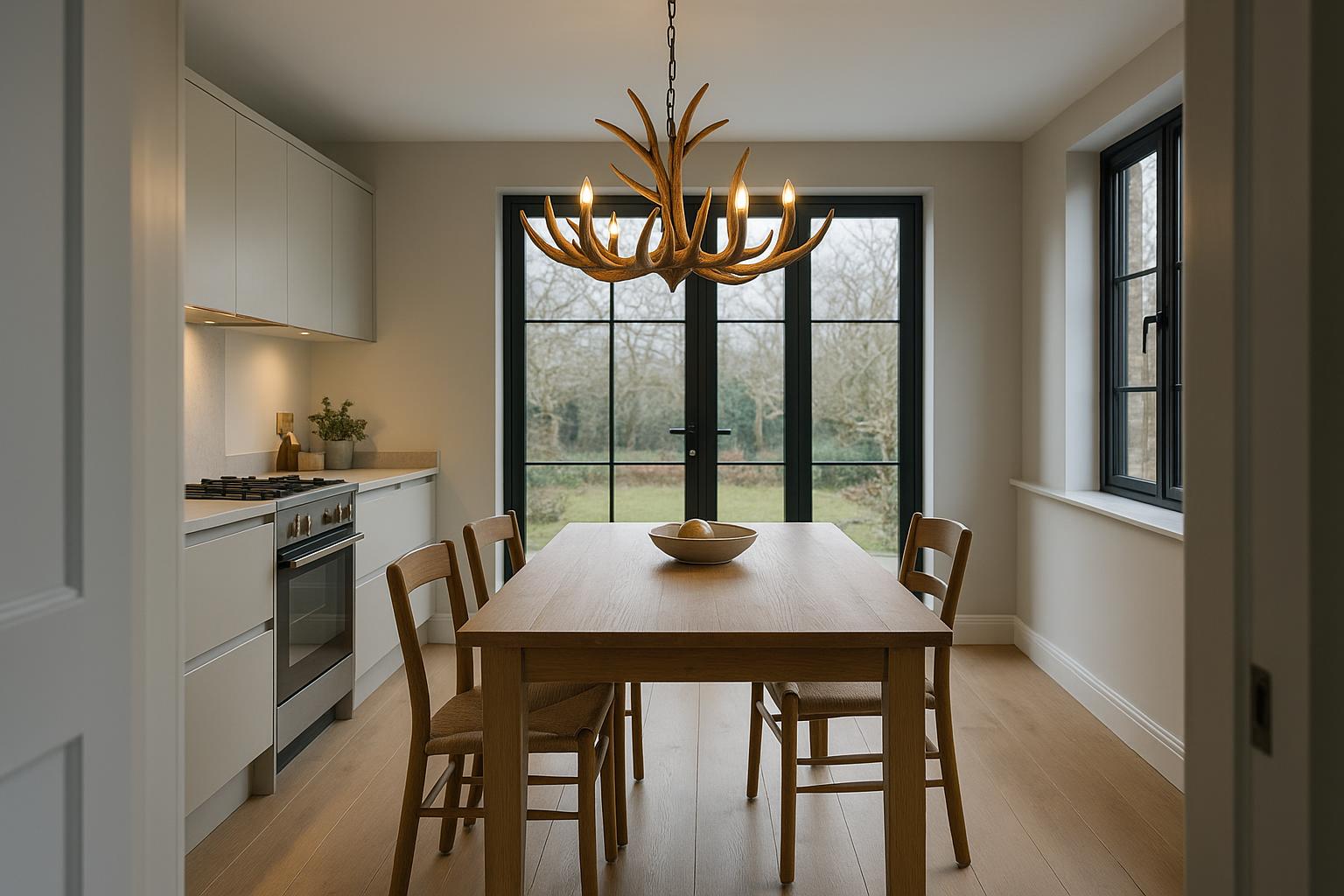
In a kitchen-diner, examine the pendant from the preparation area and the main entrance. It should mark the dining zone without blocking the view towards glazed doors or the garden. Branches must remain clear of tall cupboard doors, extractor units and the heads of people using stools. Over a sitting-room coffee table, the same principle creates a visual anchor and keeps an elaborate fitting away from routes between doors.
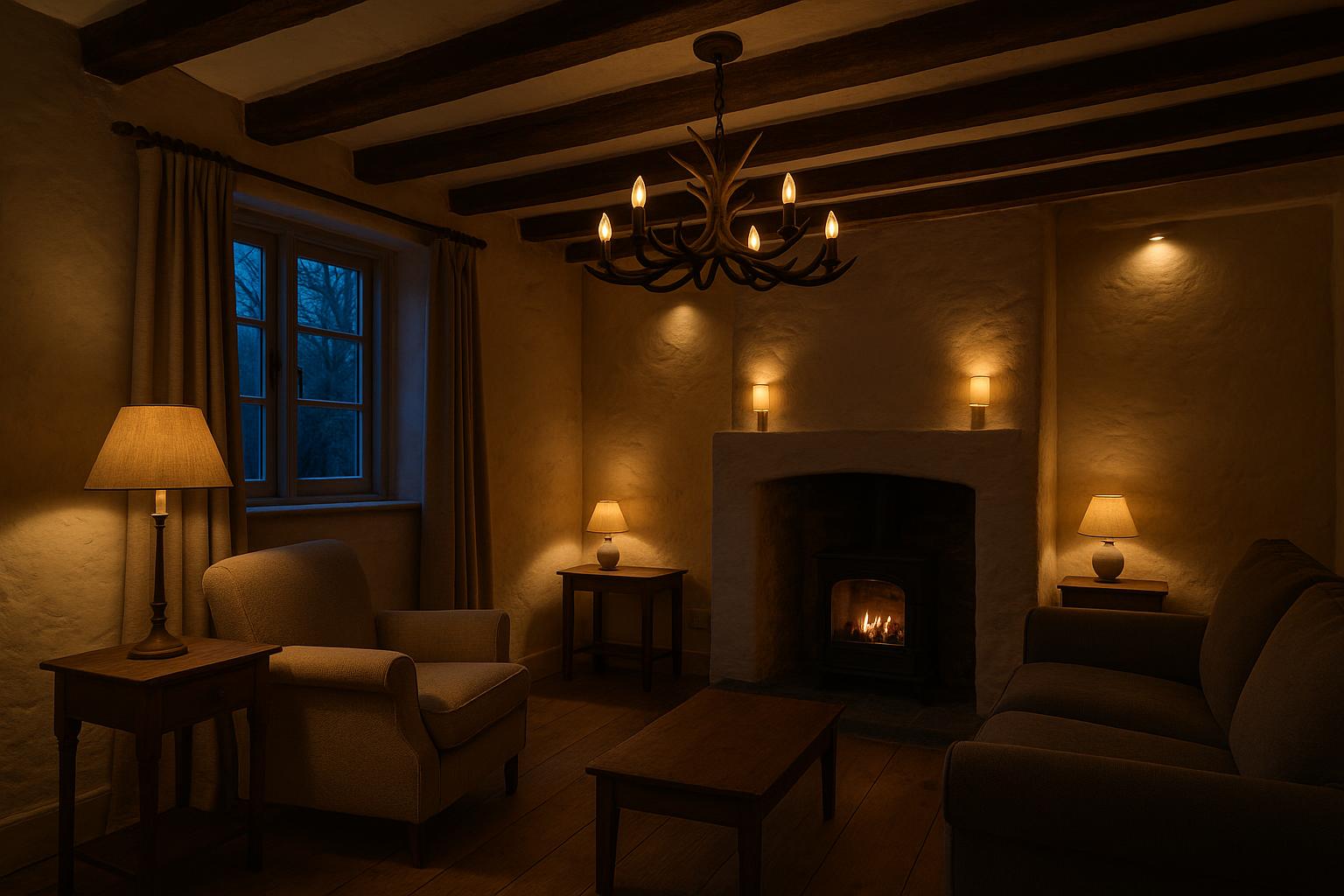
Decorative lodge lighting is often chosen for atmosphere, but a multi-branch pendant may not spread useful light evenly. Increasing the bulb output can create glare around the fitting while leaving the edges of the room dull. Supporting lights are usually a better solution.

This layered approach is particularly valuable on darker winter afternoons. It allows the pendant to remain mellow while other fittings deal with cooking, reading and circulation.
In the same direction, Room First, Antlers Second: Placing a Sculptural Pendant offers useful ideas for choosing home lighting more confidently.
Where bulbs are exposed, their shape and finish become part of the design. Clear filament-style bulbs can emphasise the structure but may feel sharp when several are visible near seated eye level. Frosted bulbs soften the points of light and are often more comfortable over a dining table.
A warm-white bulb is a sensible starting point for timber, earthy paint and most antler finishes; around 2700K generally produces a relaxed domestic effect. Colour temperature is only one consideration, however. Total brightness depends on the number of bulbs, the direction of the lamp holders and the contribution from other lights.
Always use the bulb cap, type and maximum wattage stated for the fitting. Where dimming is wanted, the bulbs, pendant and dimmer must all be compatible. A dimmer cannot correct poor placement or exposed-bulb glare, but it can make the room more adaptable between everyday use and evening meals.
In a Victorian terrace or Edwardian semi, an antler pendant can loosen the formality of cornicing, a ceiling rose and a traditional table. Keep the connection between canopy and rose neat, and introduce a contemporary element such as plain dining chairs or a flatweave rug.
A new-build offers the reverse challenge. Smooth walls and straight cabinetry already provide contrast, so one additional organic material can stop the pendant looking isolated. An oak table, textured curtains or a muted landscape colour is usually sufficient.
In a cottage, existing texture does much of the decorative work. Uneven plaster, beams and aged boards are a rich setting, so choose a shallower country style chandelier and leave surfaces relatively clear. A bungalow or compact flat needs similar restraint: prioritise headroom and a clean route through the room rather than selecting the most intricate design available.
For more consistent lighting throughout the home, the article Will It Block the View? Sizing an Antler Pendant for a UK Home may also be helpful.
Branching fittings can be awkward to lift and heavier than their appearance suggests. Confirm the overall weight, ceiling requirements and assembly instructions before ordering. The electrical point and ceiling support must be suitable for the chosen light, particularly in an older property or where a decorative ceiling rose is involved. Have the work assessed and completed by a suitably qualified electrician.
Think about cleaning while deciding the position. The branches should be reachable safely without standing on a table or leaning across a kitchen island. Follow the manufacturer's care instructions for the particular finish, switch the light off and let the bulbs cool before dusting. Keeping the pendant away from the hob will also reduce greasy deposits in a kitchen-diner.
Once the pendant is in place, repeat one aspect of it elsewhere and then stop. That might be its dark tone in a picture frame, its warm finish in a table base or its organic quality in a timber surface. Copying the antler shape or matching every finish weakens the effect.

Judge the completed arrangement from the doorway and during both daylight and evening use. The fitting should have a clear outline, a practical relationship with the furniture and enough supporting light to keep the whole room useful.
When comparing options, view Lighting Go's antler pendant lights with your ceiling height, furniture dimensions and preferred drop beside you. A carefully scaled design will supply the character; the rest of the room only needs to give it space.
Will It Work Over Dinner? A Practical Antler Pendant Guide
Room to Branch Out: Sizing an Antler Pendant for a Hallway
How to Style an Antler Pendant Without Overdoing It
Beyond the Lodge: Antler Pendant Light Ideas for British Homes
Beyond Rustic: A Room-First Guide to Antler Pendant Lights
Hot Tags: Wood Lights, Glass Pendant Lights, Discount Pendant Lights, Pendant Lights UK, Pendant Drop Lights, Discount Chandeliers UK, Flush Mount Fans, Huge Chandeliers, Ceiling Lights Sale, Glass Wall Sconces, Antler Chandeliers, Modern Bathroom Design, Dimmable Ceiling Lights, Bedroom Lights, Bathroom Lights, Kitchen Lighting, Modern Chandeliers, Lighting Ideas
Copyright © 2030 LightingGo. All rights reserved.