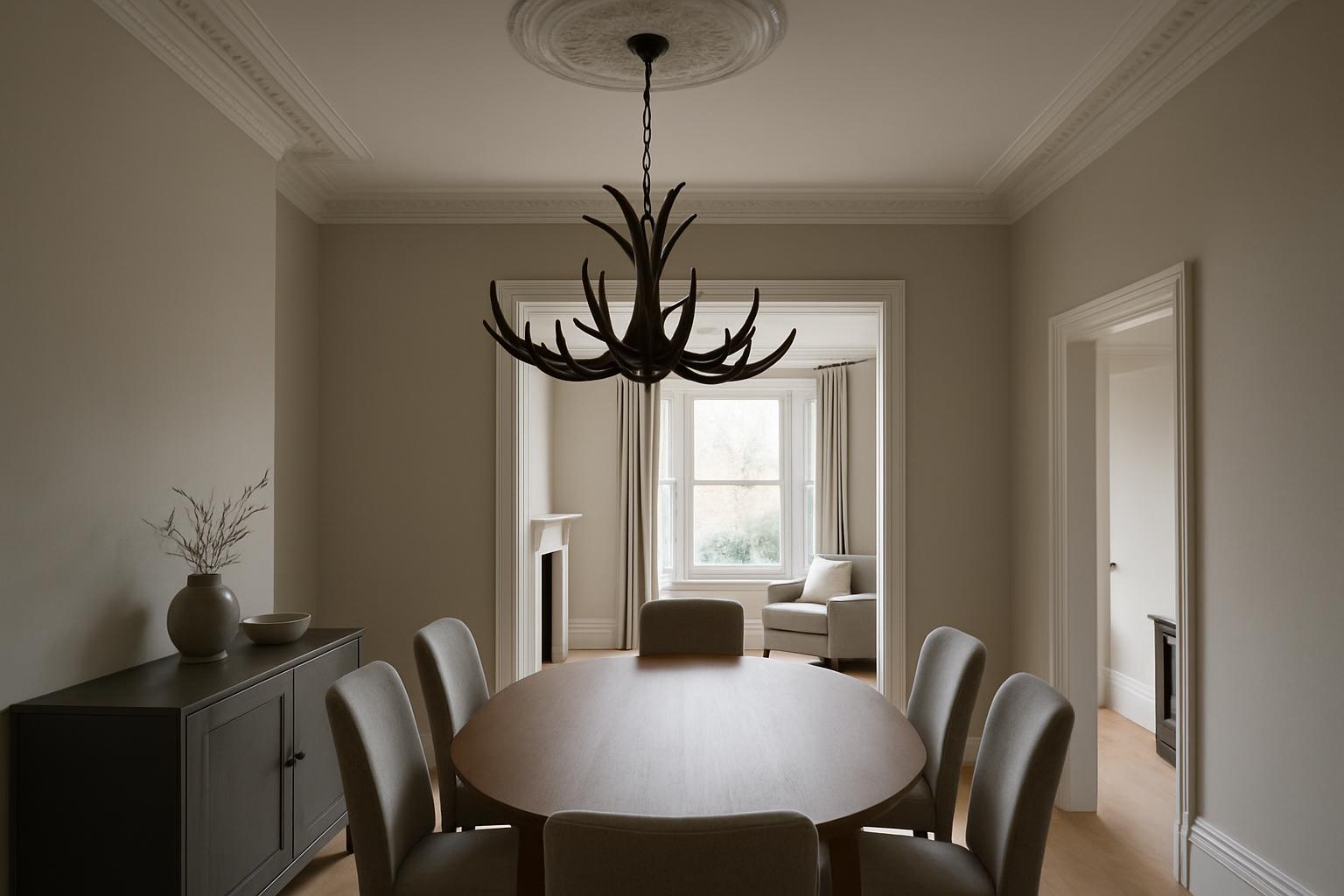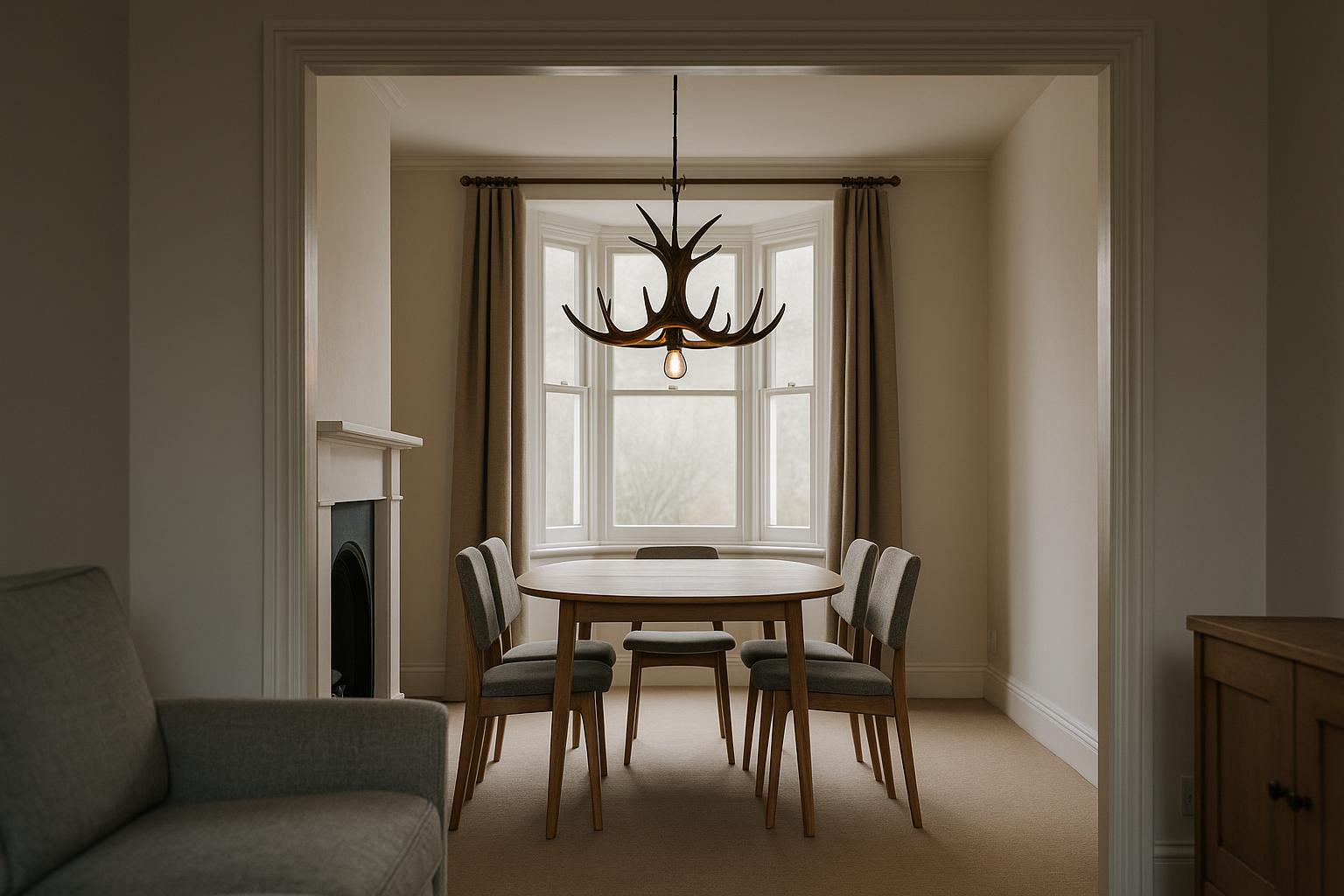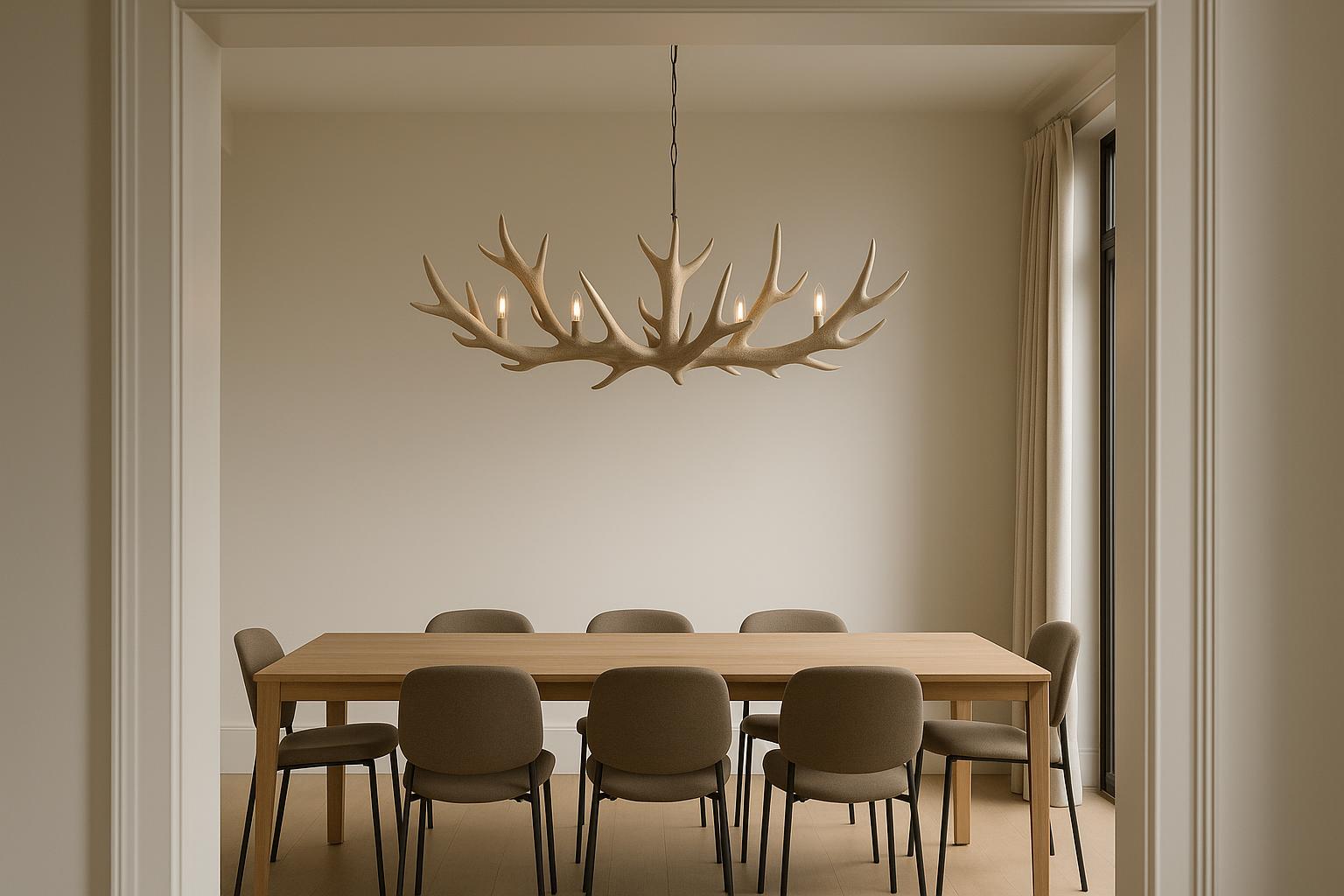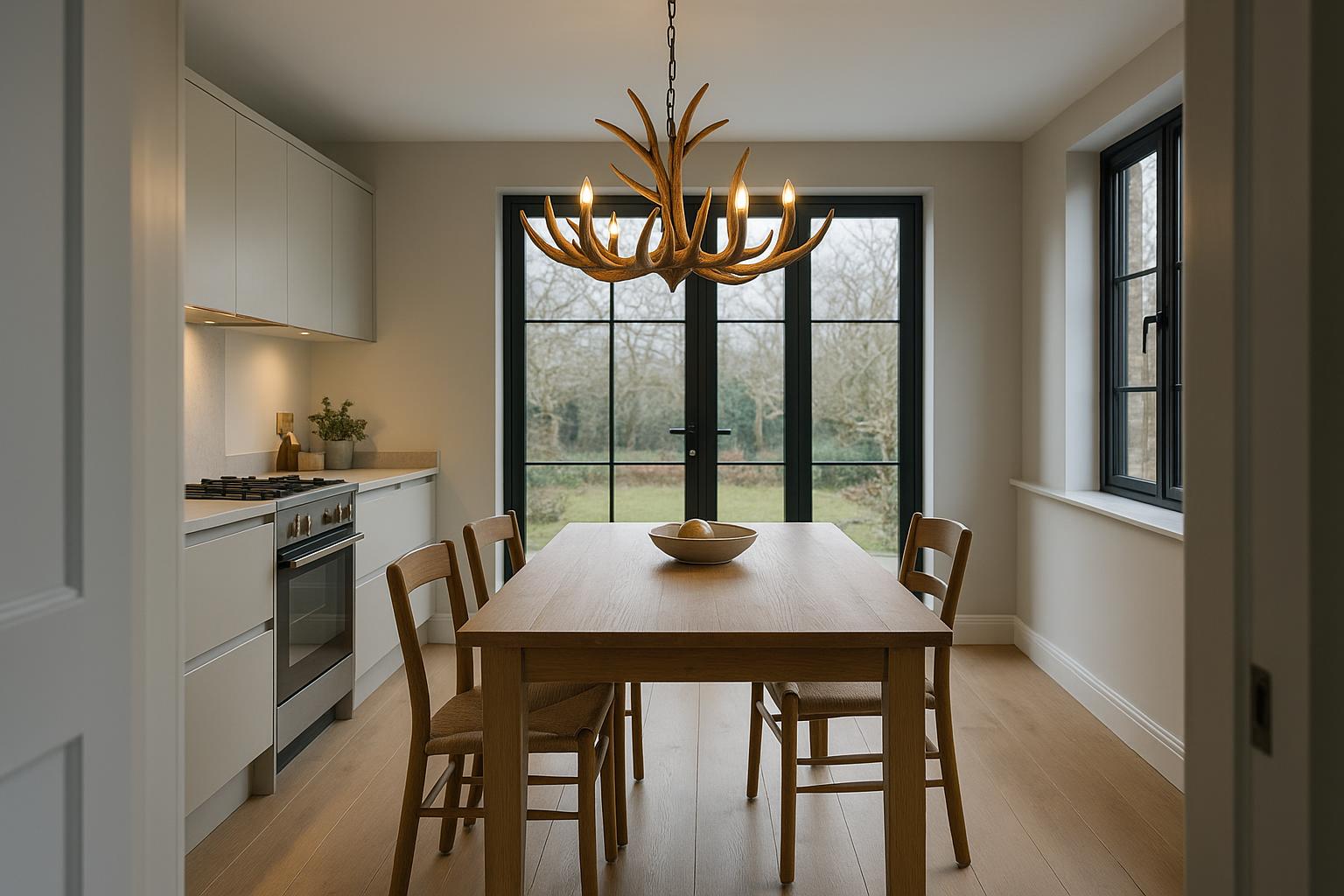



An antler pendant can work far beyond a lodge-style room. The key is to judge its outline, drop and finish against...
No featured images
1 Review(s) 
An antler pendant can work far beyond a lodge-style room. The key is to judge its outline, drop and finish against...
An antler pendant can bring character to a modest room without overwhelming it. The right choice depends on its...
An antler pendant can look sculptural rather than rustic when its scale, outline and position respond carefully to...
A practical approach to choosing the width, visual weight and drop of an antler pendant while respecting furniture,...
Antler pendant lights can bring sculptural character to a room without dictating a rustic theme. The key is to...
No featured images
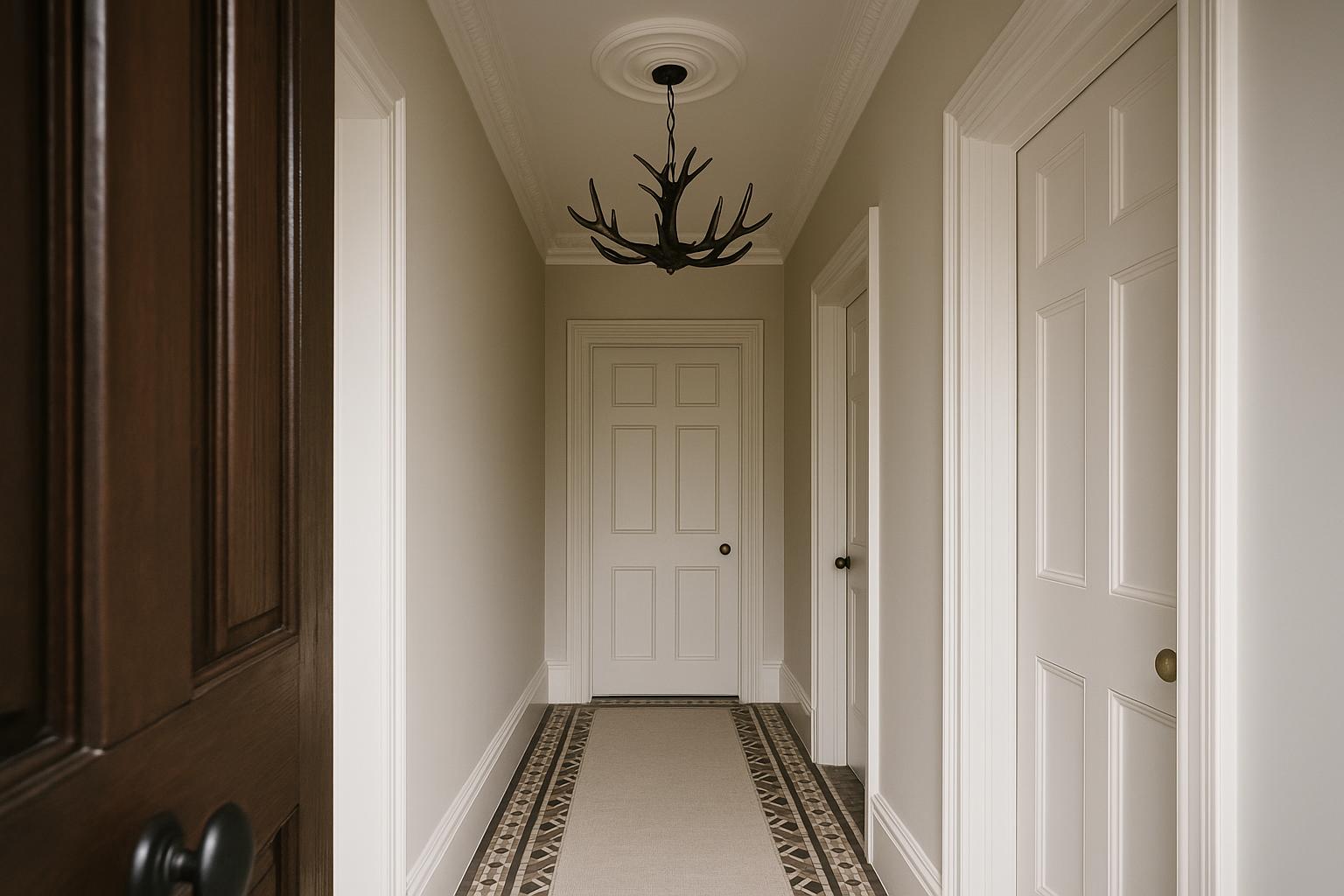
Hallways are seen in passing rather than from one settled viewpoint. A ceiling light may be framed by the front door on arrival, appear above you as you remove a coat and then come back into view from the landing. An antler pendant makes those views more noticeable because its branches create a strong outline.

Start at the threshold and look along the usual route through the house. Note whether the fitting will sit against a plain ceiling, overlap visually with several door frames or compete with a staircase. In a narrow Victorian terrace, even a moderately sized pendant can appear broad when seen through a sequence of doorways. The same fitting may feel restrained in the open hall of an Edwardian semi.
Repeat the exercise from adjoining rooms and, where relevant, from the upper landing. Check the view with doors both open and closed. A pendant that looks well placed from directly below can seem awkward if one branch appears to touch a cornice, picture frame or balustrade from the main approach.
Product photographs rarely convey scale reliably. Record the fitting's overall diameter, body height and maximum suspension, then mark those dimensions in the hall. Low-tack tape can indicate the width on the floor, while a piece of cardboard or a lightweight paper template suspended temporarily can show where the lowest point will fall. Keep any mock-up well away from the live electrical point.
This simple model exposes problems that measurements alone may miss. Walk beneath it wearing a bulky coat, carry a long parcel through the entrance and open nearby cupboard doors. If furniture must pass through the hall to reach other rooms, consider that route too. The aim is not merely to prevent contact; the fitting should also leave enough visual space to avoid making the ceiling feel compressed.
Measure the narrowest relevant part of the hall rather than relying on its widest section. Projecting architraves, a turn in the stairs or a tall storage unit can change how much room the pendant appears to occupy.
Antler designs with similar dimensions can carry very different visual weight. An open arrangement with visible gaps allows the ceiling to show through and often feels lighter than a dense cluster. Dark finishes sharpen every branch against a pale ceiling, while light and mid-toned finishes tend to produce a softer outline.
For a slim passage, favour a contained form whose branches turn inward rather than extending horizontally towards the walls. A compact multi-light design can still have character without behaving like a full country style chandelier. Broad antler chandeliers are generally easier to accommodate where the hall opens into a stairwell or has a distinct square entrance area.
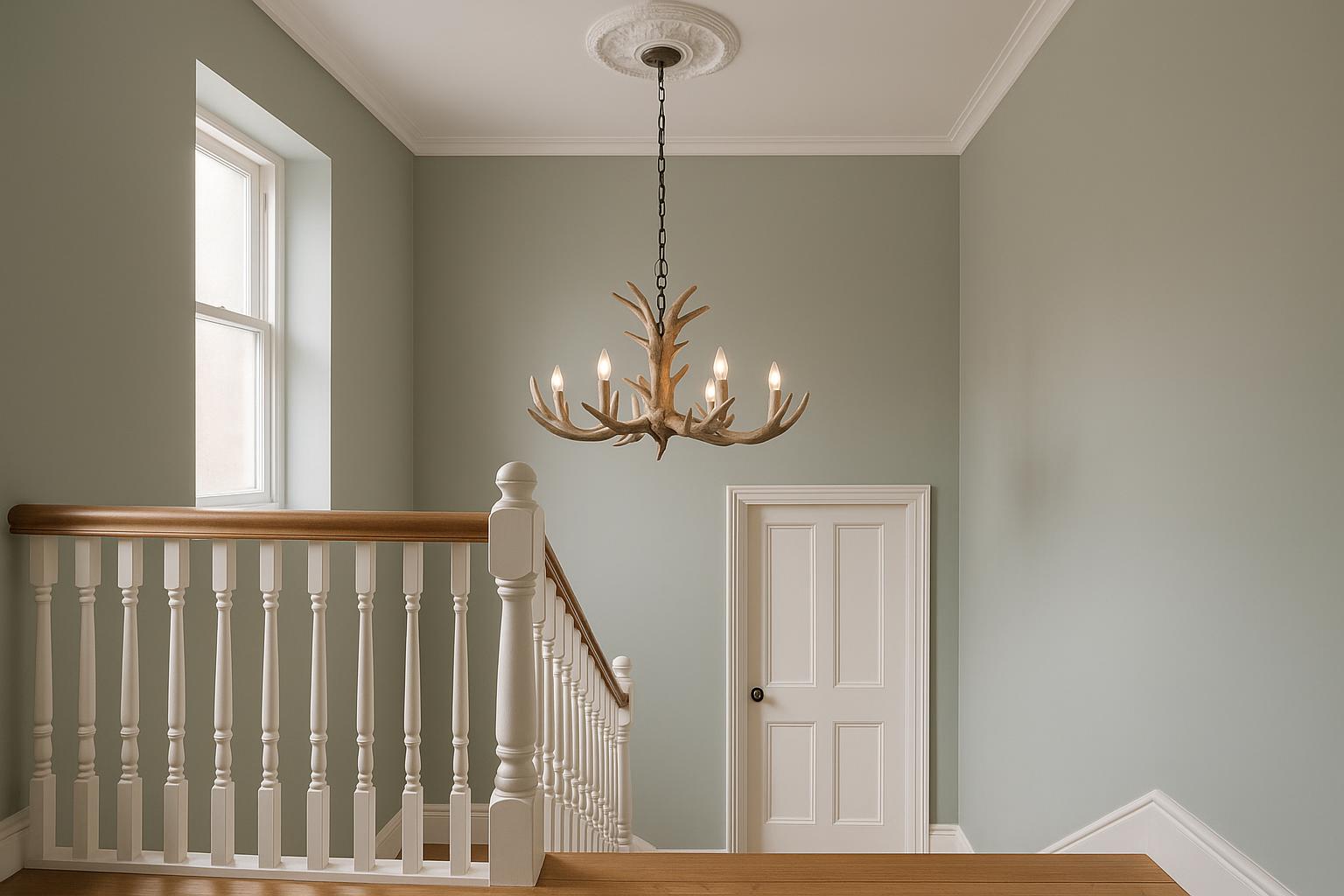
Double-height space permits a larger fitting, but it introduces an extra test: the view at upper-floor eye level. A wide pendant beside a landing may feel intrusive even when there is ample clearance beneath it. Position and outline matter as much as total size, particularly near open balustrades.
To complement this topic, you can also read Will It Work Over Dinner? A Practical Antler Pendant Guide.
The suspension should suit the circulation route rather than an abstract rule for room height. Check the product's minimum and maximum drop and establish whether adjustment is made through a cable, chain or fixed rod. A model described as adjustable may still have a minimum assembled height that is too deep for a standard hallway ceiling.

Allow for the tallest regular users and for everyday objects such as umbrellas, garment bags and boxes. Look above nearby doors as well: a tall front door, under-stairs cupboard or full-height coat cabinet may swing close to the pendant's branches.
Stairs require a sectional check because the floor level changes beneath the fitting. Follow the complete route from the first tread through any turn and onto the landing. Do not assume that adequate clearance at the hall floor means the pendant is clear of someone higher up the staircase.
A period ceiling rose can provide an attractive background, but it should not dictate an unsuitable position. Nor should decorative plasterwork be assumed to provide structural support. Ask a suitably qualified electrician to assess the fixing point, weight, wiring and practical clearances before installation.
An entrance needs light at several levels. People must be able to find keys, distinguish shoes, read post and move safely between the hall and stairs. An ornamental fitting that glows attractively at ceiling level may not illuminate the lower part of a long corridor particularly well.
Check the number and direction of the lamp holders on the specific product. Exposed lamps can define the antler shape and produce lively light, but they may cause glare when viewed from a landing. Upward-facing lamps usually give a gentler effect on the ceiling, although console surfaces and the lower walls may then need support from another source.
A layered scheme can include:
In the same direction, Will It Fit the View? Choosing Antler Pendants for a Country Home offers useful ideas for choosing home lighting more confidently.
Switch on the existing lights during a darker afternoon before deciding what is missing. If dimming is planned, confirm that the fitting, lamps and control are compatible rather than assuming any LED lamp will work with the existing dimmer.
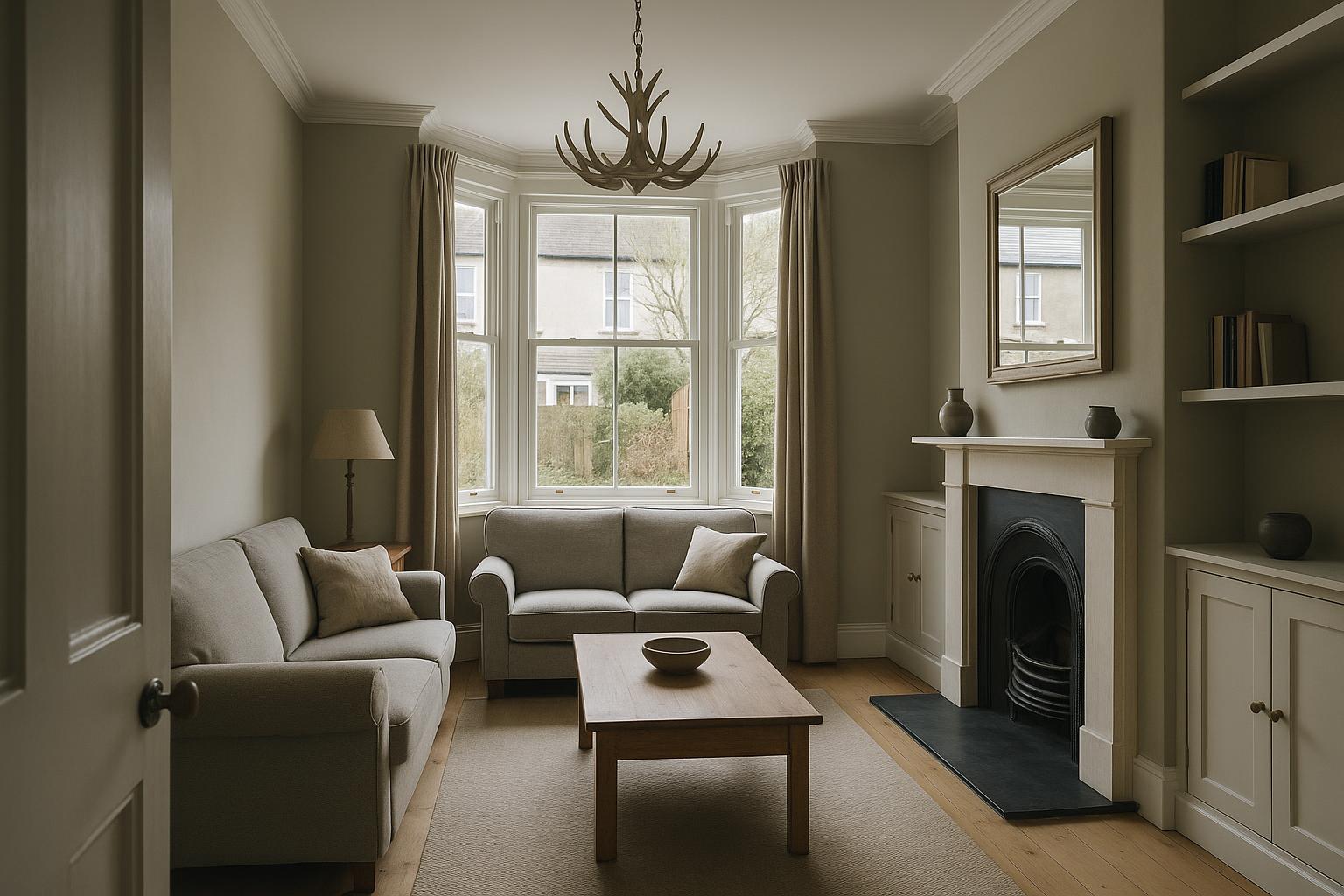
rustic antler lighting need not be confined to cottage or lodge interiors. Its irregular shape can work particularly well as a counterpoint to the orderly details of a Georgian townhouse or Victorian terrace. Cornicing, panelled doors and patterned tiles provide enough context; adding animal motifs and heavy timber at every turn is likely to make the scheme feel themed.
In a cottage, let existing materials do some of the work. Old floorboards, lime-toned walls, stone or a woven runner may already offer plenty of texture. One clearly chosen pendant will usually look more convincing than several competing rustic accessories.
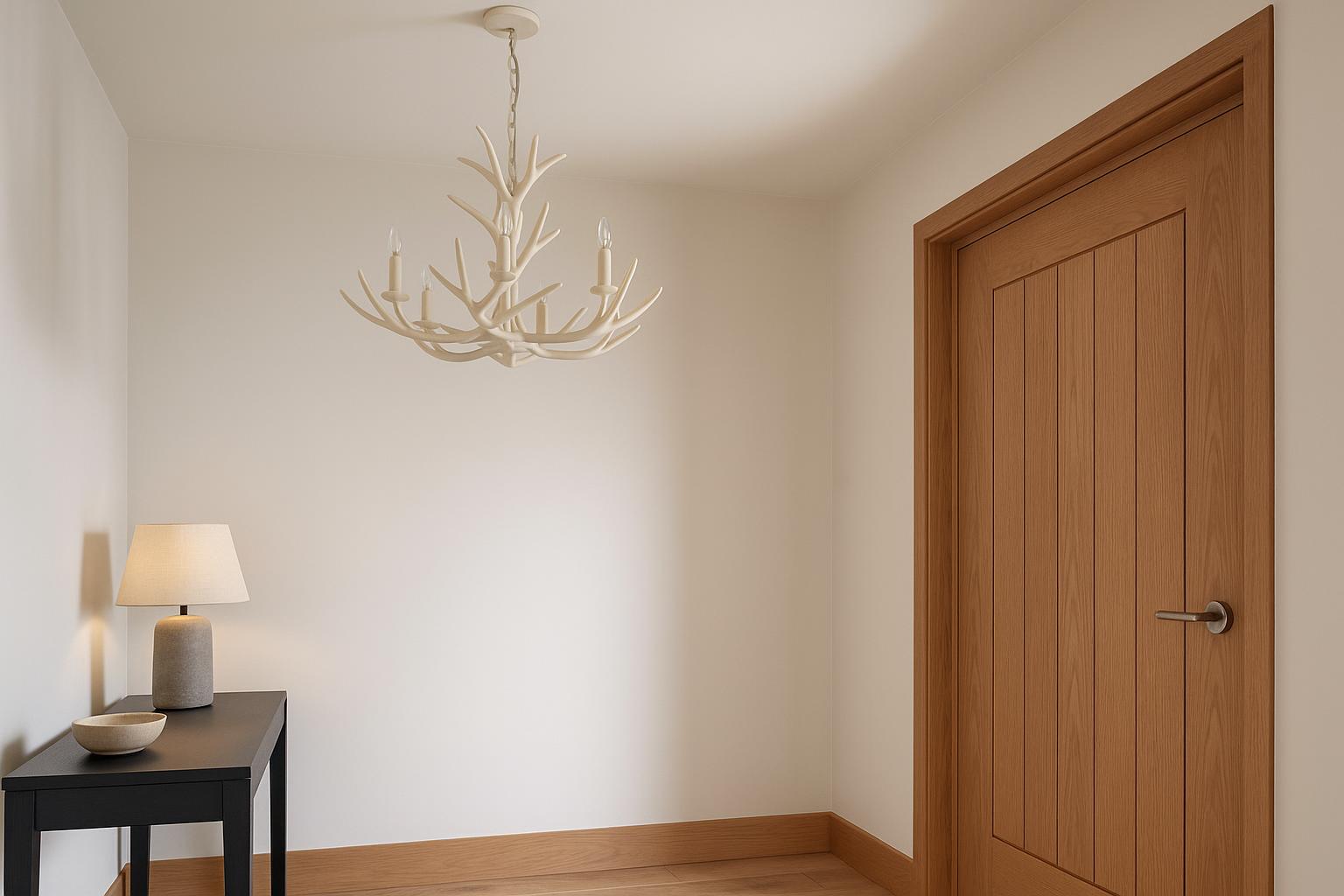
A modern new-build calls for a cleaner edit. Against plain walls and simple joinery, an airy antler form can read almost as sculpture. Repeat a single colour or material elsewhere, perhaps in a console base or door furniture, without trying to match every finish exactly.
Hallways often receive borrowed or filtered daylight, so finish samples should be viewed in the actual space. Check them near the ceiling in the morning and again under artificial light. A dark brown or black fitting may create an elegant silhouette by day but lose surface detail after dusk. Pale finishes can feel less imposing, although they may blend too closely into a light ceiling if the design relies on contrast.
Consider the floor within the same view. Encaustic-style tiles and patterned runners already attract attention at ground level, making a simpler pendant outline a useful counterbalance. A long, neutral corridor can support a more intricate form because there is less visual activity elsewhere.
For more consistent lighting throughout the home, the article Antler Pendant Lights Without the Lodge Theme may also be helpful.
Warm white, muted green, plaster pink, charcoal and natural timber can all sit comfortably with antler shapes. The key is restraint rather than a prescribed country palette. Two or three related materials generally give the fitting more authority than a collection of loosely rustic finishes.
Before browsing Lighting Go's antler pendant lights, keep the hall measurements beside you and compare them with each product's stated dimensions. Confirm the overall width, assembled height and available suspension range rather than judging from a styled room image.

Also establish:
Large fittings may be awkward to manoeuvre through a London flat, enclosed staircase or small vestibule. Follow the product instructions for assembly and maintenance, and leave electrical work and assessment of the ceiling support to a suitably qualified electrician.
The right pendant should hold the eye without narrowing the route. A slightly quieter design, placed carefully and supported by useful lighting elsewhere, will often give an entrance more presence than the largest fitting the ceiling can physically take.
Will It Fit the View? Choosing Antler Pendants for a Country Home
Will It Work Over Dinner? A Practical Antler Pendant Guide
Before You Hang It: Antler Pendants and Living-Room Sightlines
How to Style an Antler Pendant Without Overdoing It
Beyond the Lodge: Antler Pendant Light Ideas for British Homes
Hot Tags: Wood Lights, Glass Pendant Lights, Discount Pendant Lights, Pendant Lights UK, Pendant Drop Lights, Discount Chandeliers UK, Flush Mount Fans, Huge Chandeliers, Ceiling Lights Sale, Glass Wall Sconces, Antler Chandeliers, Modern Bathroom Design, Dimmable Ceiling Lights, Bedroom Lights, Bathroom Lights, Kitchen Lighting, Modern Chandeliers, Lighting Ideas
Copyright © 2030 LightingGo. All rights reserved.