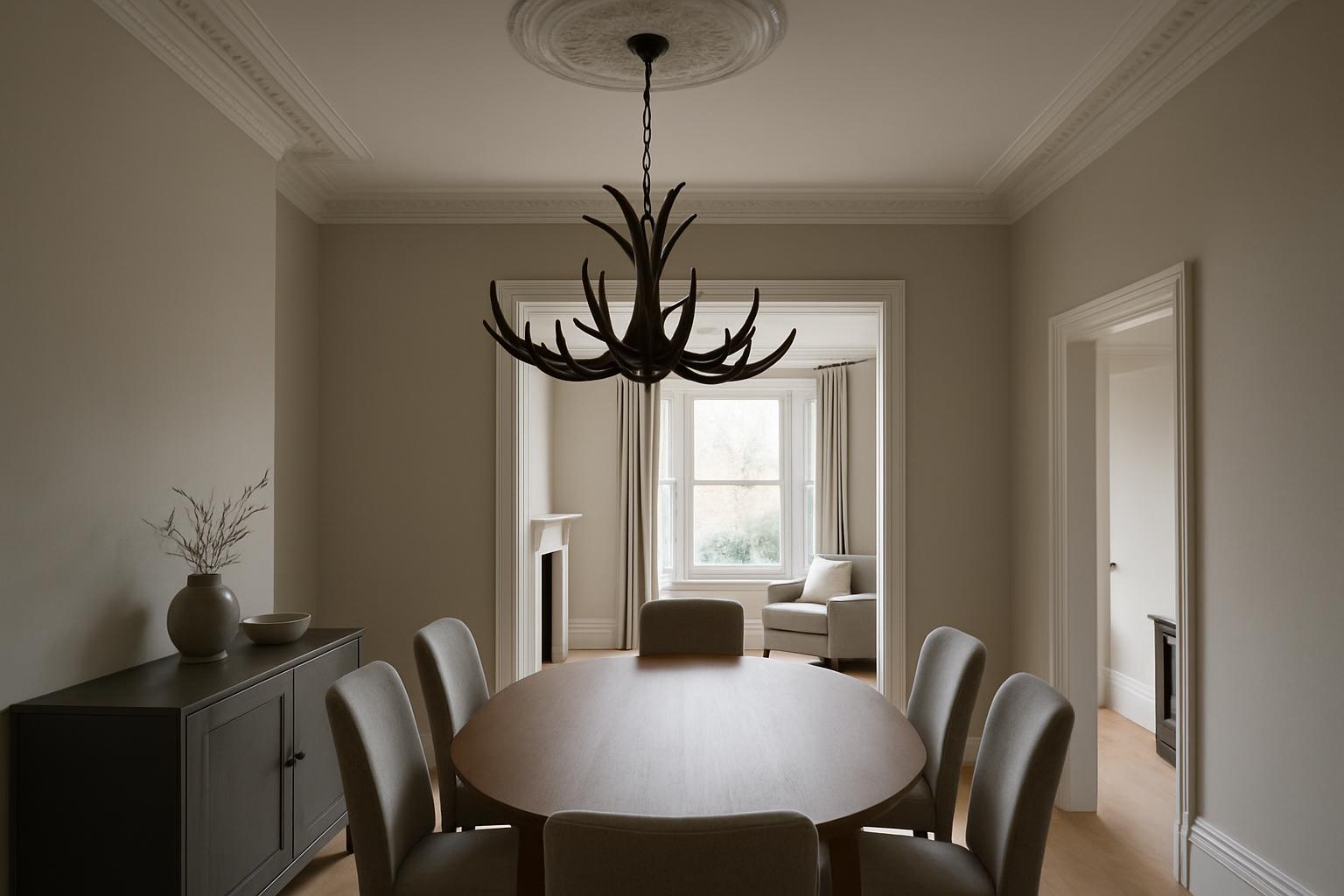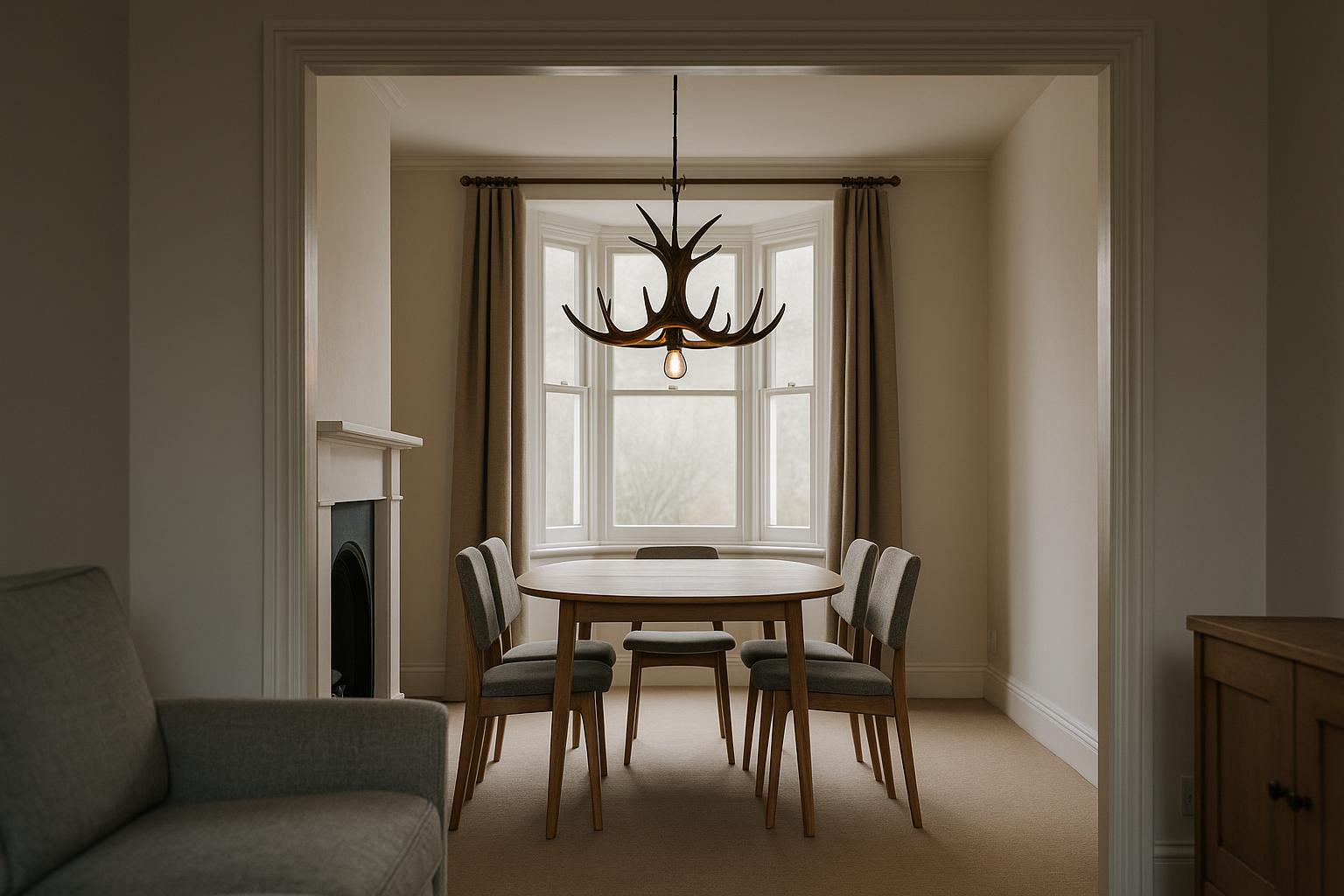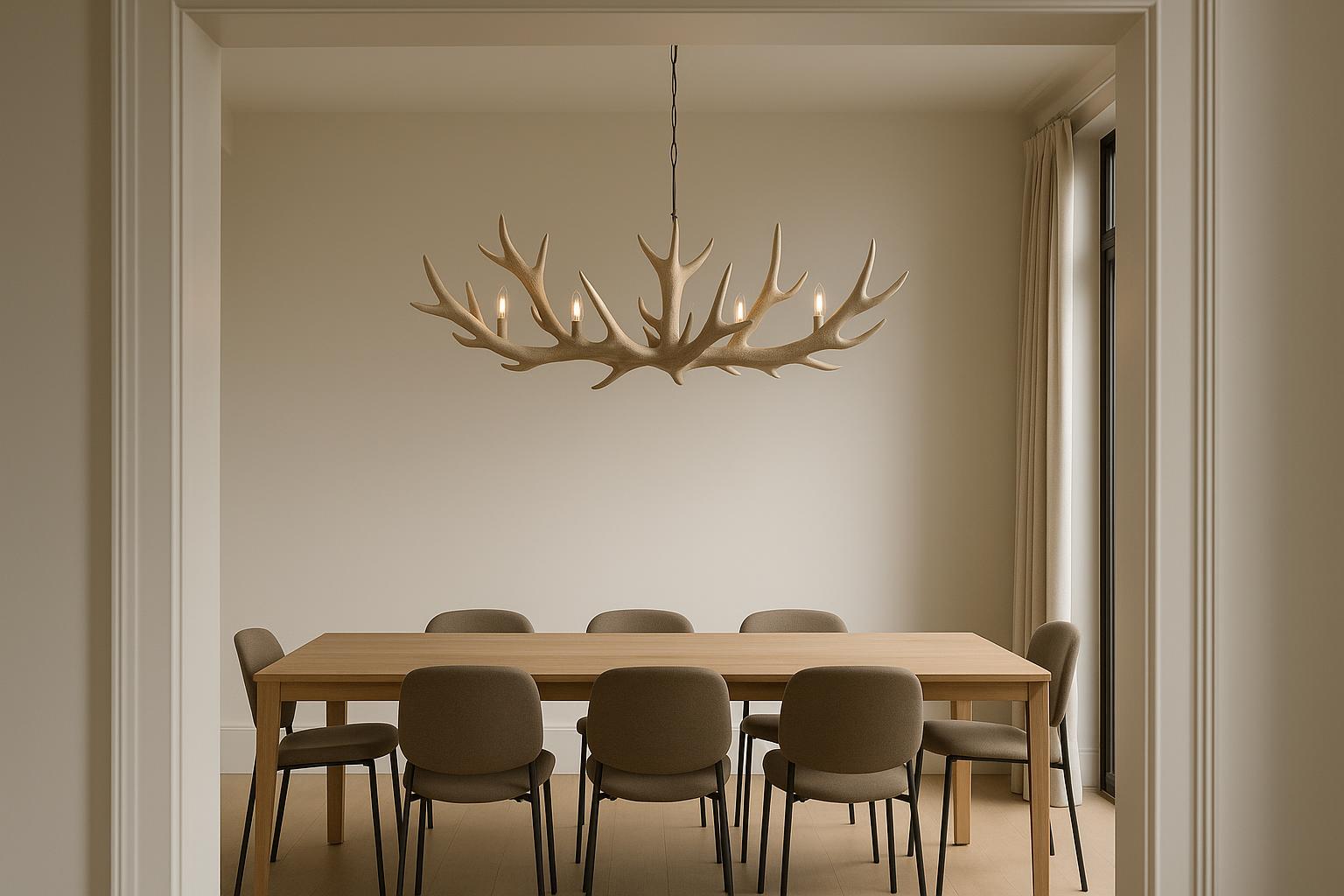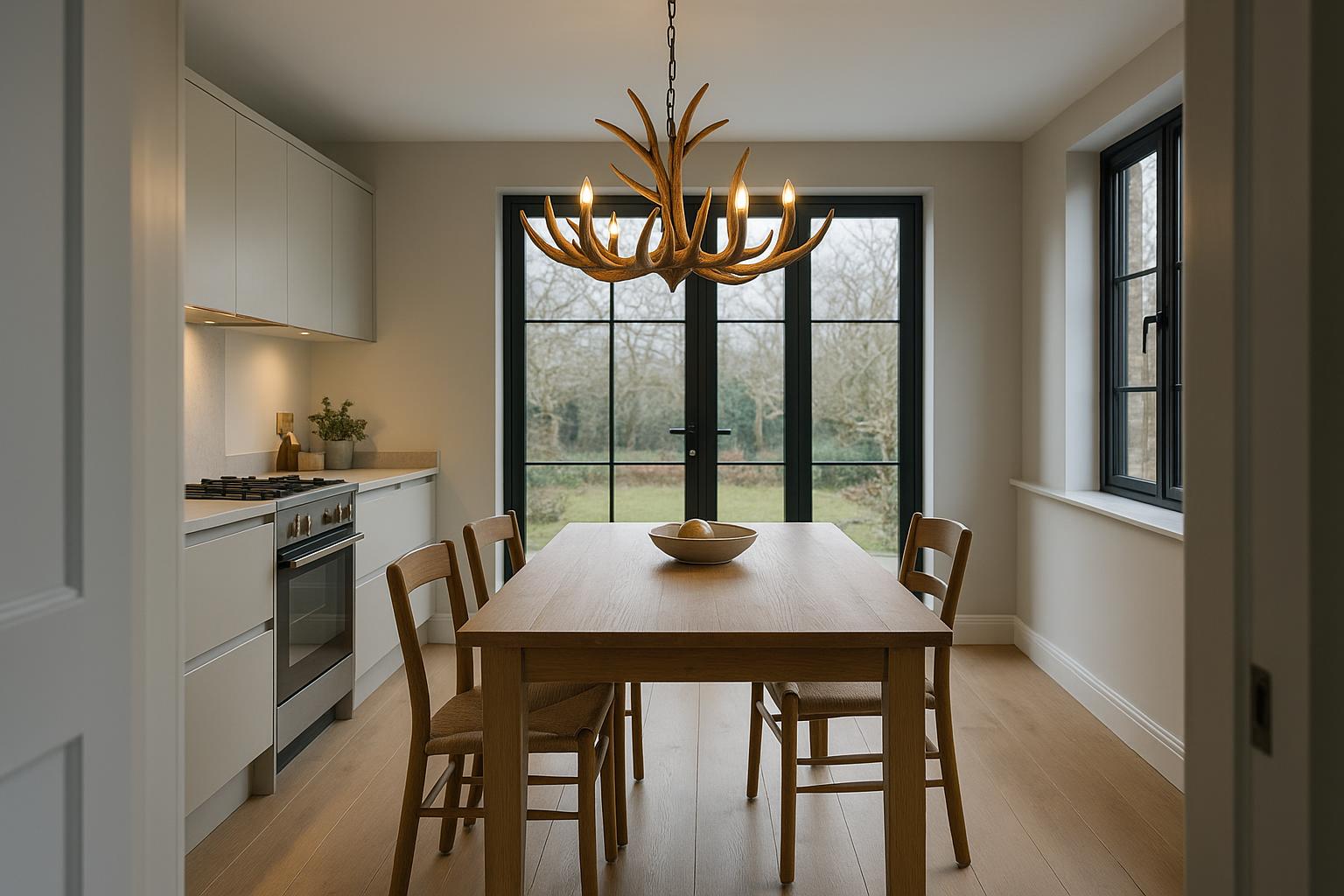



An antler pendant can work far beyond a lodge-style room. The key is to judge its outline, drop and finish against...
No featured images
1 Review(s) 
An antler pendant can work far beyond a lodge-style room. The key is to judge its outline, drop and finish against...
An antler pendant can bring character to a modest room without overwhelming it. The right choice depends on its...
An antler pendant can look sculptural rather than rustic when its scale, outline and position respond carefully to...
A practical approach to choosing the width, visual weight and drop of an antler pendant while respecting furniture,...
Antler pendant lights can bring sculptural character to a room without dictating a rustic theme. The key is to...
No featured images
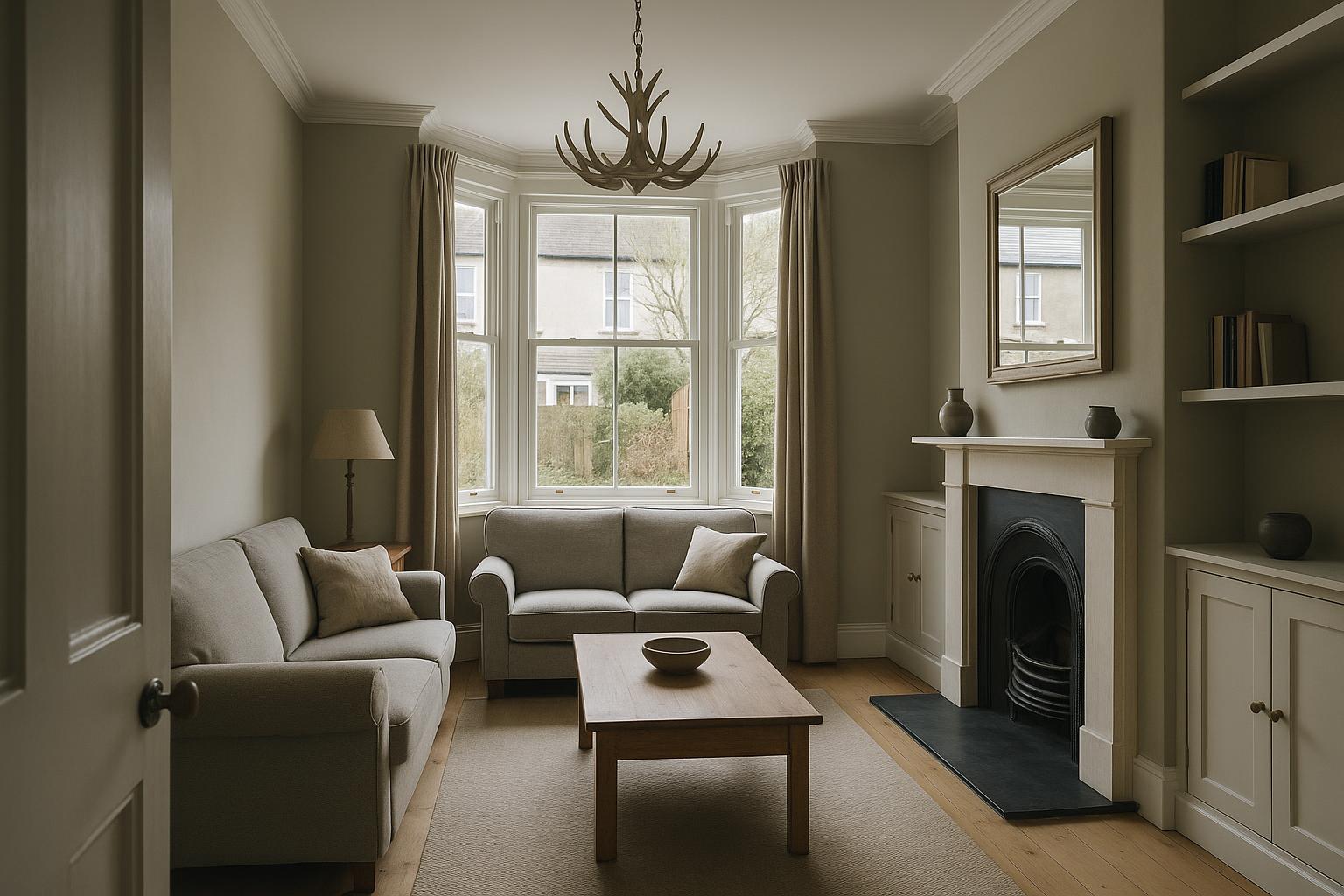
An antler pendant already brings irregular lines, texture and a recognisable motif into a room. It rarely needs much help. The most convincing interiors give the fitting space to be seen, rather than surrounding it with checked fabrics, woodland ornaments and heavily rustic furniture.

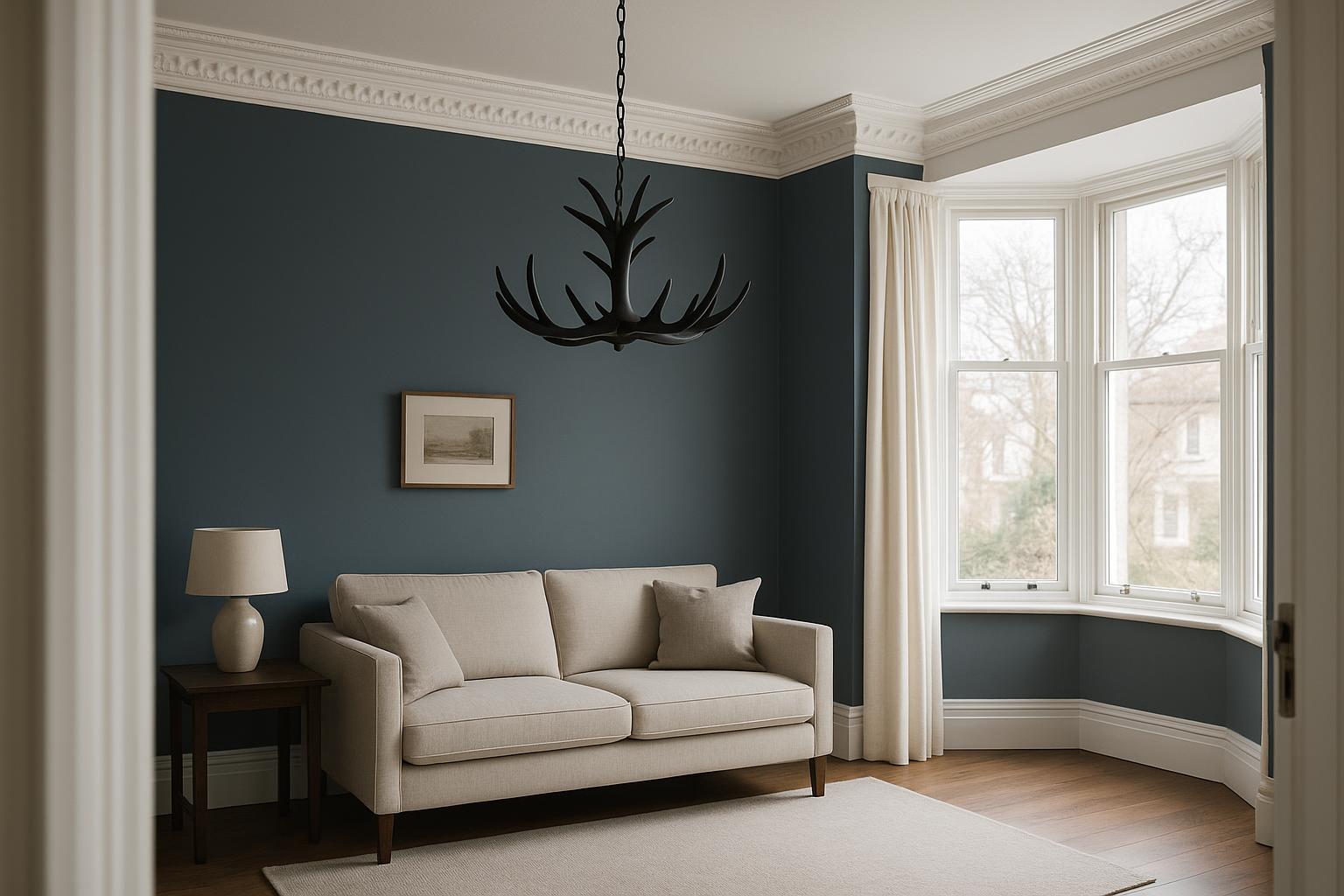
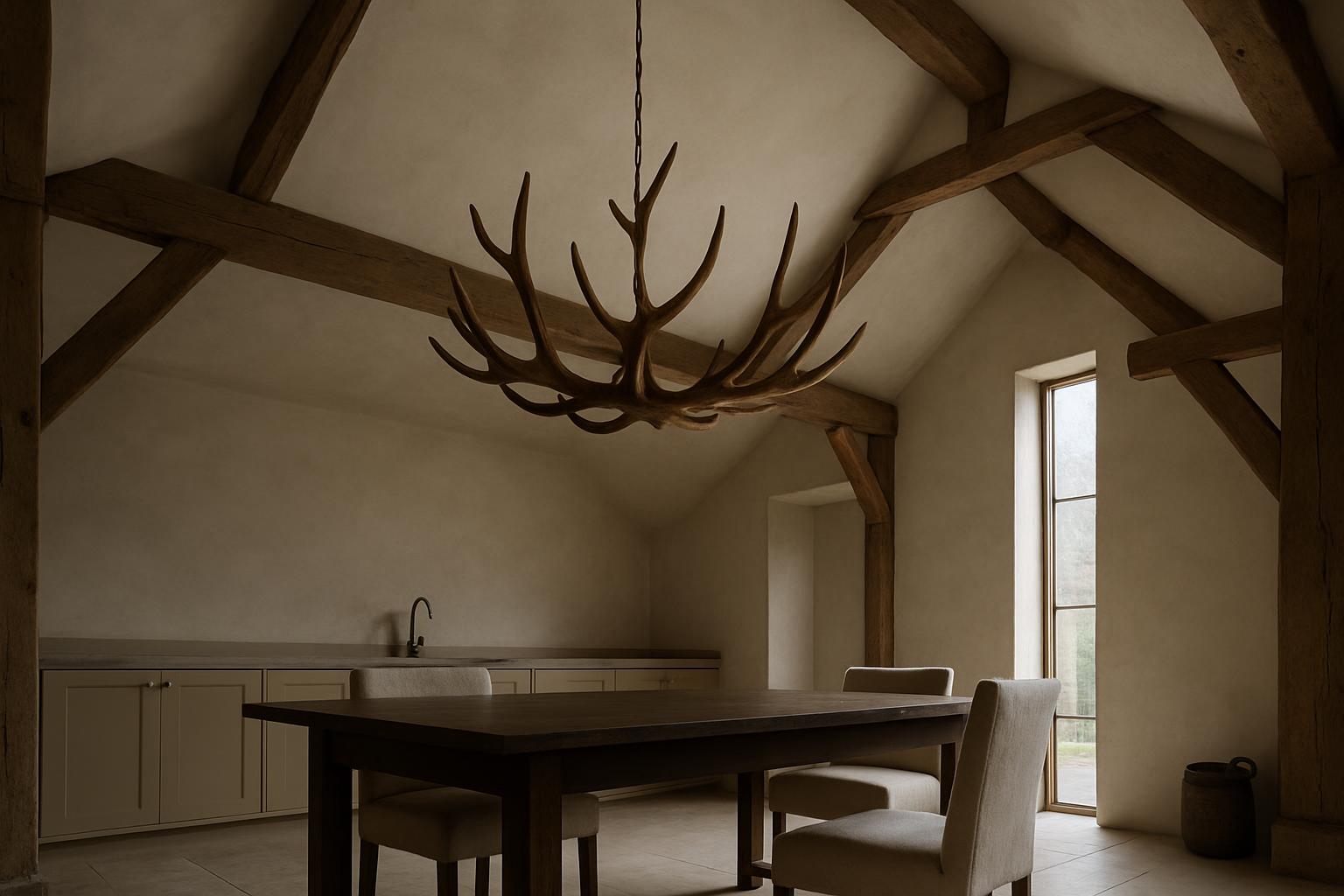
This is where luxury antler pendant lights can move beyond the familiar lodge look. Against plain plaster, limewash, deep paint colours or restrained joinery, the branching form reads more like ceiling sculpture. Linen, stone, dark timber and aged metal can support it without turning the room into a set.
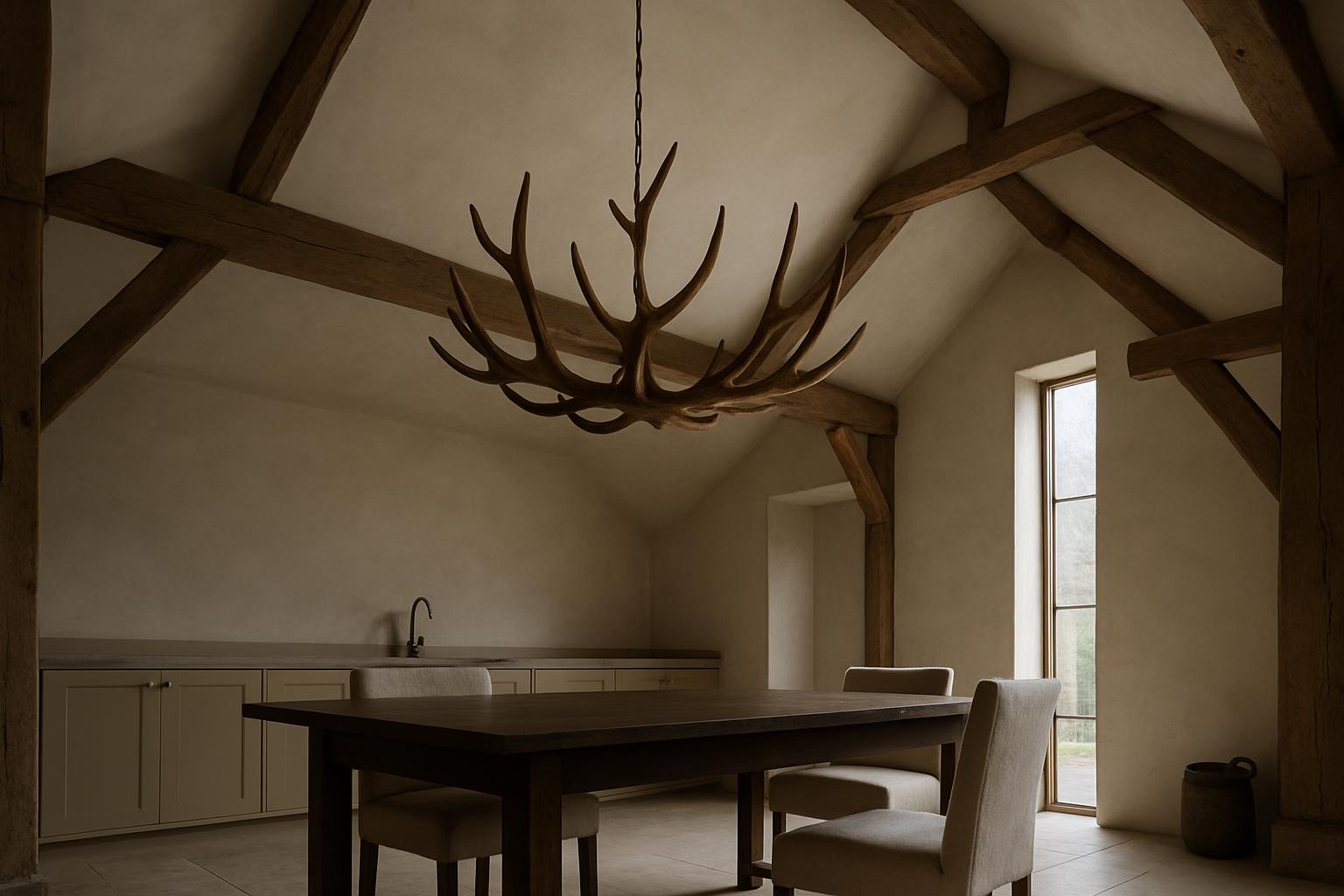
Restraint matters particularly in cottages and barn conversions. Exposed beams, old stone and uneven walls already provide plenty of character. Adding rustic antler lighting to every available surface can make those genuine architectural details less noticeable. One well-placed pendant, with quieter wall and table lights elsewhere, is usually the stronger decision.
Product dimensions are essential, but a single diameter does not explain how an antler fitting will occupy a room. Look for its width, body height and complete drop, including the ceiling canopy, chain, rod or flex. A design with branches that rise and spread may appear much larger from below than it does in a straight-on photograph.
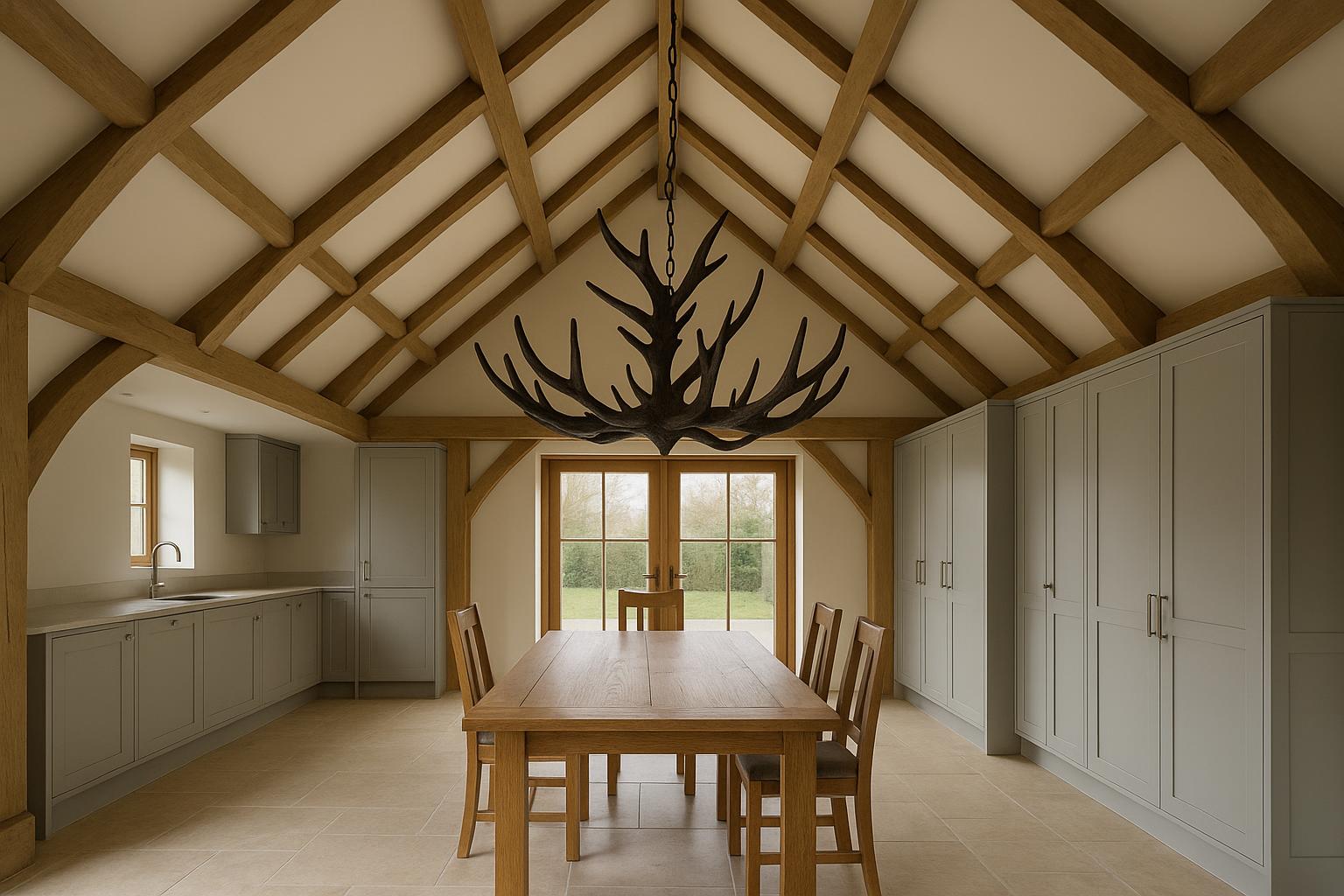
Record the ceiling height in metres and the proposed drop in centimetres, then consider the volume left beneath and around the fitting. A broad kitchen-diner with a relatively low ceiling may suit a shallow, horizontally spreading design. A stairwell or vaulted extension can accommodate a deeper arrangement because there is room to appreciate it from more than one level.
A simple mock-up is more useful than guesswork. Mark the outer width with removable tape, or suspend a lightweight cardboard outline at the proposed height. View it from the doorway and from a seated position. This quickly reveals whether the fitting feels substantial, cramped or unexpectedly low.
Do not assume the centre of the ceiling is the right location. Beams, roof slopes, skylights and period plasterwork can shift the visual balance. If there is a ceiling rose, check that its size, condition and position suit the canopy. The electrical point and ceiling structure must also be capable of supporting the fitting, so establish the installation requirements before ordering.
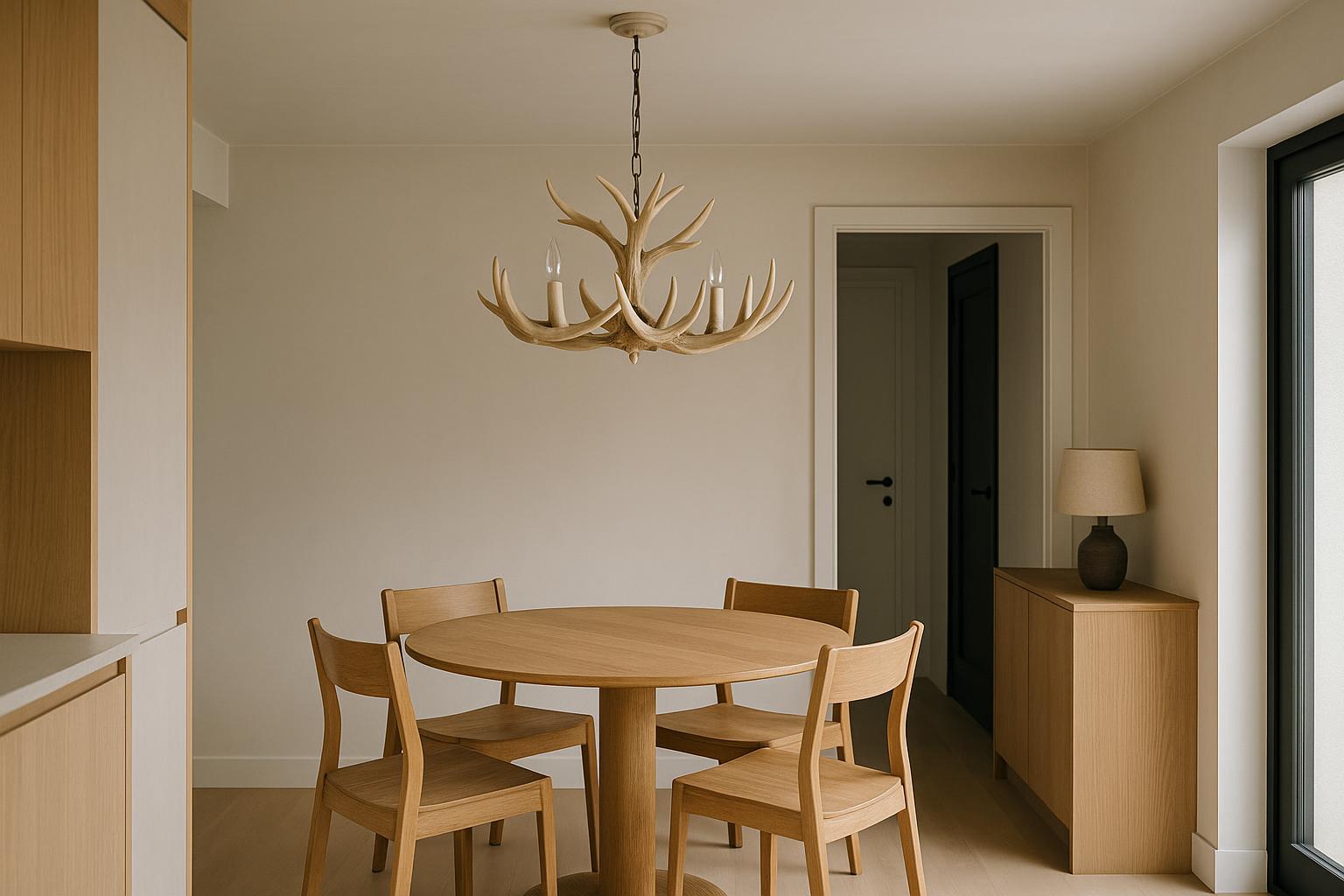
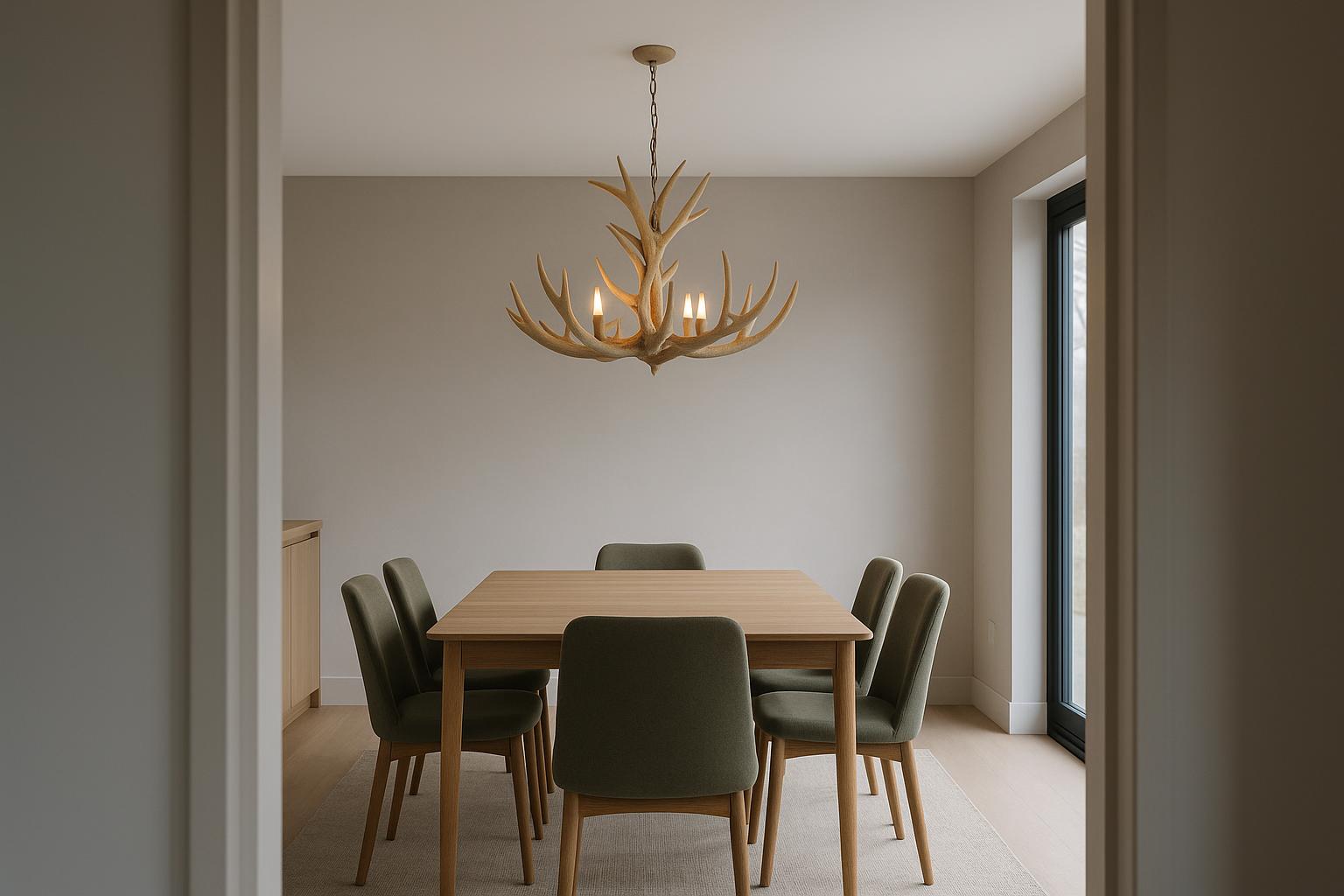
Over a dining table, the pendant should relate to the furniture rather than to an empty floor plan. A long table often needs a visually broad or elongated composition; a compact cluster can leave the table ends feeling detached. A round table can take a more concentrated form, provided its branches do not extend awkwardly into the surrounding circulation space.
To complement this topic, you can also read Room to Breathe: Siting a Large Antler Pendant.
Suspension height affects both appearance and use. The fitting should sit low enough to connect with the table, but not so low that it obscures faces or dominates conversation. Check the view while seated as well as standing. Chairs may move, but the table provides a dependable anchor and keeps people from walking directly beneath the lowest branches.
Open-plan rooms require a wider check. Stand in the kitchen, sitting area and any connecting hallway to see what will appear behind the pendant. Its outline may become confused against open shelving, exposed cookware or strongly patterned curtains. A plain wall, a closed run of cabinetry or a calm view towards garden doors will make the branches easier to read.
In a knocked-through Victorian terrace, centring the fitting over the dining table may produce a better view through the two reception rooms than centring it within the rear room itself. The most useful centre line is often the one established by furniture and movement, not by the walls.
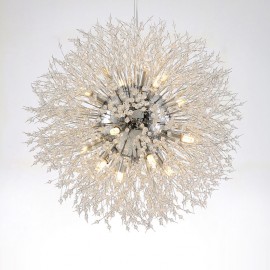
Antler pendants vary more in shape than their category name suggests. Some resemble a compact nest, while others form a low crown or spread around a conventional chandelier frame. Symmetrical designs tend to feel formal and settled. Looser branching introduces movement, but needs a calmer background and more empty space around it.

Choose that outline before comparing surface colours. Pale antler-inspired forms can feel less imposing beneath a modest ceiling, especially when the ceiling itself is light. Brown, black and weathered finishes create firmer definition and can hold their own in a tall room or against a deep wall colour.
Finish descriptions and photographs should be read carefully. Studio lighting and screen settings can change the apparent tone, while products that look similar may use different manufactured materials. Do not infer that a fitting contains natural antler from its appearance or from broad terms such as country style chandelier. Check the individual product description for the stated material, finish and construction.
In the same direction, Antler Pendant Lights Without the Hunting-Lodge Effect offers useful ideas for choosing home lighting more confidently.
Antler chandeliers are decorative fittings, even when they contain several bulbs. Their branching forms can produce lively shadows, and the light may not reach working surfaces evenly. That is not a fault if the rest of the scheme is planned to support them.
In a kitchen-diner, use separate task lighting for preparation areas rather than relying on the pendant above the table. Wall lights, a floor lamp or a discreet lamp on a sideboard can soften the sitting and dining zones. On a tall landing, lower-level wall lighting will make the route comfortable to use while allowing the pendant to remain the main visual feature.
Bulb choice changes the character of both the fitting and the room. Warm light generally softens pale walls and enriches brown, bronze and timber tones during darker winter afternoons. Before planning a dimmed evening effect, confirm the required bulb cap, permitted bulb type and wattage, and whether the fitting, bulbs and control are all suitable for dimming.
A period room does not require a period-style pendant. In a Georgian townhouse or Edwardian semi, the irregular antler outline can provide an effective counterpoint to cornicing, ceiling roses and orderly proportions. Keeping the furniture and colour palette controlled makes that contrast look intentional.
Compact homes need a different approach. In a bungalow, maisonette or London flat with limited ceiling height, look for a shallow body and modest drop. Positioning it over a fixed table is safer and more coherent than allowing a broad arrangement to project into a route between rooms.
For more consistent lighting throughout the home, the article The Room Test for Antler Pendant Lights: Scale, Drop and Glare may also be helpful.
New-build interiors can sometimes make a dark fitting look isolated against uninterrupted white walls. A timber table, dark-framed doors or a restrained repeat of the pendant's deeper tone can give it context. There is no need to match every metal finish. Repeating one related colour in a handle, frame or lamp base is often sufficient.
Large barn-style extensions can accommodate more substantial lodge lighting, but generous space is not an invitation to fill every part of the ceiling void. Leave clear air around the branches and preserve views of beams, roof structure and glazing. The pendant should help organise the volume, not conceal it.
Before committing to a design, compare the fitting's dimensions with the ceiling height, table size and nearest doors or walkways. Check its total weight, assembly requirements, suspension adjustment and installation instructions. Intricate fittings also need sensible cleaning access; branches above a dining table will show dust, so consider how they can be reached without moving half the room.

Electrical work and physical support must suit the particular fitting and ceiling. Heavy pendants should not be attached on the assumption that an existing rose or plasterboard fixing is adequate. Follow the manufacturer's instructions and use a suitably qualified electrician where required.
Once the room measurements, sightlines and lighting layers are clear, browse Lighting Go's collection of luxury antler pendant lights. The best choice is not automatically the largest or most elaborate. It is the fitting whose outline has enough room to breathe and whose light works comfortably with the architecture below it.
Antler Pendant Lights Without the Lodge Theme
Will It Fit the View? Choosing Antler Pendants for a Country Home
Room to Branch Out: Sizing an Antler Pendant for a Hallway
Before You Hang It: Antler Pendants and Living-Room Sightlines
How to Style an Antler Pendant Without Overdoing It
Hot Tags: Wood Lights, Glass Pendant Lights, Discount Pendant Lights, Pendant Lights UK, Pendant Drop Lights, Discount Chandeliers UK, Flush Mount Fans, Huge Chandeliers, Ceiling Lights Sale, Glass Wall Sconces, Antler Chandeliers, Modern Bathroom Design, Dimmable Ceiling Lights, Bedroom Lights, Bathroom Lights, Kitchen Lighting, Modern Chandeliers, Lighting Ideas
Copyright © 2030 LightingGo. All rights reserved.