


An antler pendant can work far beyond a lodge-style room. The key is to judge its outline, drop and finish against...
No featured images
1 Review(s) 
An antler pendant can work far beyond a lodge-style room. The key is to judge its outline, drop and finish against...
An antler pendant can bring character to a modest room without overwhelming it. The right choice depends on its...
An antler pendant can look sculptural rather than rustic when its scale, outline and position respond carefully to...
A practical approach to choosing the width, visual weight and drop of an antler pendant while respecting furniture,...
Antler pendant lights can bring sculptural character to a room without dictating a rustic theme. The key is to...
No featured images
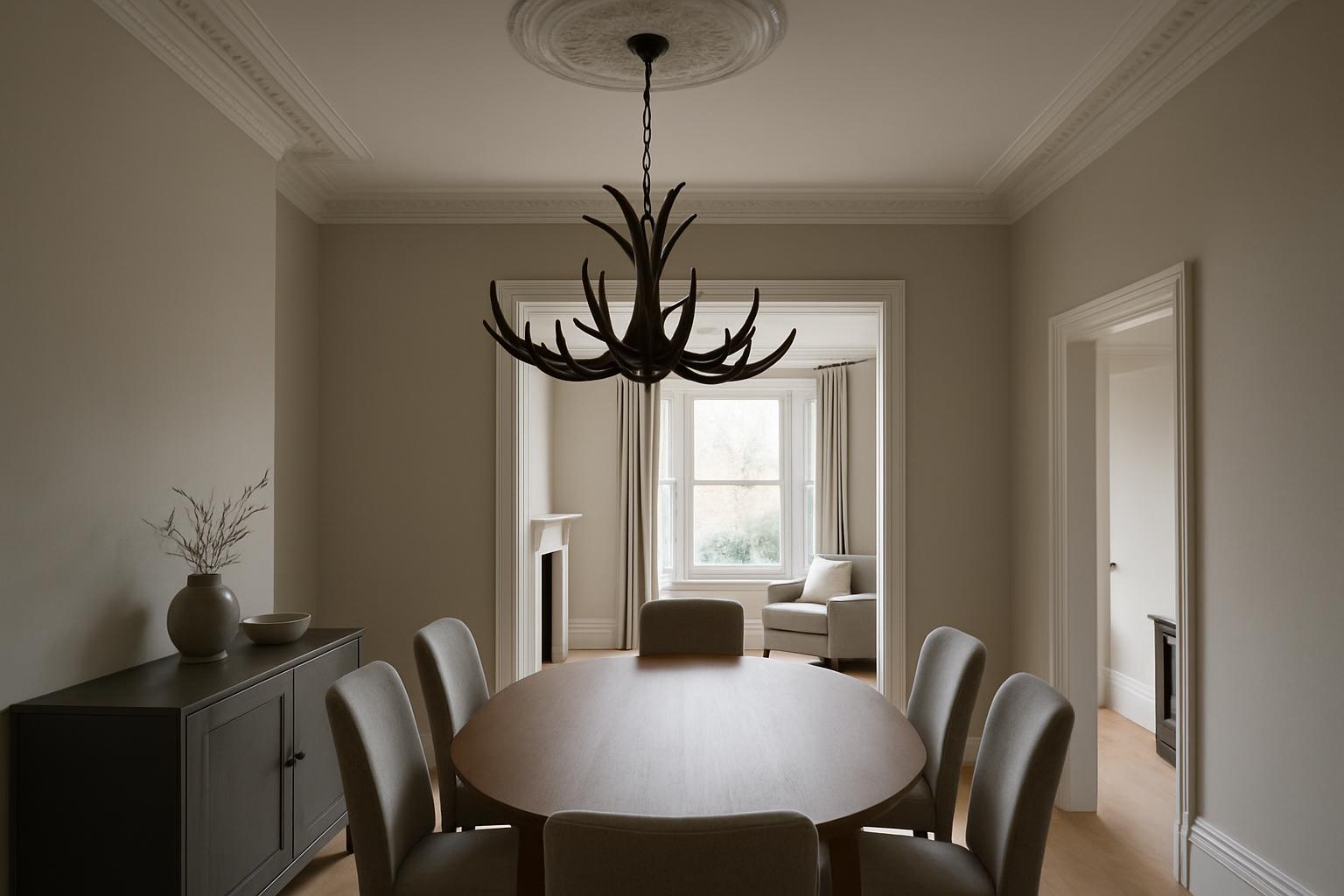
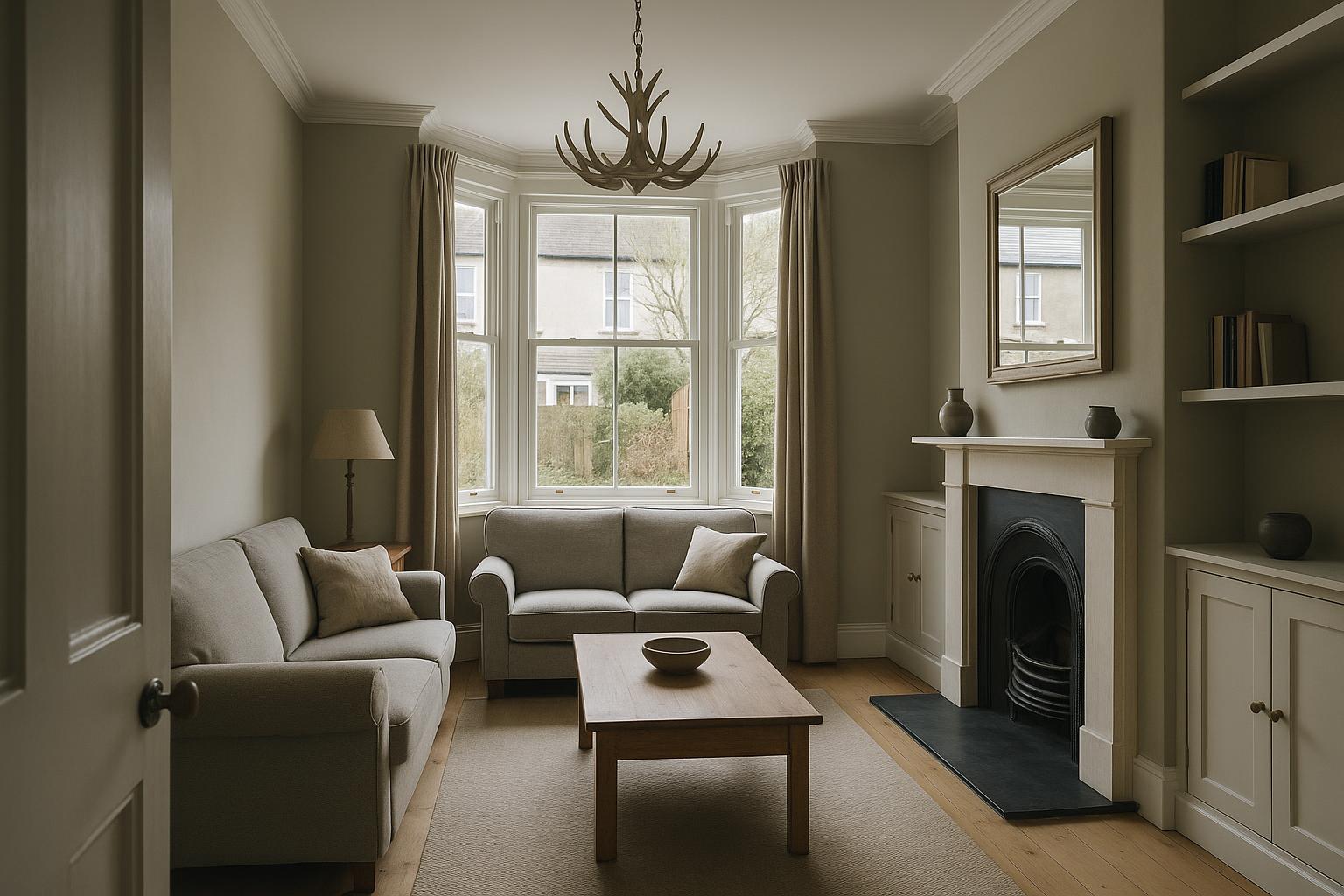
An antler pendant is chosen as much for its outline as for its light. Branches extend into the room, cast shadows and remain noticeable even when the lamps are off. A design that appears restrained against a plain studio backdrop can feel much busier once it is seen alongside cupboards, beams, windows and furniture.
This makes the view through the room a better starting point than floor area alone. Before you buy antler pendant lights online, record the dimensions of the space and study the proposed position from the places where the fitting will most often be seen. The aim is not to make a sculptural light disappear, but to give its shape enough room to be understood.
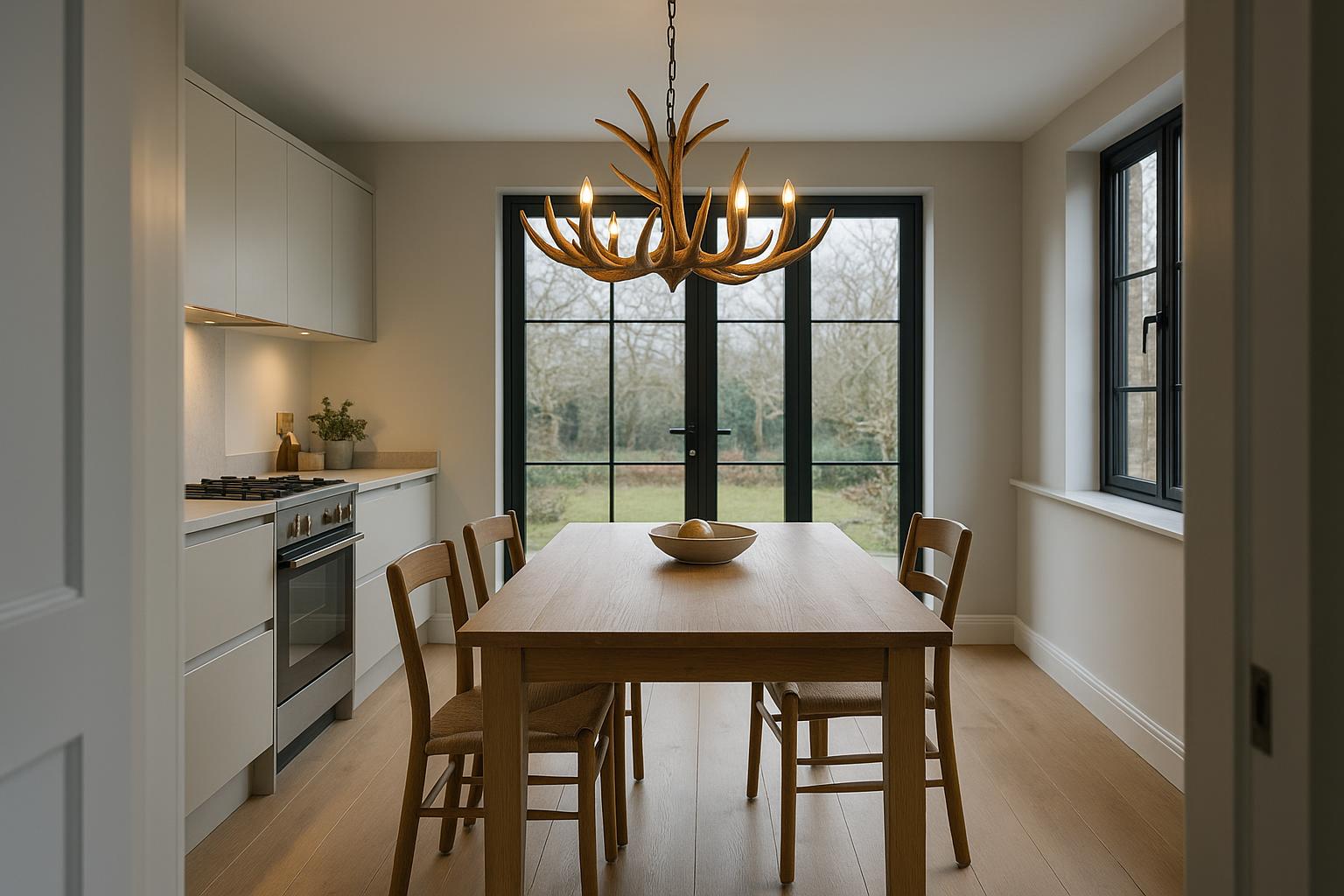
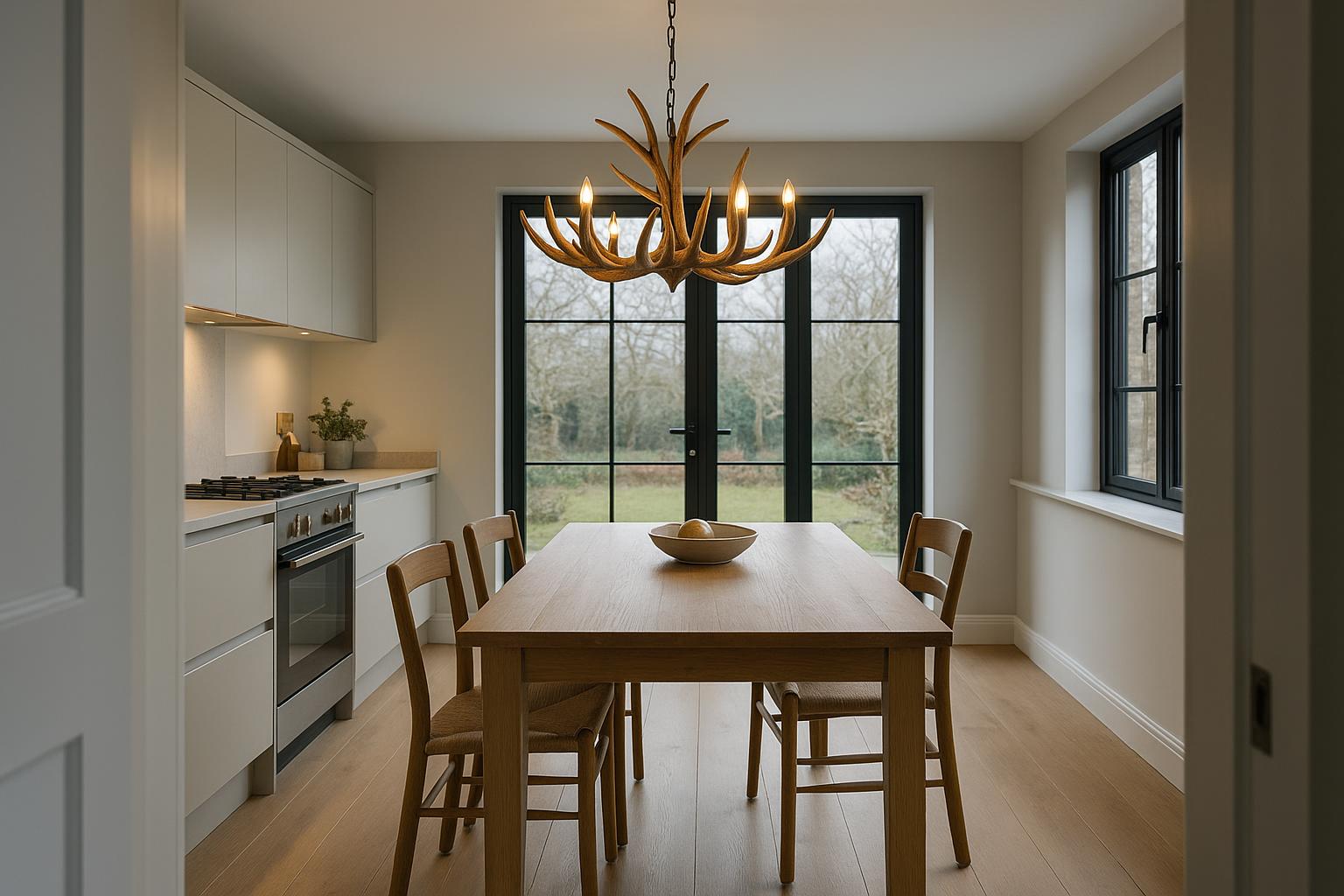
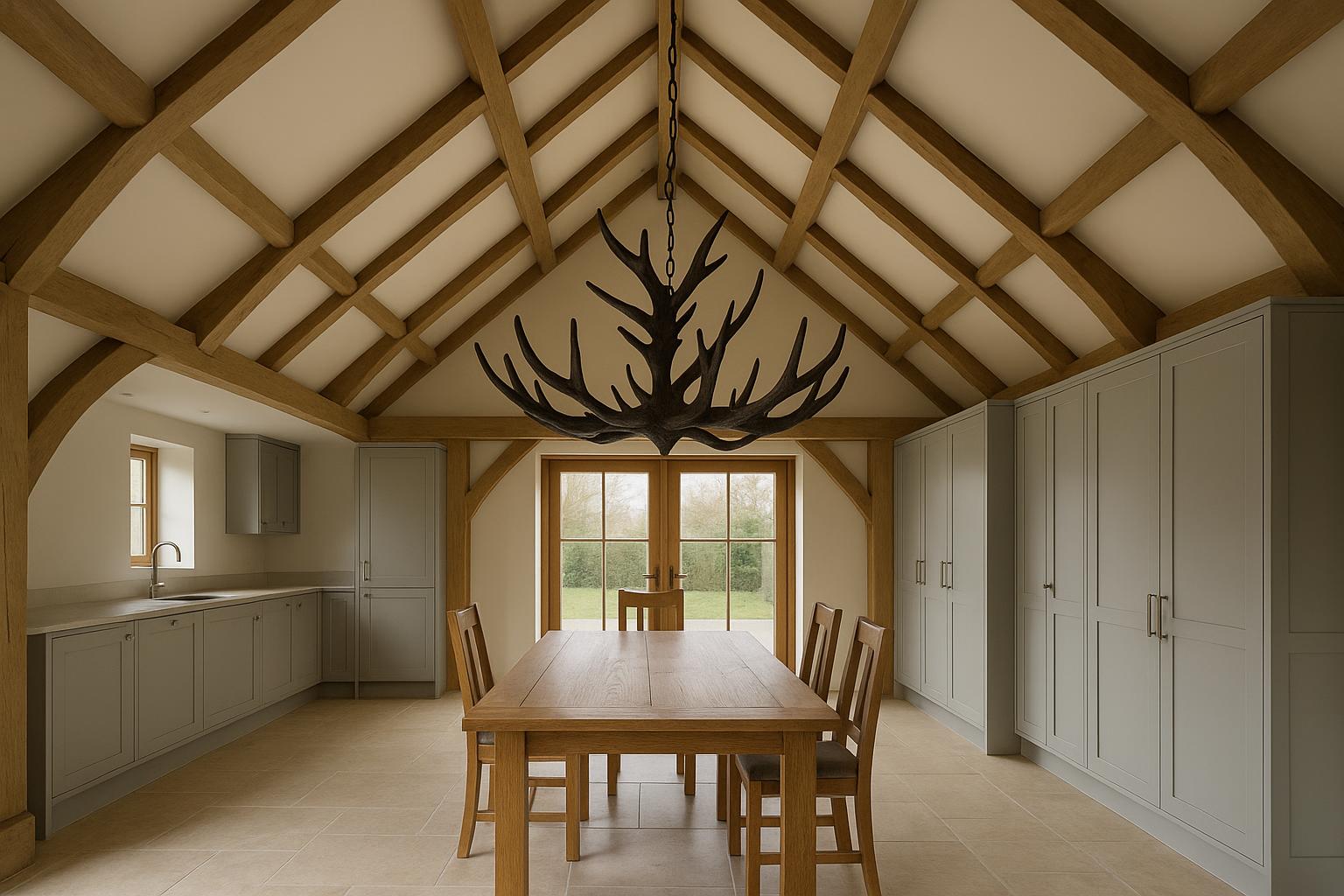
Stand in the doorway and look towards the proposed ceiling point. In a kitchen-diner, that view might already contain wall cupboards, a cooker hood, glazed garden doors and the backs of dining chairs. An antler form placed across all four can turn a clear view into a knot of competing lines.

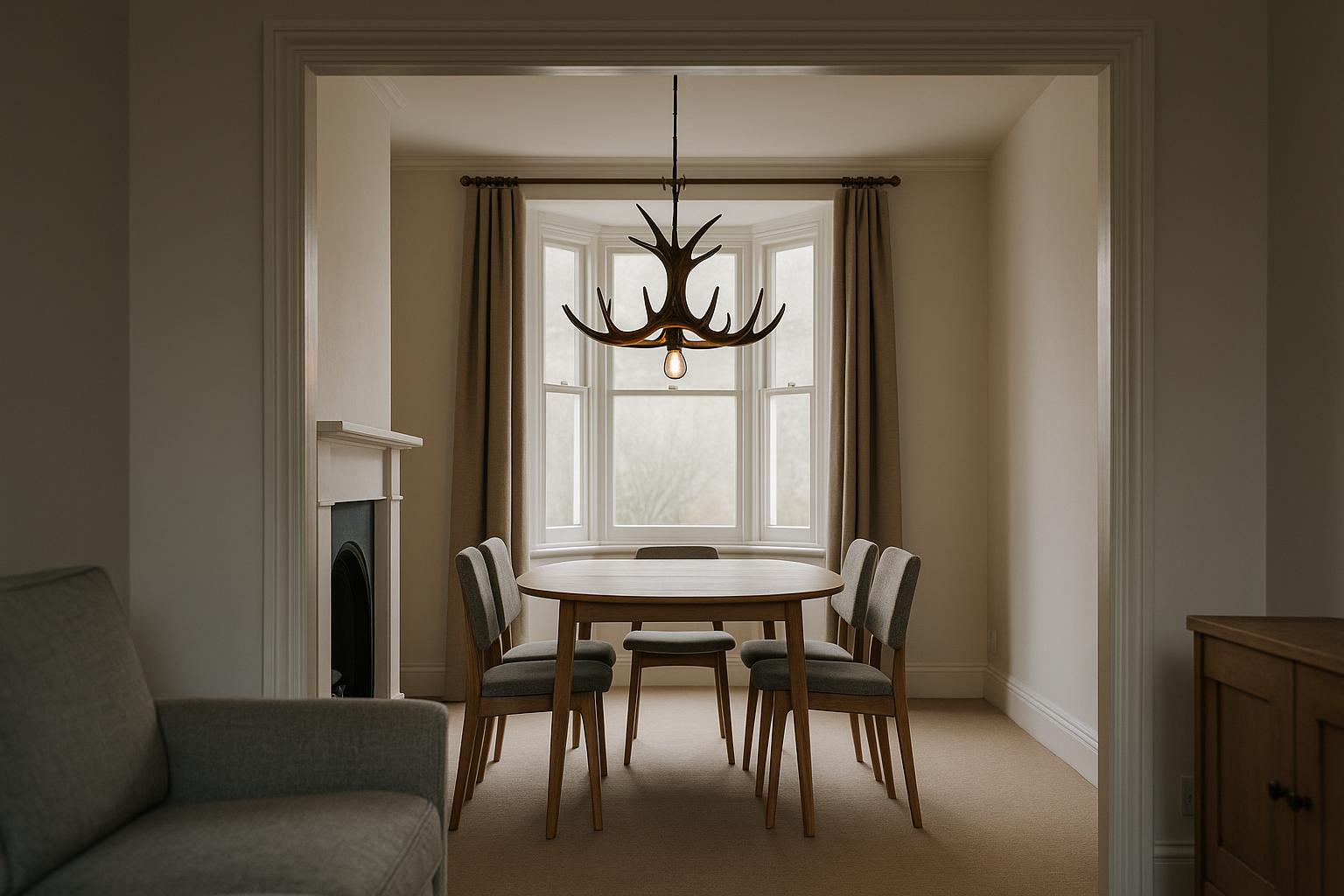
Repeat the exercise from the table, kitchen worktop and any adjoining sitting area. In a sitting room, check the view from the sofa as well as from the hallway. Bay windows, shelving, picture arrangements and a chimney breast can all affect whether the pendant has a calm background.
Take a photograph from each position. A photograph compresses the scene and makes overlaps easier to spot. If the branches disappear against dark beams or a crowded bookcase, moving the ceiling point may not be practical, but a narrower or paler fitting could produce a clearer result.
Online photographs do not show how a fitting will occupy your room. Write down its stated width, depth, body height and suspension range in millimetres. Check whether the listed height covers the decorative body alone or includes the chain, cable, rod and mounting canopy.
Use removable masking tape to mark the width and depth on the dining table or floor. Then hang a lightweight length of string from the ceiling to show the lowest point. For an irregular design, add short horizontal pieces of card or paper to suggest the furthest-reaching branches. This rough model is more useful than trying to imagine the dimensions from a tape measure held in mid-air.
Look at the outline from a seated position and while standing. If it seems doubtful, photograph the model. It should reveal whether the fitting will obscure a garden view, sit uncomfortably close to a cupboard door or appear too small above a substantial table.
A pendant above a dining table or fixed island occupies a protected area where people do not normally walk beneath it. Even there, the lowest branches should not interrupt conversation across the surface or create glare directly in seated sightlines. Test the position with the chairs pulled out, rather than judging it from an empty room.
To complement this topic, you can also read Beyond Rustic: A Room-First Guide to Antler Pendant Lights.
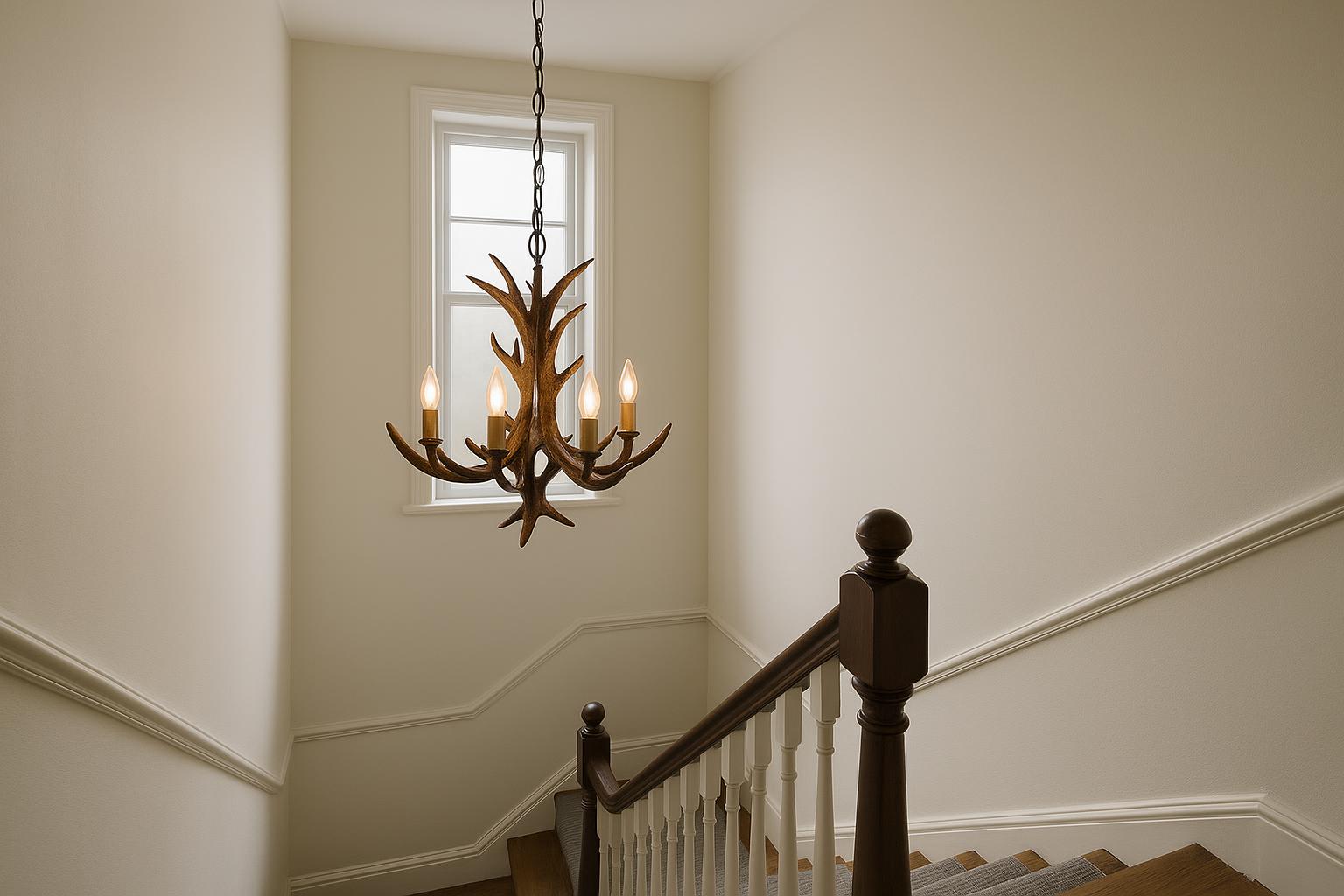
An open part of the room requires a different approach. Check the lowest point as well as every sideways projection. Door swings, tall cabinet doors and routes between the kitchen and garden all need clear space. In a stairwell, inspect the proposed drop from the lower flight, the turn of the stairs and the upper landing. A fitting can be safely above one route yet feel intrusive from another level.
Low ceilings often favour a compact body and short suspension. A wide fitting is not automatically unsuitable, but it needs a secure visual and physical zone beneath it. If the room cannot provide that zone, an antler flush light or wall light may be a more convincing use of the motif.
The boundary between a pendant and a chandelier is not consistent across retailers. One compact multi-lamp fitting may be called a chandelier, while a broad single-tier design is listed as a pendant. Compare the actual dimensions and construction rather than relying on the product name.

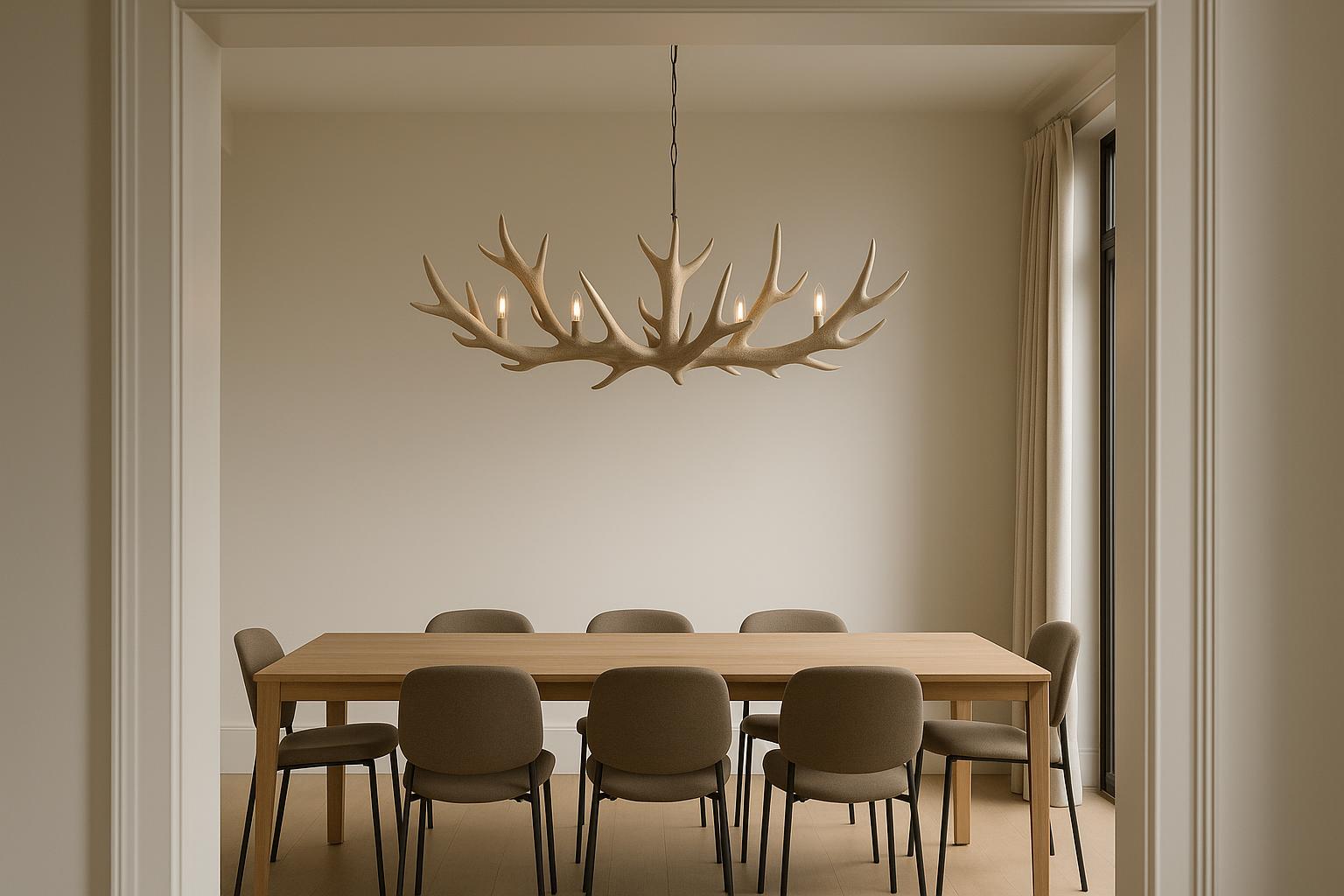
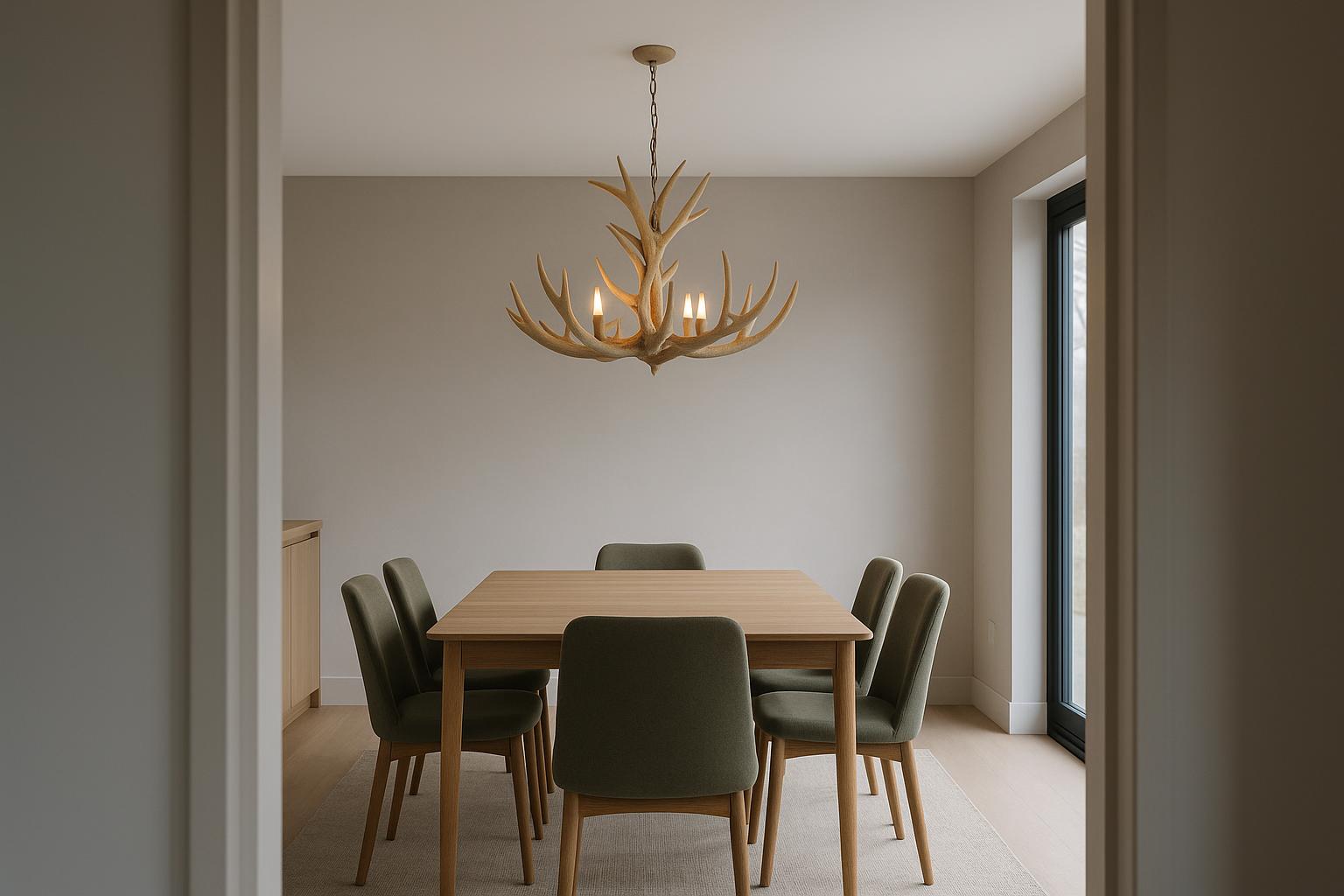
Open branches with visible gaps tend to preserve more of the background. Closely packed forms create a heavier visual mass, even when their overall width is smaller. Also note whether the design spreads horizontally, forms a rounded cluster or hangs in a narrow vertical arrangement.
This is particularly useful when comparing rustic antler lighting with larger antler chandeliers. A country style chandelier may suit a vaulted extension or generous dining room, while a concentrated pendant can bring the same naturalistic line into a Victorian terrace or new-build kitchen without suggesting a fully themed lodge interior.
A striking silhouette does not guarantee useful room light. Examine the number and position of the lamps, whether they face up or down, and whether shades or branches obstruct their spread. Exposed lamps can look lively but may be uncomfortable when they sit close to eye level.
Read the product information for the required lamp caps, maximum wattage, supplied light sources and dimming compatibility. If a dimmer is planned, the fitting, lamps and control must be mutually compatible. Avoid assuming that every LED lamp will work with every dimming system.
In the same direction, Beyond the Lodge: Antler Pendant Light Ideas for British Homes offers useful ideas for choosing home lighting more confidently.
Plan other light sources at the same time. Task lighting is still needed over kitchen worktops, while table and floor lamps make a sitting room more comfortable on dark winter afternoons. The pendant can provide general light and atmosphere without carrying the whole scheme by itself.
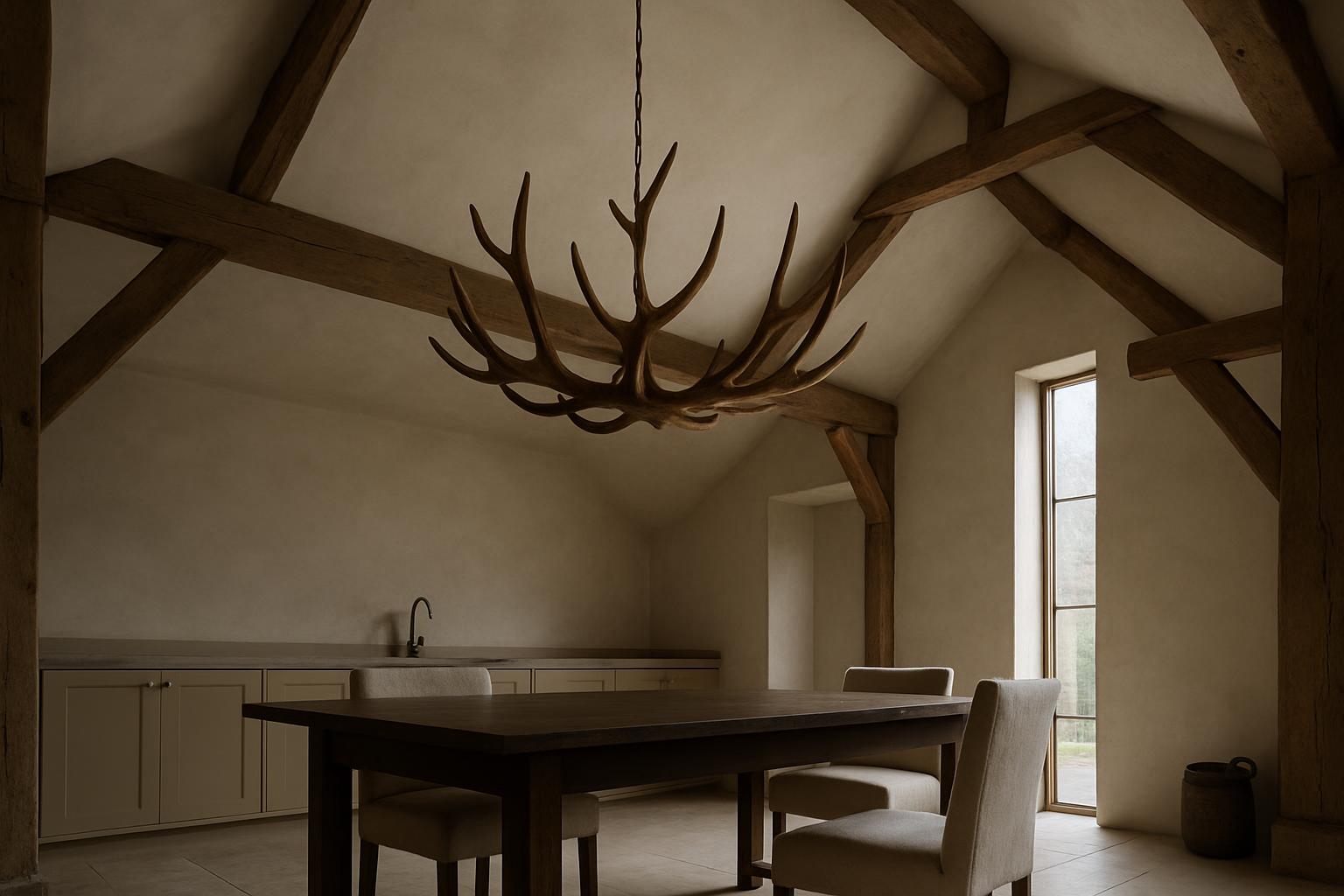
Finish changes the apparent scale. Dark brown, charcoal and black branches form a firm outline against pale plaster, which can be effective in a large room but emphatic in a compact one. Cream, soft grey and lightly washed finishes usually create less contrast, although they may stand out against timber or a coloured ceiling.
View finish photographs on more than one screen if colour is important, as displays vary. Product images may also be taken under warm lighting that alters the appearance of brown and cream tones. Use the written material and finish description alongside the photographs, and do not infer that antlers are natural, reclaimed or manufactured from their appearance alone.
There is little need to repeat the antler motif elsewhere. A dark fitting can relate quietly to window frames, ironmongery or chair legs; a pale one may sit well with oak, linen and limewashed surfaces. Plain ceramics, smooth stone and simple upholstery prevent lodge lighting from becoming a decorative theme.
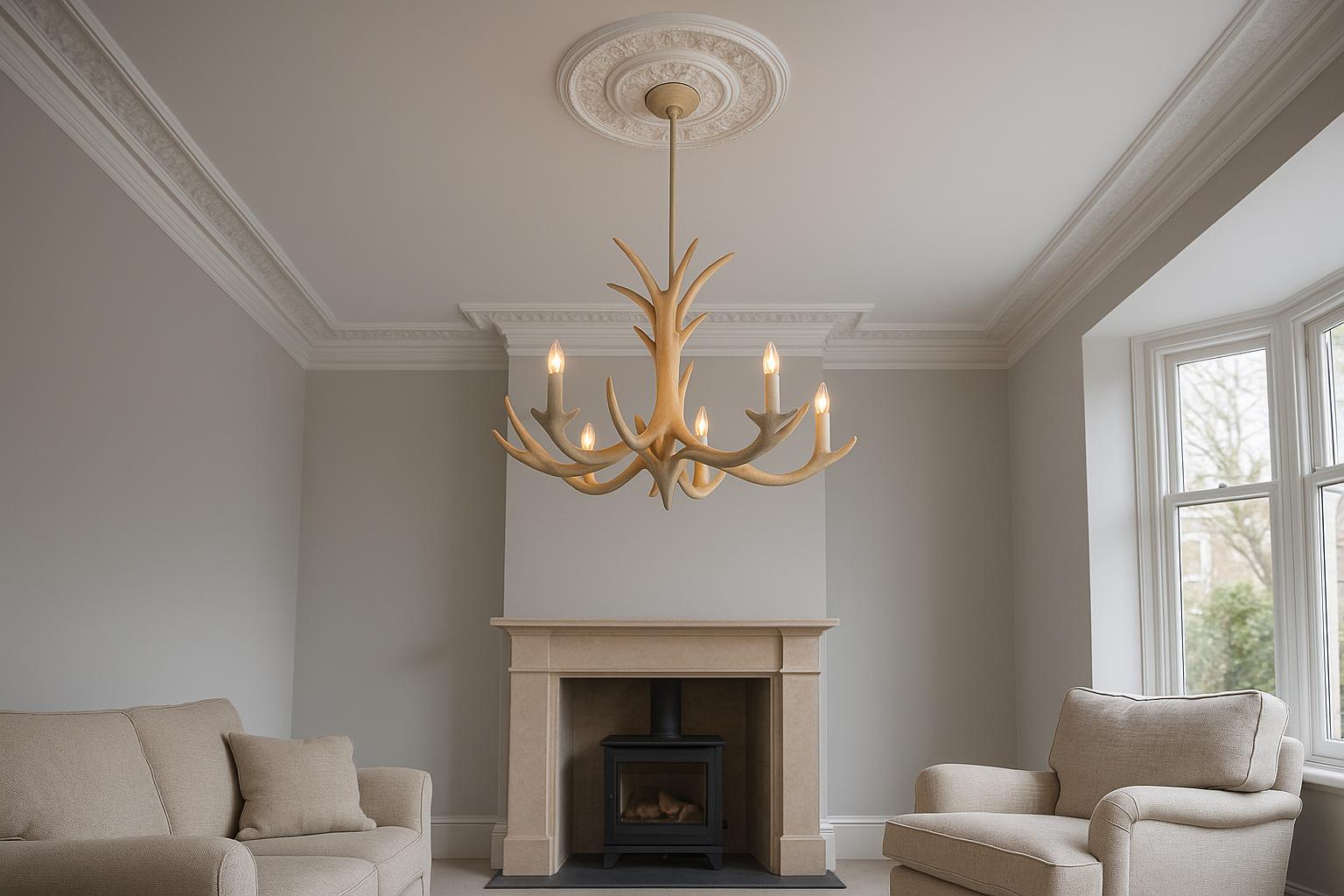
Period details can either frame the pendant or compete with it. In a Victorian or Edwardian room, measure the ceiling rose and compare it with the fitting’s mounting canopy. Confirm how much plasterwork would remain visible and ask an electrician to assess the fixing position rather than assuming the existing light point can support a heavier fitting.
For more consistent lighting throughout the home, the article How to Style an Antler Pendant Without Overdoing It may also be helpful.
Exposed beams need similar care. Leave enough visual separation for the branches to read independently, and check that the suspension does not place them against uneven timber. Beneath a sloping or vaulted ceiling, confirm whether the supplied canopy and suspension method suit the intended position.
Weight and assembly also matter. Check the packaged and assembled dimensions, particularly if access is through a narrow hallway, loft stair or tight landing. A broad fitting may arrive in sections, but this should be confirmed from the product information rather than assumed.
Keep the room notes beside you while comparing products. For each fitting, record overall width and depth, decorative body height, minimum and maximum drop, canopy size, weight, lamp requirements, material, finish and assembly details. Remove any option that exceeds the space you marked out, however appealing its styled photograph may be.

With those limits established, browse Lighting Go’s antler pendant lights and compare only the fittings that suit the available ceiling height and sightlines. A shortlist based on measured space is less likely to be swayed by photographic scale.
The right pendant should remain distinctive without interrupting movement, views or conversation. Give the branches a quiet background, provide other light where tasks demand it and arrange installation with an electrician who can assess the ceiling support and electrical connection.
Room to Branch Out: Sizing an Antler Pendant for a Hallway
How to Style an Antler Pendant Without Overdoing It
Beyond Rustic: A Room-First Guide to Antler Pendant Lights
Antler Pendant Lights Without the Hunting-Lodge Effect
How to Make an Antler Pendant Feel Architectural, Not Themed
Hot Tags: Wood Lights, Glass Pendant Lights, Discount Pendant Lights, Pendant Lights UK, Pendant Drop Lights, Discount Chandeliers UK, Flush Mount Fans, Huge Chandeliers, Ceiling Lights Sale, Glass Wall Sconces, Antler Chandeliers, Modern Bathroom Design, Dimmable Ceiling Lights, Bedroom Lights, Bathroom Lights, Kitchen Lighting, Modern Chandeliers, Lighting Ideas
Copyright © 2030 LightingGo. All rights reserved.