


An antler pendant can work far beyond a lodge-style room. The key is to judge its outline, drop and finish against...
No featured images
1 Review(s) 
An antler pendant can work far beyond a lodge-style room. The key is to judge its outline, drop and finish against...
An antler pendant can bring character to a modest room without overwhelming it. The right choice depends on its...
An antler pendant can look sculptural rather than rustic when its scale, outline and position respond carefully to...
A practical approach to choosing the width, visual weight and drop of an antler pendant while respecting furniture,...
Antler pendant lights can bring sculptural character to a room without dictating a rustic theme. The key is to...
No featured images
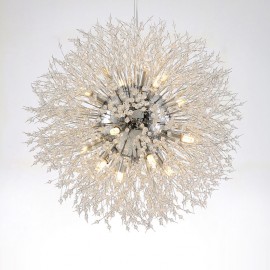
An antler pendant is defined as much by the gaps between its branches as by the fitting itself. That open, irregular outline makes it visually larger than a drum shade or simple globe with similar listed dimensions. It also means the wall, window or furniture seen behind it becomes part of the composition.

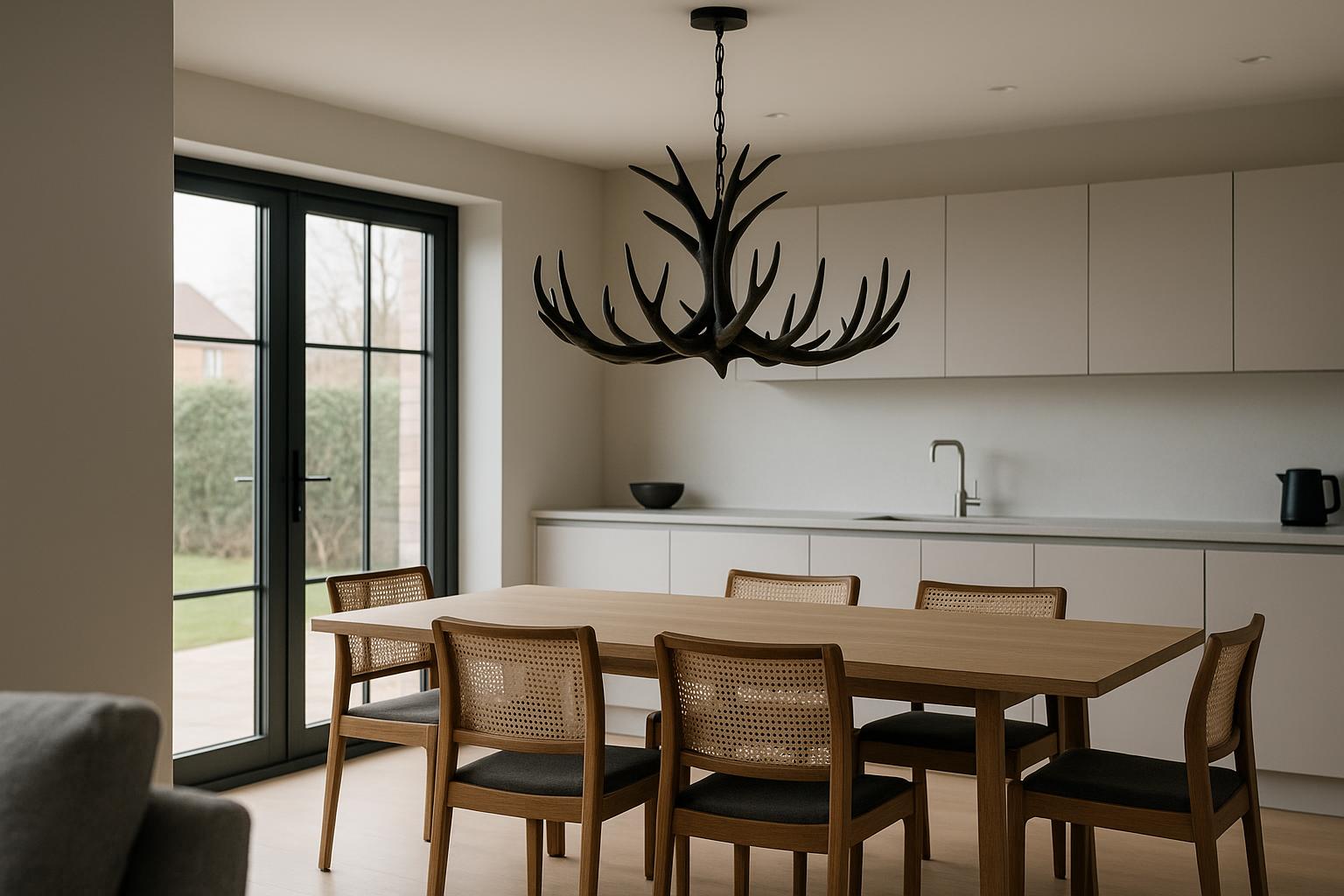
Begin by looking at the room without thinking about rustic styling. Note its strongest lines: a pitched roof, long dining table, chimney breast, run of cabinetry or broad set of garden doors. The pendant should either reinforce that geometry or provide a deliberate contrast. A branching form can soften the straight edges of a new-build kitchen just as effectively as it can sit beneath old beams.
This approach helps prevent the familiar lodge effect. Antlers already carry a strong visual association, so they do not need support from tartan, wildlife prints, rough timber and stone at the same time. Treated as a single sculptural element, the fitting has far more range.
A statement ceiling light needs an obvious relationship with something below it. A dining table, kitchen island, stairwell or defined seating group provides that anchor. Suspending a large pendant in the geographical centre of an open-plan room can leave it appearing detached, particularly when the furniture is arranged off-centre.
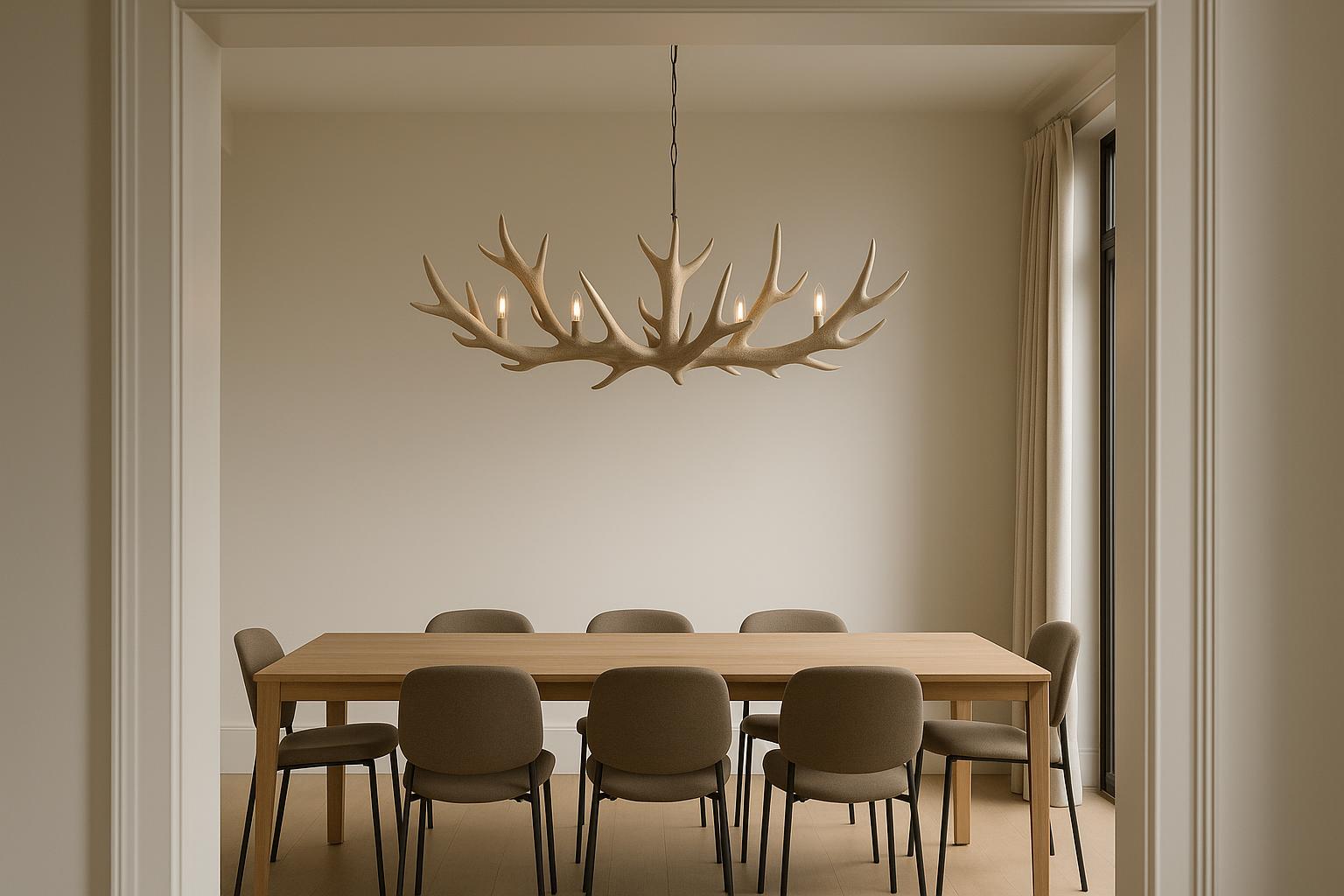
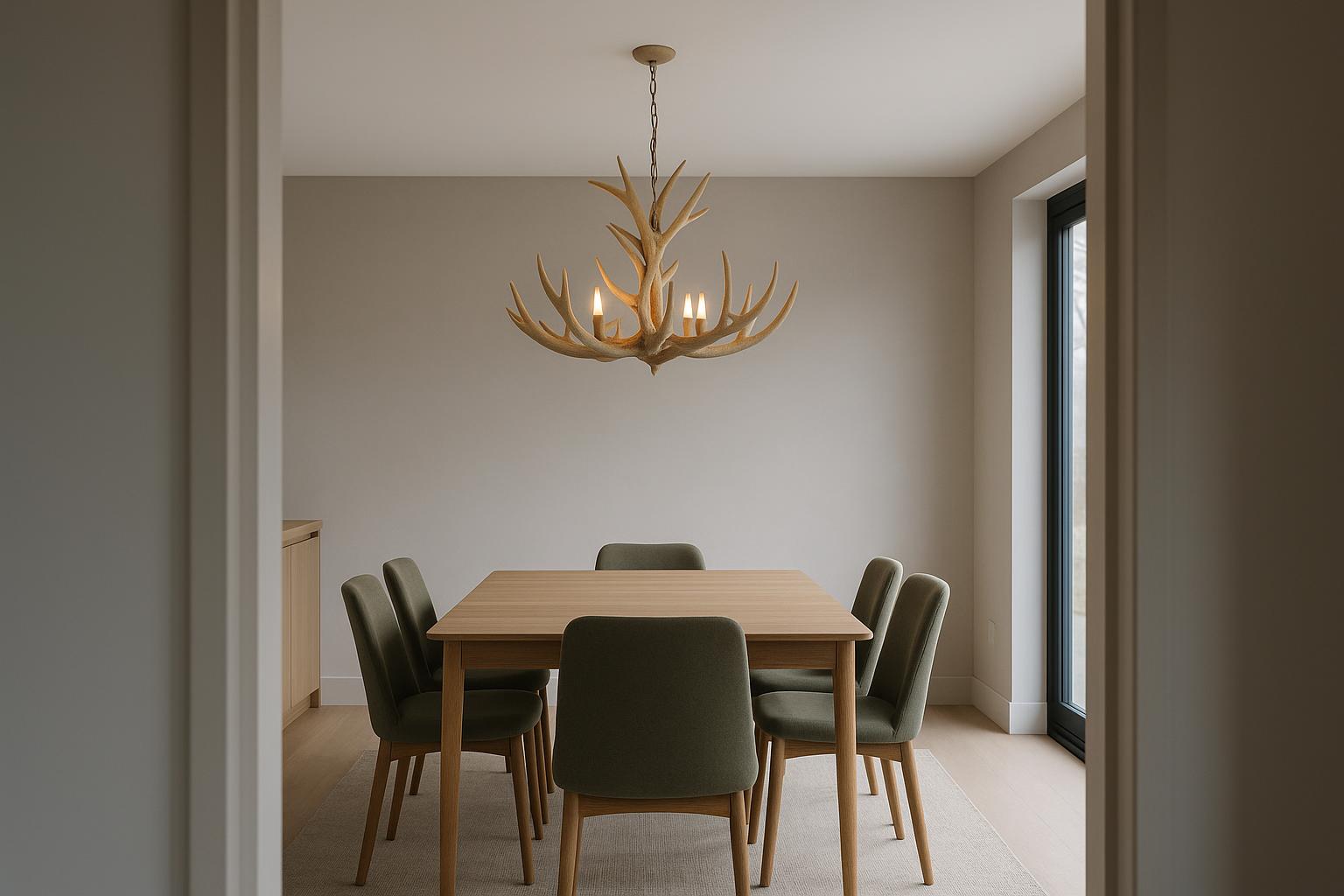
Let the object beneath the light guide both position and shape. A broad, rounded design can suit a square dining area or circular table. A more linear arrangement often sits comfortably above a rectangular table or island. The forms need not match exactly, but their proportions should feel related.
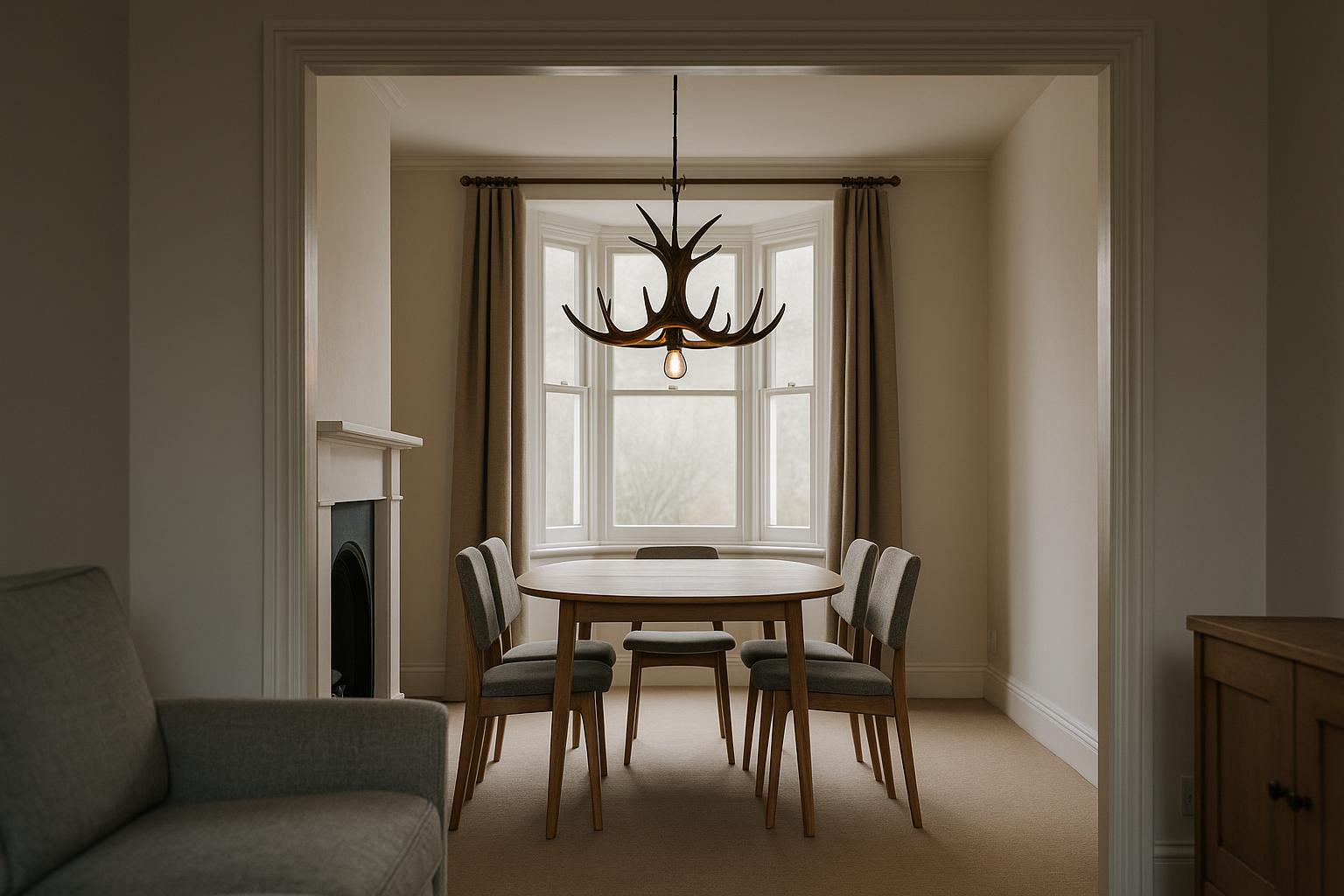
In a bay-window dining room, the table may sit well away from the original ceiling point. Moving the fitting can produce a much more convincing result than compromising the furniture layout, but any alteration to the electrical position should be assessed and carried out by a suitably qualified electrician.
Product dimensions are essential, yet they do not fully communicate the visual weight of projecting branches. Before ordering, mark the fitting’s maximum width on the floor with masking tape or sheets of newspaper. Then hang string from the proposed ceiling point to show its lowest edge. Viewing this simple outline from the doorway and from a chair is more useful than relying on a photograph taken in a much larger room.
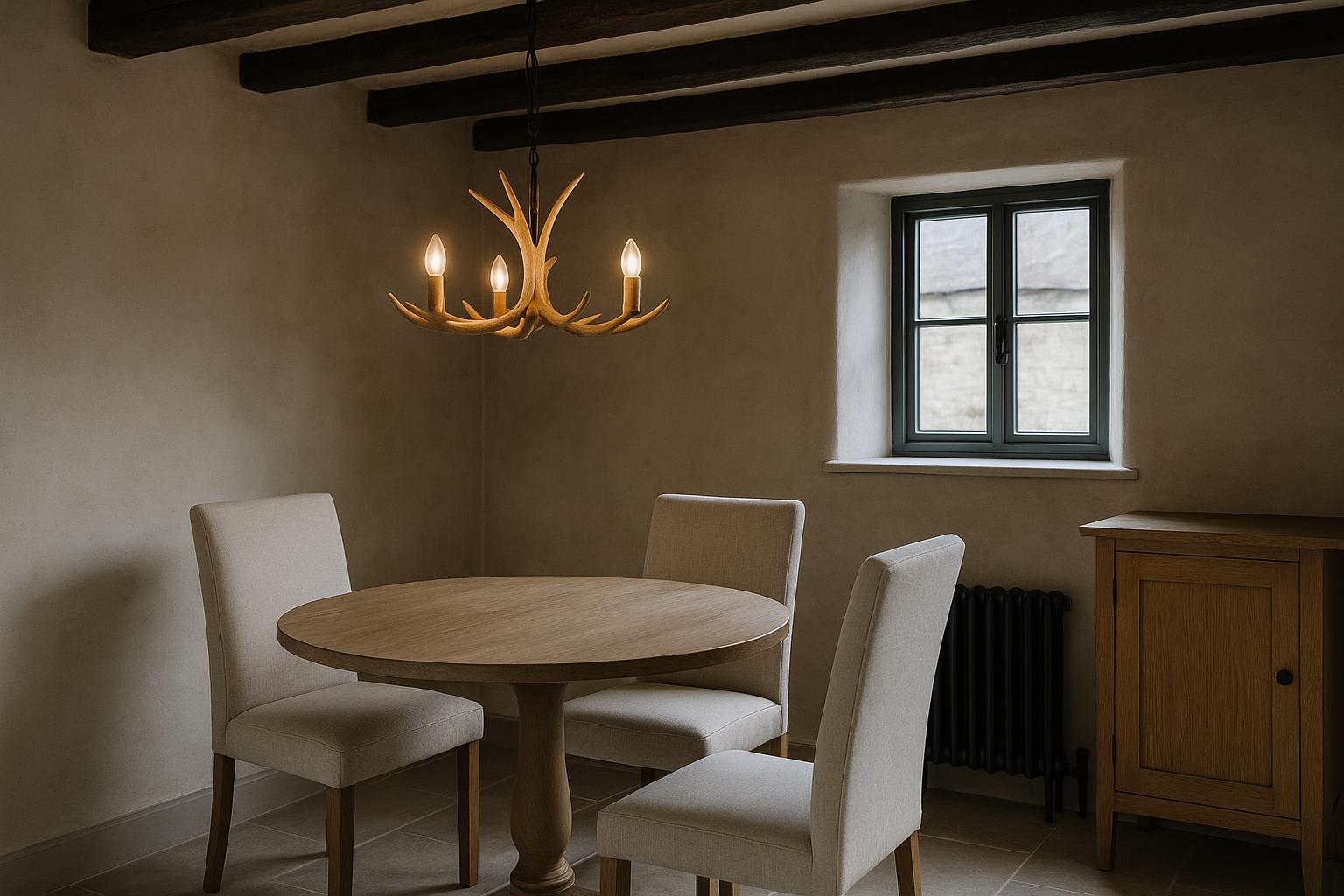
Low ceilings call for particular restraint. A shallow fitting can still have character, but it needs enough clearance to avoid making the room feel compressed. In a compact cottage dining room, a smaller pendant positioned over the table may work because people do not walk directly beneath it. The same drop in a hallway or open circulation route could be intrusive.
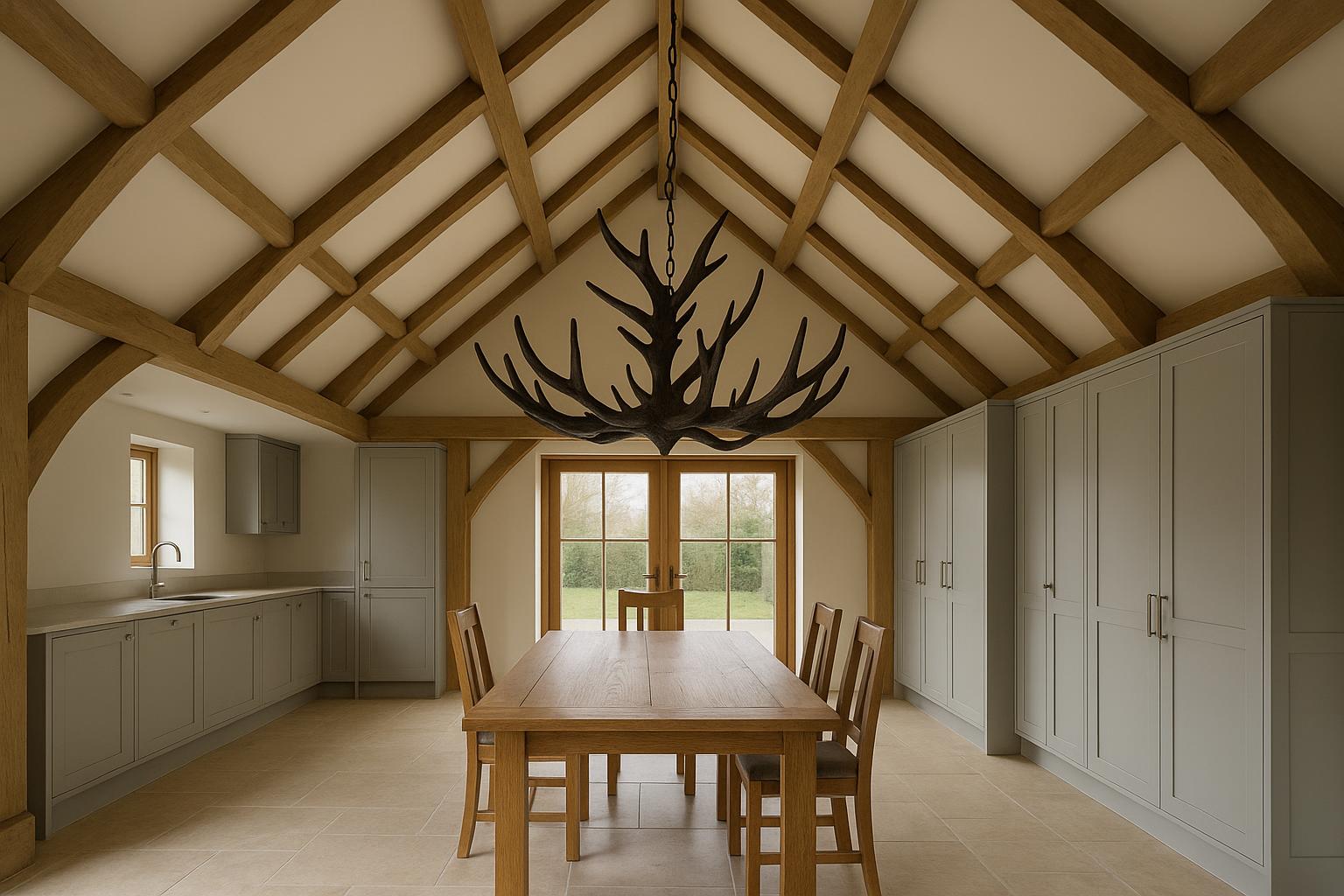
High and pitched ceilings create the opposite problem. A small fitting on a long cable may look stranded in the void. Here, both the body of the pendant and its suspension need sufficient presence. A generous antler chandelier can hold its own in a tall extension, provided it remains connected to the dining or seating area below rather than floating above empty floor space.
To complement this topic, you can also read Beyond the Lodge: Antler Pendant Light Ideas for British Homes.
Check the canopy as well as the decorative body. Its diameter, depth and finish affect how neatly the installation meets the ceiling, especially where there is a ceiling rose or visible beam.
The easiest way to make rustic antler lighting feel contemporary is to avoid repeating its message elsewhere. Pair the organic outline with plain surfaces and quieter furniture: limewashed or softly painted walls, unpatterned upholstery, simple oak, dark metal or handleless cabinetry. One textured element can provide warmth without turning the room into a set.

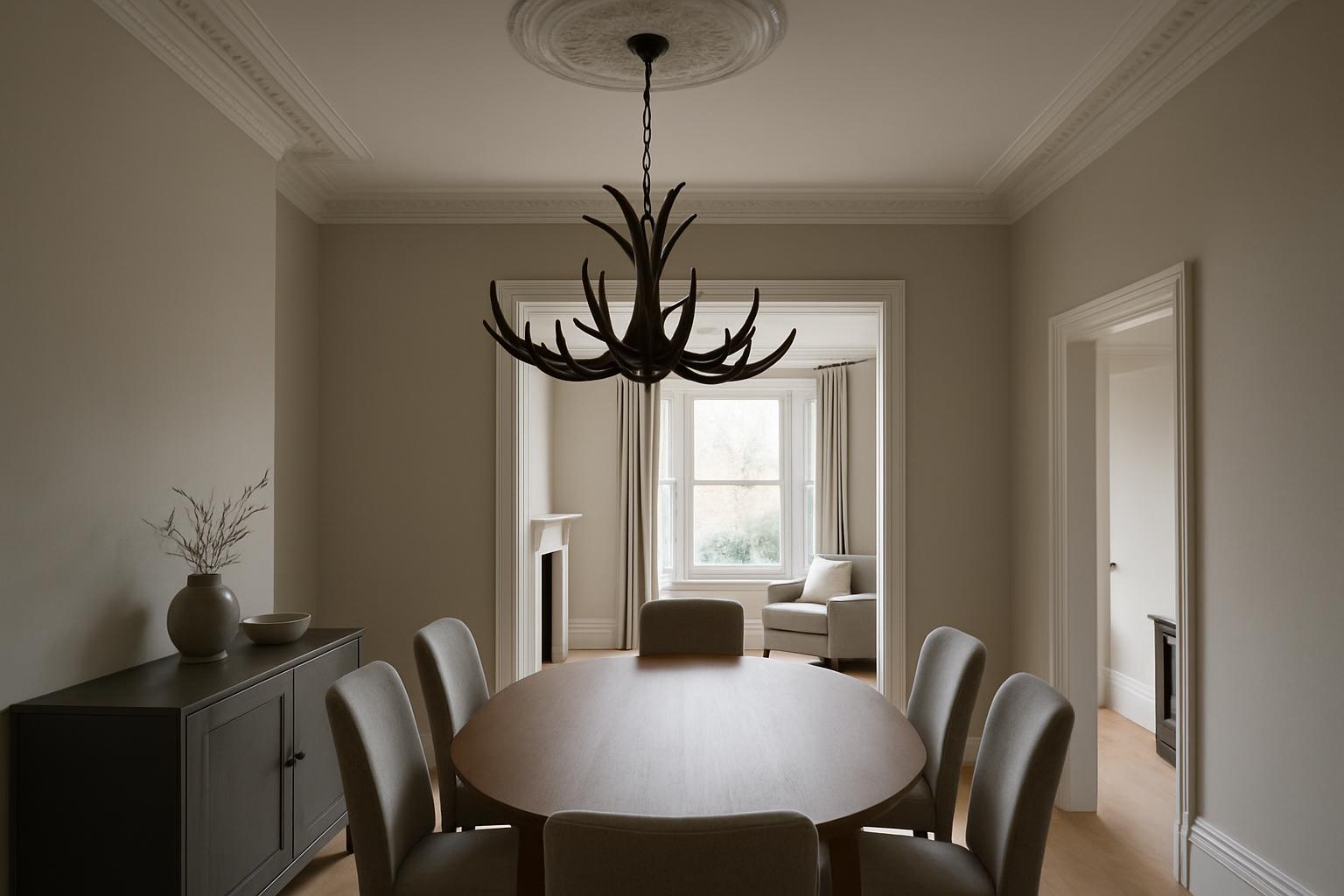
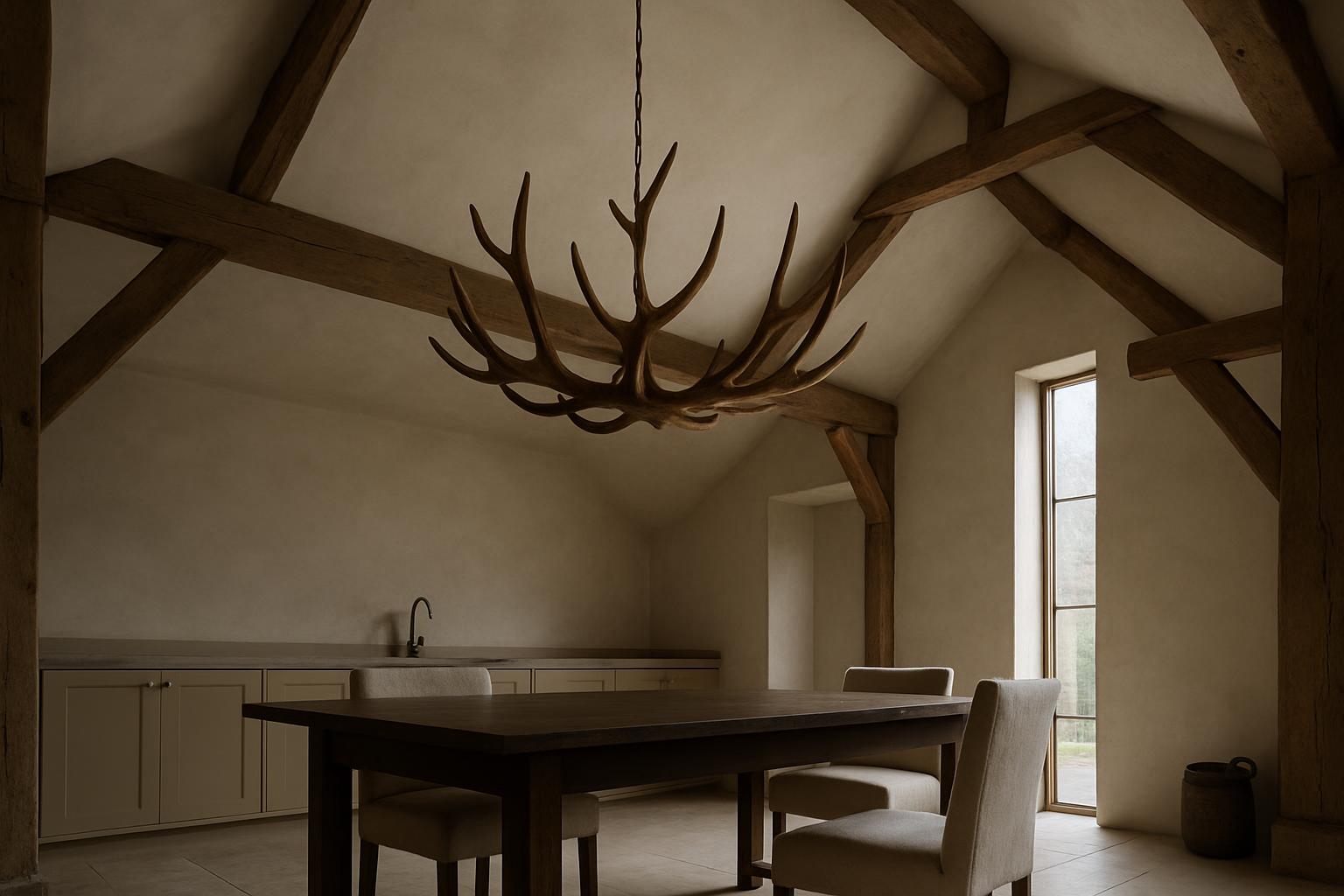
Finish changes the character of the fitting. A dark antler form against a pale ceiling creates a crisp silhouette and will be particularly noticeable on grey winter afternoons. A lighter or more tonal finish settles into the architecture and may suit a smaller room where strong contrast would dominate. Product photographs should be checked alongside close views of the finish, as colour can appear different under warm artificial light and cool daylight.
Existing timber deserves attention. An antler pendant does not need to match a dining table or exposed beams exactly. In fact, several near-matching brown finishes can look more awkward than a clear contrast. If the room already contains heavily grained wood, a restrained fitting and plain surrounding surfaces will give each element more breathing space.
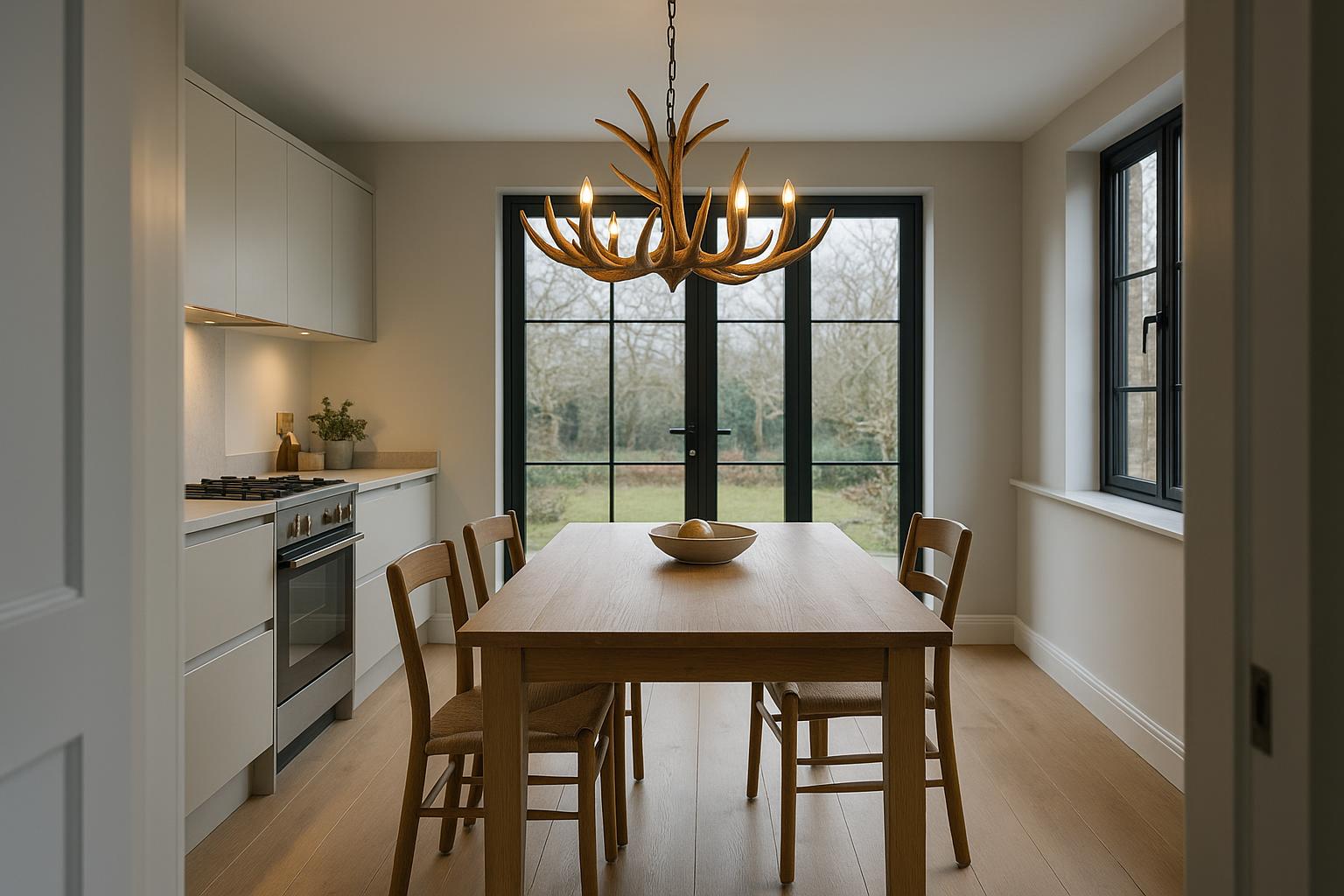
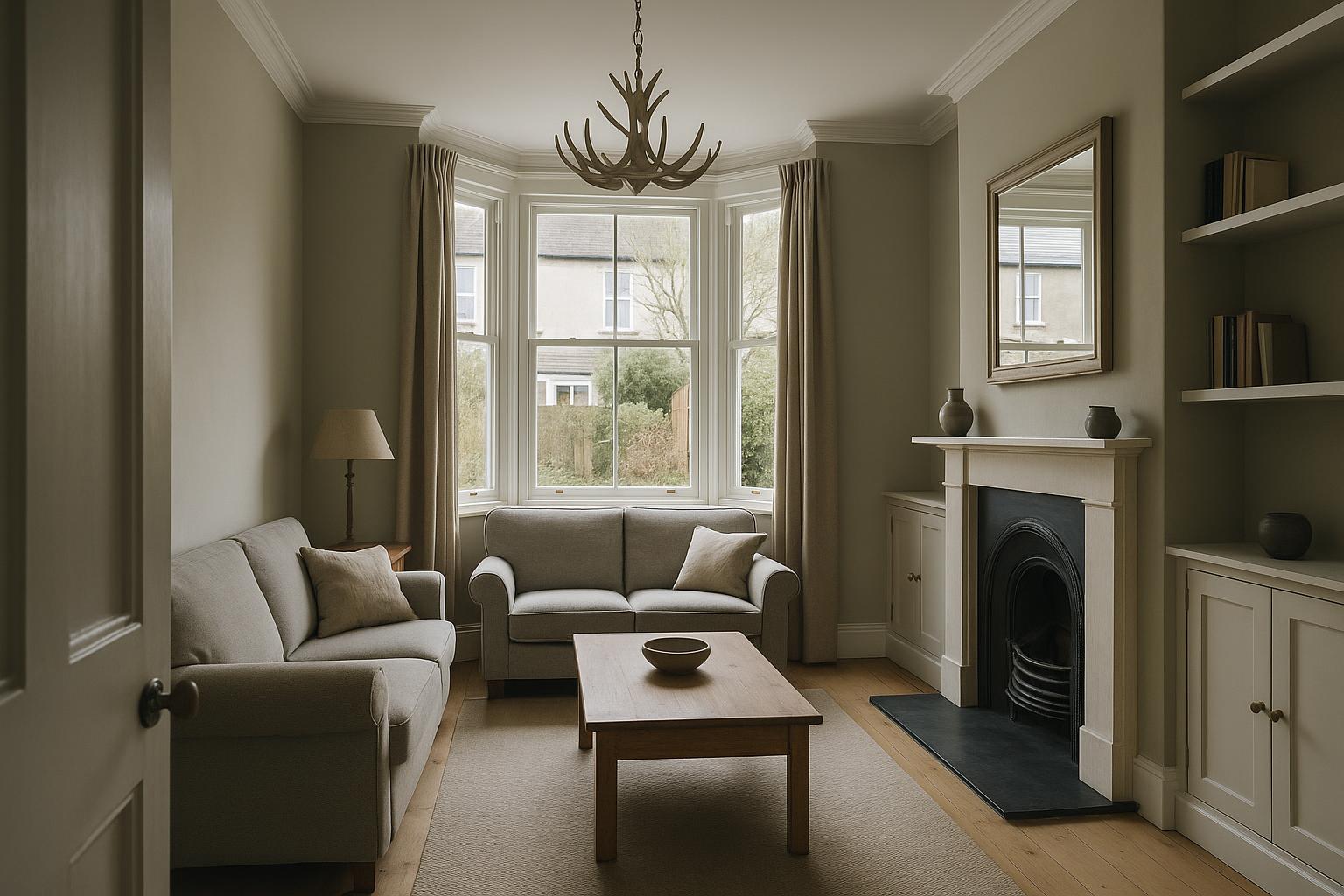
Do not judge the pendant only from directly beneath it. In a kitchen-diner, it may be seen from the worktop, sitting area and garden doors. In a Victorian terrace, the first view might be through an opening beside the chimney breast. Stand in each position and consider the background.
A branching silhouette reads cleanly against a calm wall, a simple window or the darkness beyond glazing in the evening. It can become muddled against open shelves, patterned curtains or a crowded gallery wall. If the background is already busy, either simplify that area or choose a more contained pendant.
In the same direction, How to Style an Antler Pendant Without Overdoing It offers useful ideas for choosing home lighting more confidently.
Seated views matter too. Open lamps can cause uncomfortable glare across a dining table even when the fitting looks attractive from the doorway. Check the location of each light source in the product images and dimensions, then consider where people’s eye level will be in relation to it.
An expressive pendant should not be expected to perform every lighting task. Multi-light antler designs may spread light across a broad area, but their practical effect depends on lamp position, output, shades and the colours of nearby surfaces. Always use the lamp type and maximum wattage stated by the manufacturer.
Over a dining table, the pendant can provide a pool of comfortable ambient light while a table lamp or wall light softens the edges of the room. In a kitchen-diner, food preparation needs dedicated task lighting over worktops, the sink and hob. This allows the decorative fitting to be chosen for atmosphere and scale without leaving working areas in shadow.
Layering becomes especially useful during darker months. Discreet downlights, wall lights, shelf lighting and low-level lamps can fill different parts of the room without competing with the central feature. Separate controls provide flexibility where the installation permits. If dimming is planned, confirm that the lamps, fitting and control are mutually compatible rather than assuming any LED lamp will work with an existing dimmer.
Colour temperature also affects the result, but there is no single correct choice for every interior. Warmer light often suits timber and earthy finishes, while a kitchen may need clearer task illumination elsewhere. What matters is that adjacent light sources do not produce a jarring mixture of noticeably different colours.
For more consistent lighting throughout the home, the article Before You Hang It: Antler Pendants and Living-Room Sightlines may also be helpful.
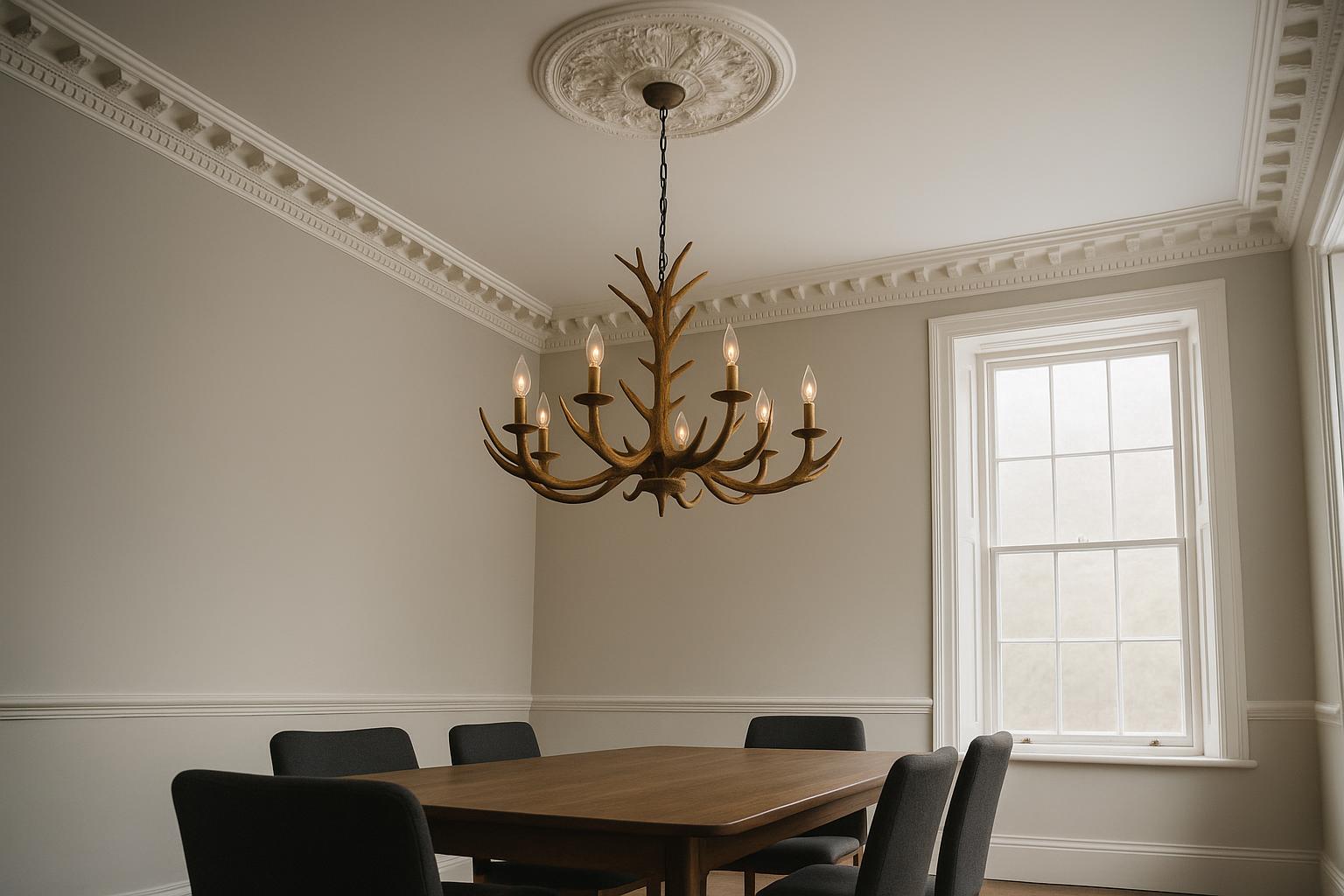
Period character can give antler pendant lights a convincing setting, but original features should not be treated merely as a backdrop. Decorative plasterwork, ceiling roses and old fixing points may require assessment before a wide or heavy fitting is installed. The size of the visible canopy may also conflict with the proportions of a delicate rose.
In a Georgian townhouse or Edwardian semi, contrast is often more effective than imitation. Restrained cornicing and calm wall colours can frame the irregular pendant without requiring other rustic references. In a cottage with low beams, the fitting should leave visible space around the timber rather than filling every gap beneath it.
Ceiling construction and the weight of fittings vary, so installation requirements must be checked for the chosen product and property. Supplied instructions should be followed, with electrical and structural suitability confirmed by appropriately qualified professionals where necessary.
Before committing, compare the fitting with the room rather than with other product photographs. Check its full width, body height, suspension range, canopy dimensions, lamp positions and installation requirements. Review the mock-up while standing, seated and looking in from the next room.

Browse Lighting Go’s antler pendant lights with your measurements, ceiling details and sightline notes to hand. The best choice will not be the most elaborate fitting in isolation, but the one that gives the room a strong focal point without dictating everything around it.
Will It Fit the View? Choosing Antler Pendants for a Country Home
Will It Work Over Dinner? A Practical Antler Pendant Guide
Room to Branch Out: Sizing an Antler Pendant for a Hallway
Before You Hang It: Antler Pendants and Living-Room Sightlines
How to Style an Antler Pendant Without Overdoing It
Hot Tags: Wood Lights, Glass Pendant Lights, Discount Pendant Lights, Pendant Lights UK, Pendant Drop Lights, Discount Chandeliers UK, Flush Mount Fans, Huge Chandeliers, Ceiling Lights Sale, Glass Wall Sconces, Antler Chandeliers, Modern Bathroom Design, Dimmable Ceiling Lights, Bedroom Lights, Bathroom Lights, Kitchen Lighting, Modern Chandeliers, Lighting Ideas
Copyright © 2030 LightingGo. All rights reserved.