


An antler pendant can work far beyond a lodge-style room. The key is to judge its outline, drop and finish against...
No featured images
1 Review(s) 
An antler pendant can work far beyond a lodge-style room. The key is to judge its outline, drop and finish against...
An antler pendant can bring character to a modest room without overwhelming it. The right choice depends on its...
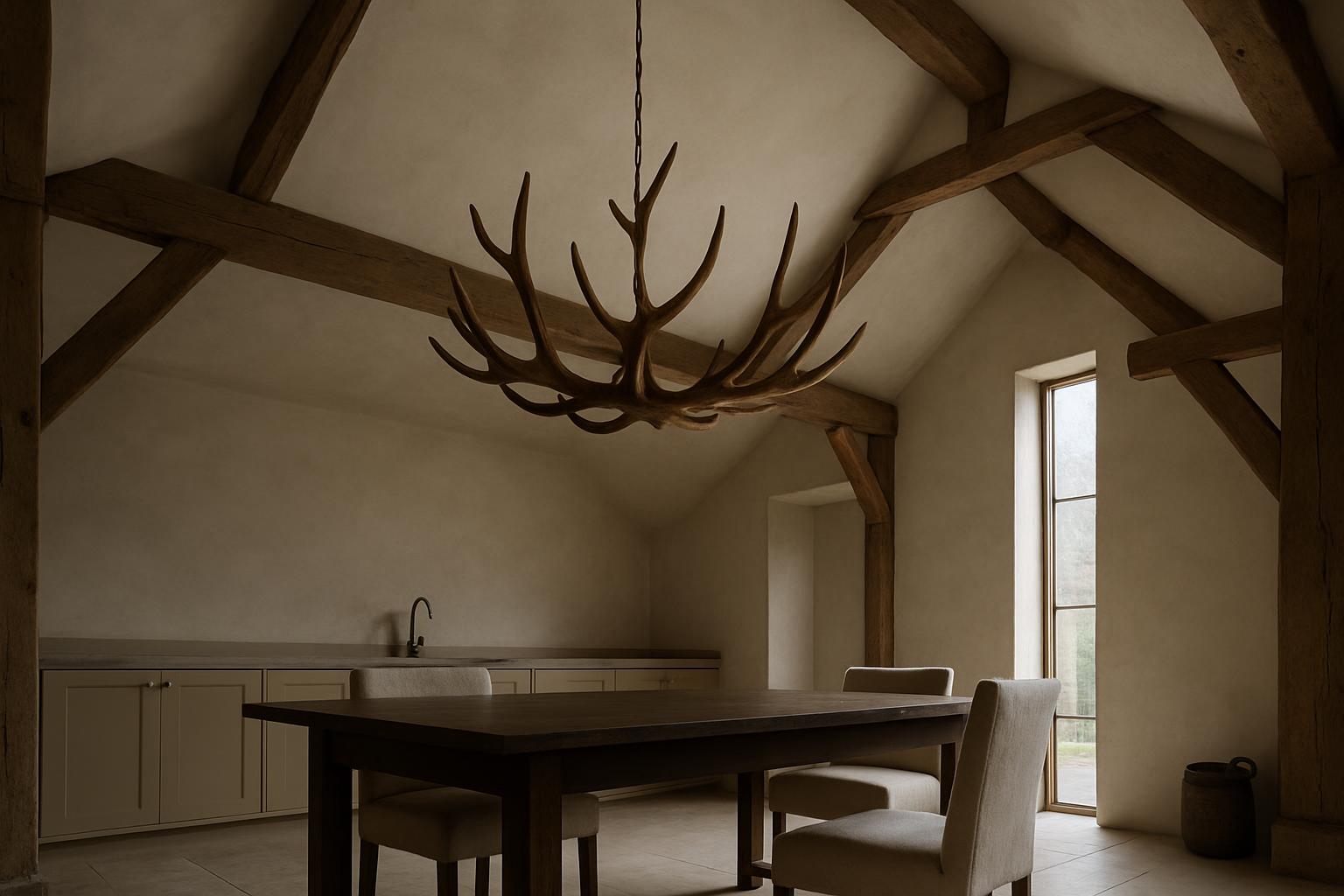
An antler pendant can look sculptural rather than rustic when its scale, outline and position respond carefully to...
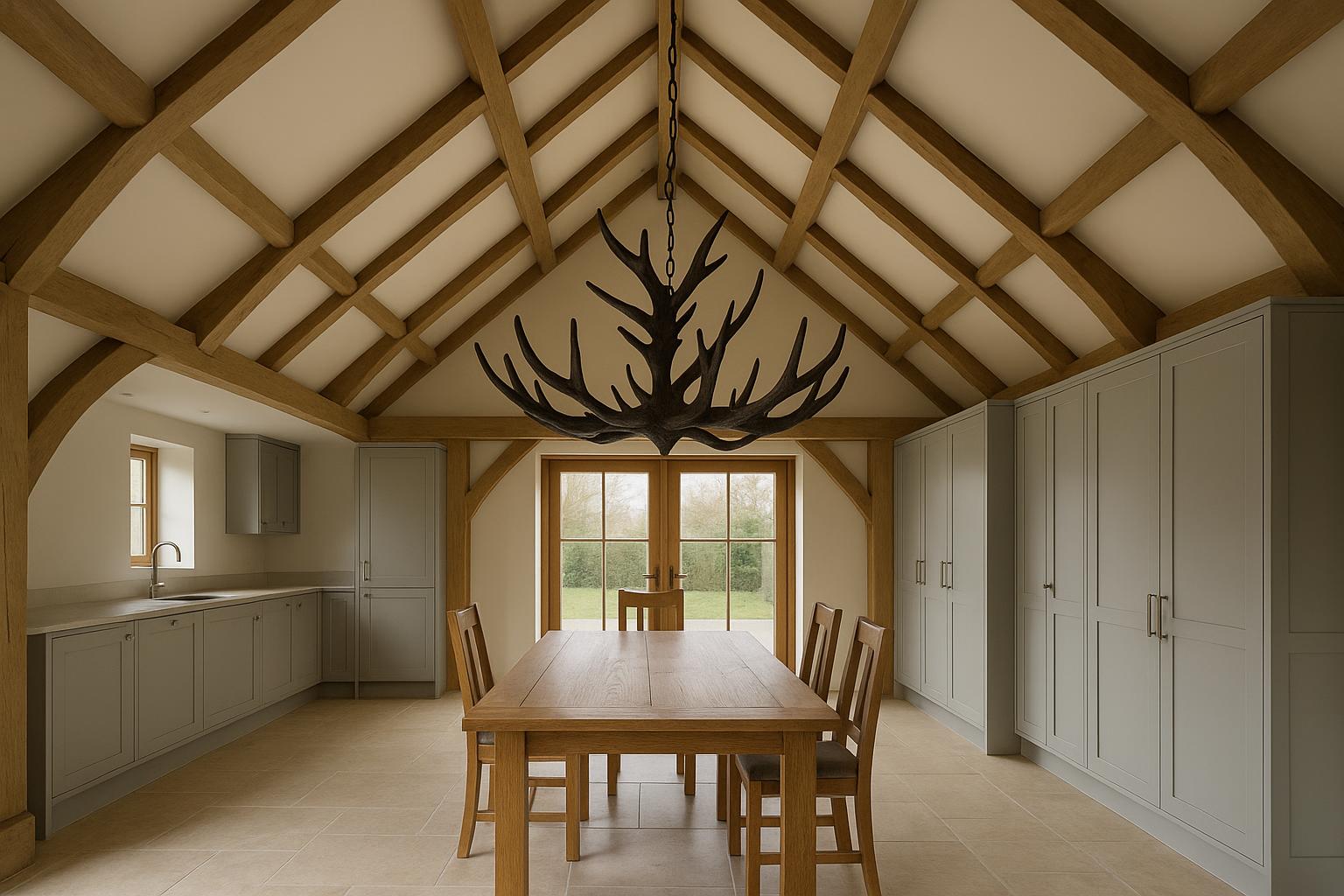
A practical approach to choosing the width, visual weight and drop of an antler pendant while respecting furniture,...
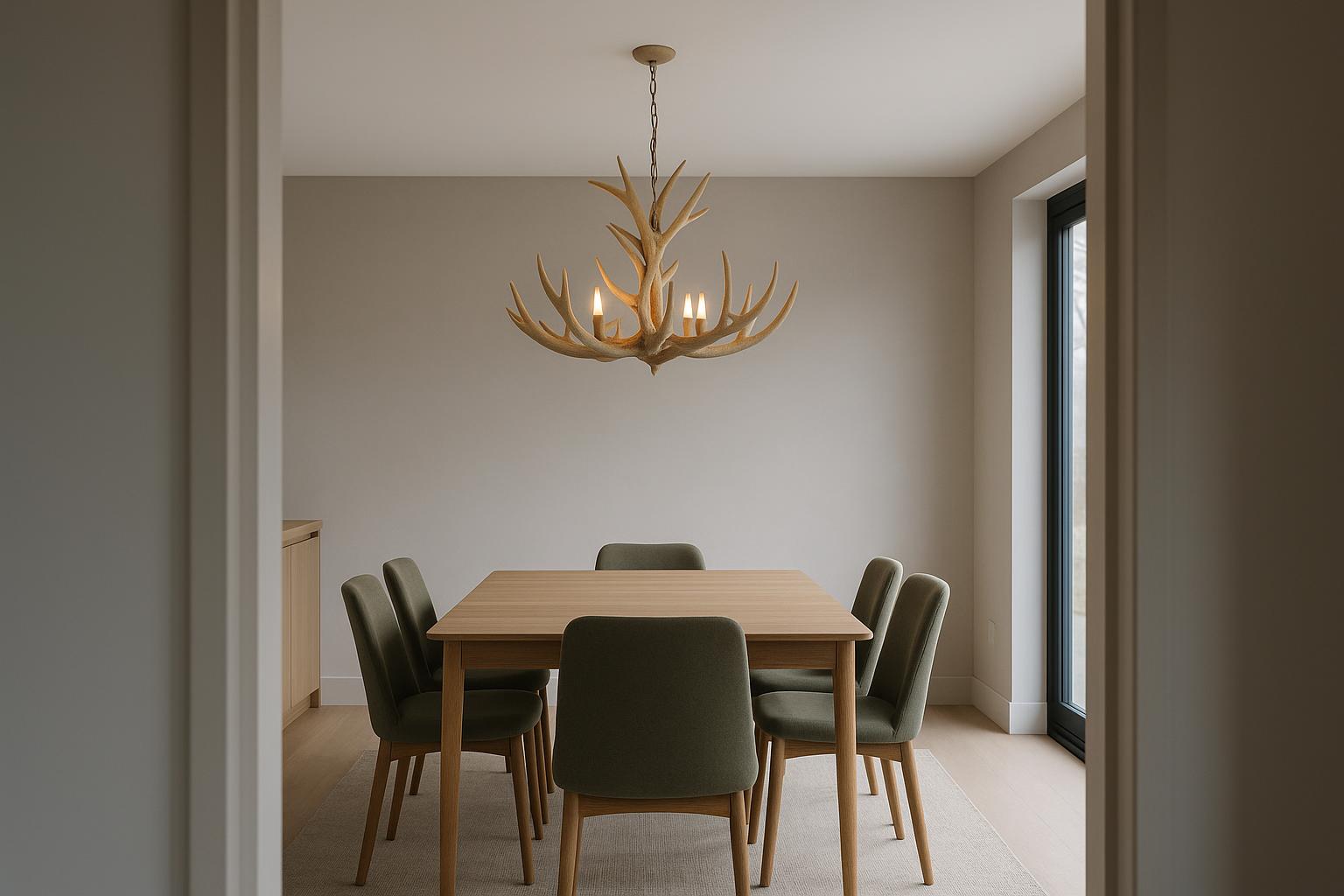
Antler pendant lights can bring sculptural character to a room without dictating a rustic theme. The key is to...
No featured images
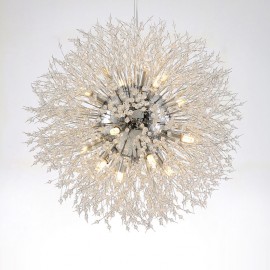
antler pendant lights have an obvious association with lodges and rural interiors, but that need not dictate the rest of the room. Their more adaptable quality is the irregular outline: branching forms introduce movement where tables, cabinets, doors and walls create mostly straight lines. In a restrained interior, that contrast can make the light fitting feel closer to suspended sculpture than themed decoration.

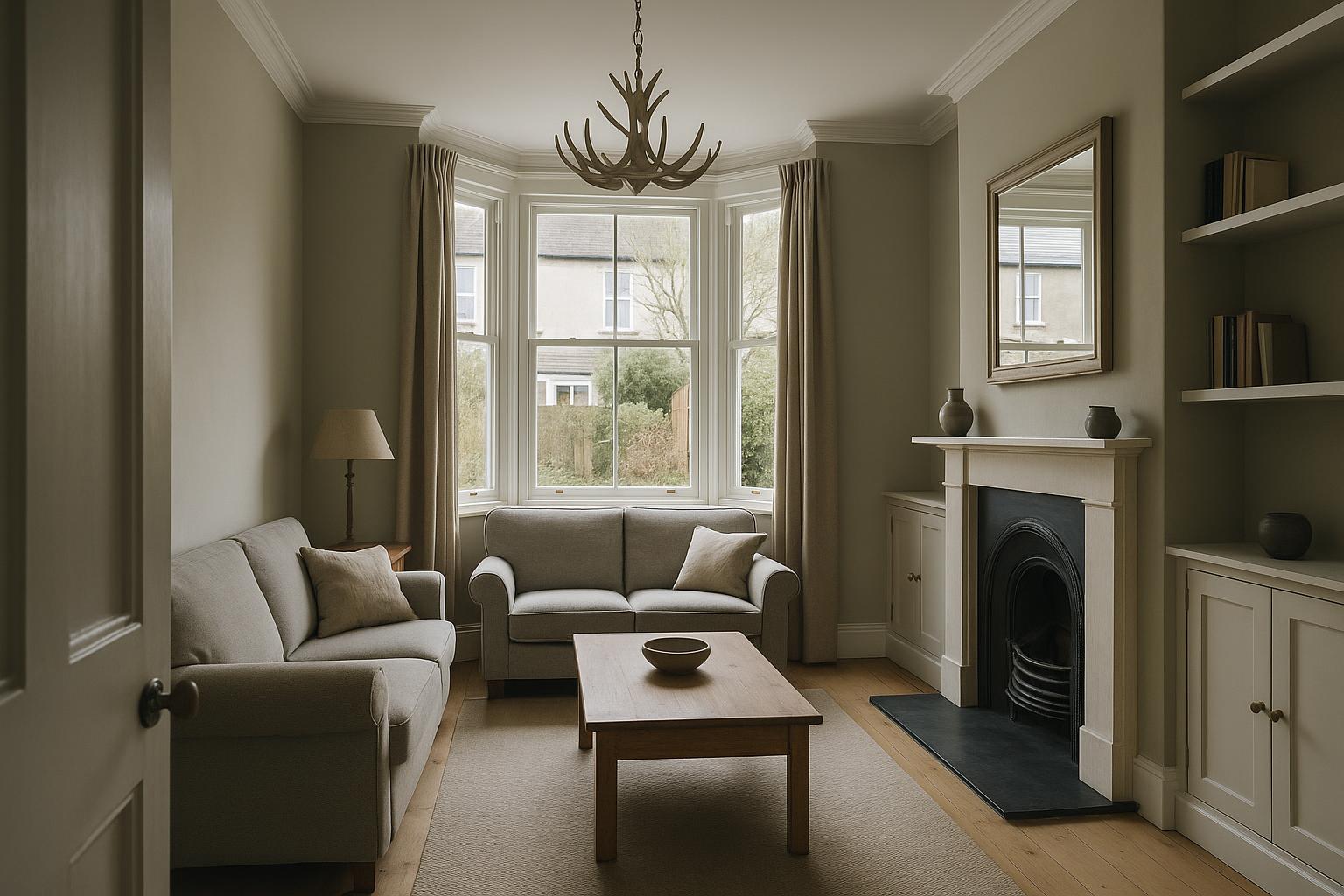
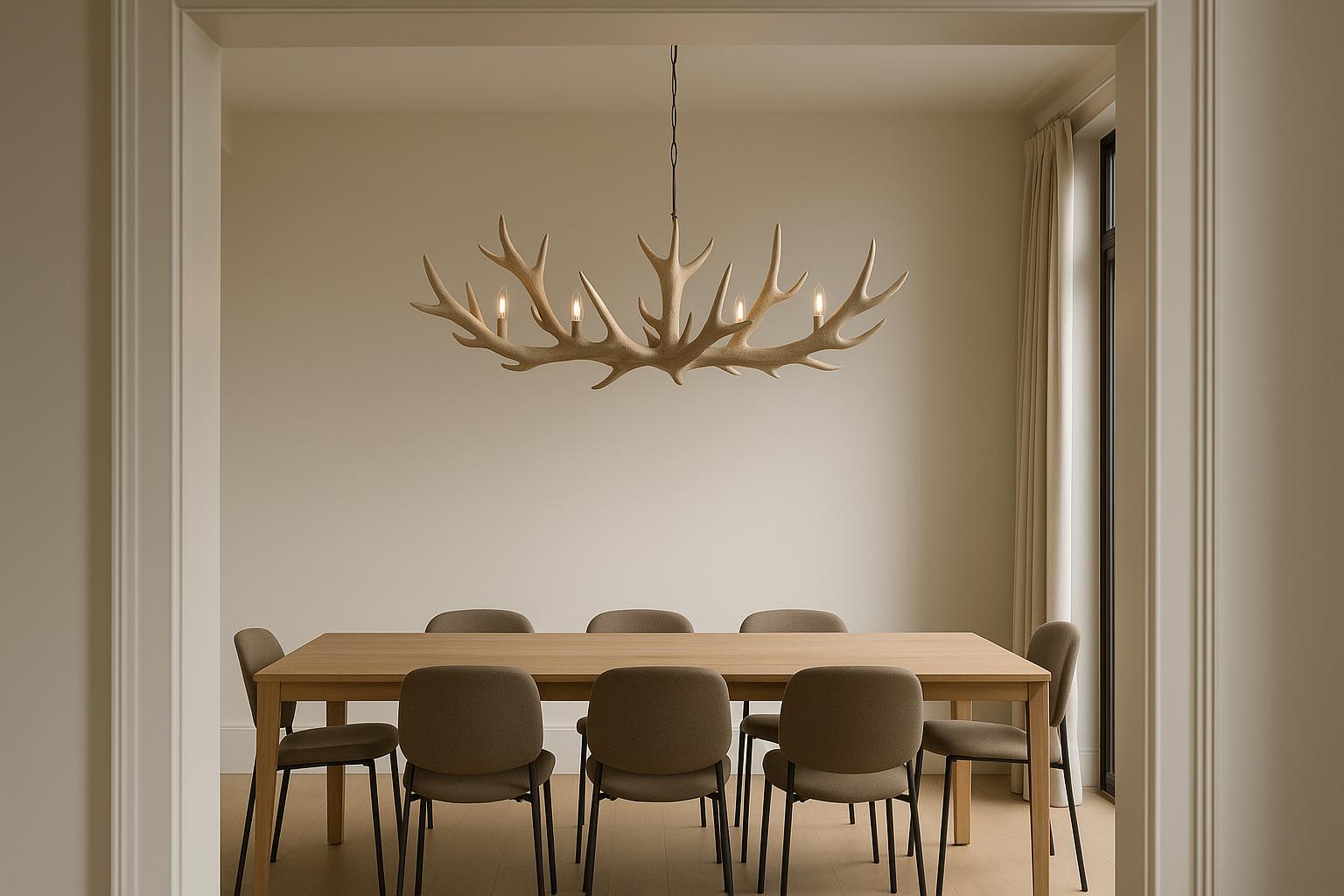
Begin by studying the overall form rather than the product's styling label. Some designs spread horizontally, some form a dense central cluster, and others have a deeper, cascading profile. A broad fitting can echo the length of a dining table, while a compact arrangement may sit more comfortably in a cottage kitchen or modest sitting room. The number and position of visible lamps will also affect how busy the silhouette appears.
Material matters too. Colours and textures vary between products, and an antler form should not automatically be assumed to use natural antler. Check the specification for the stated material, finish and construction, particularly if weight, maintenance or material choice will influence your decision.
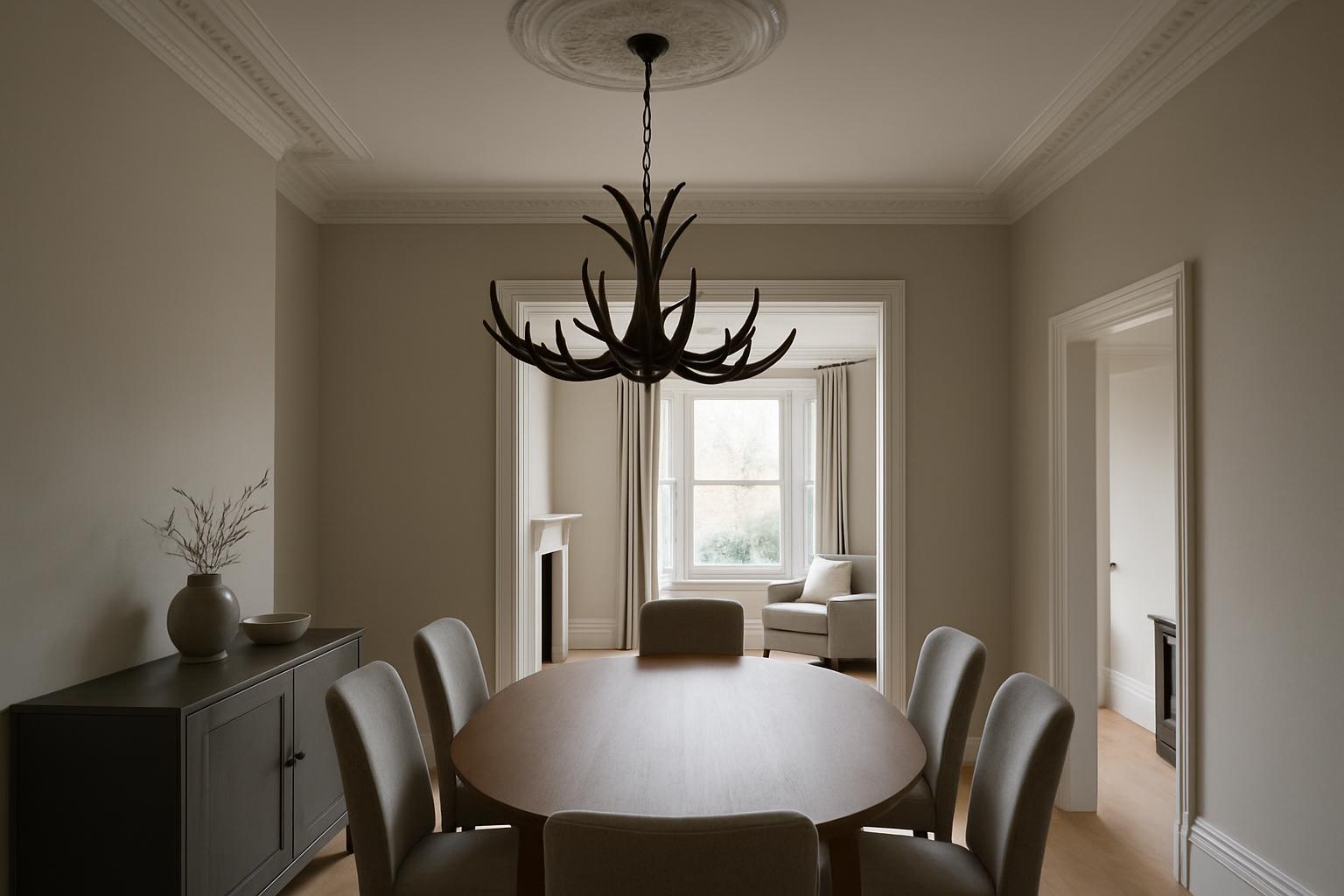
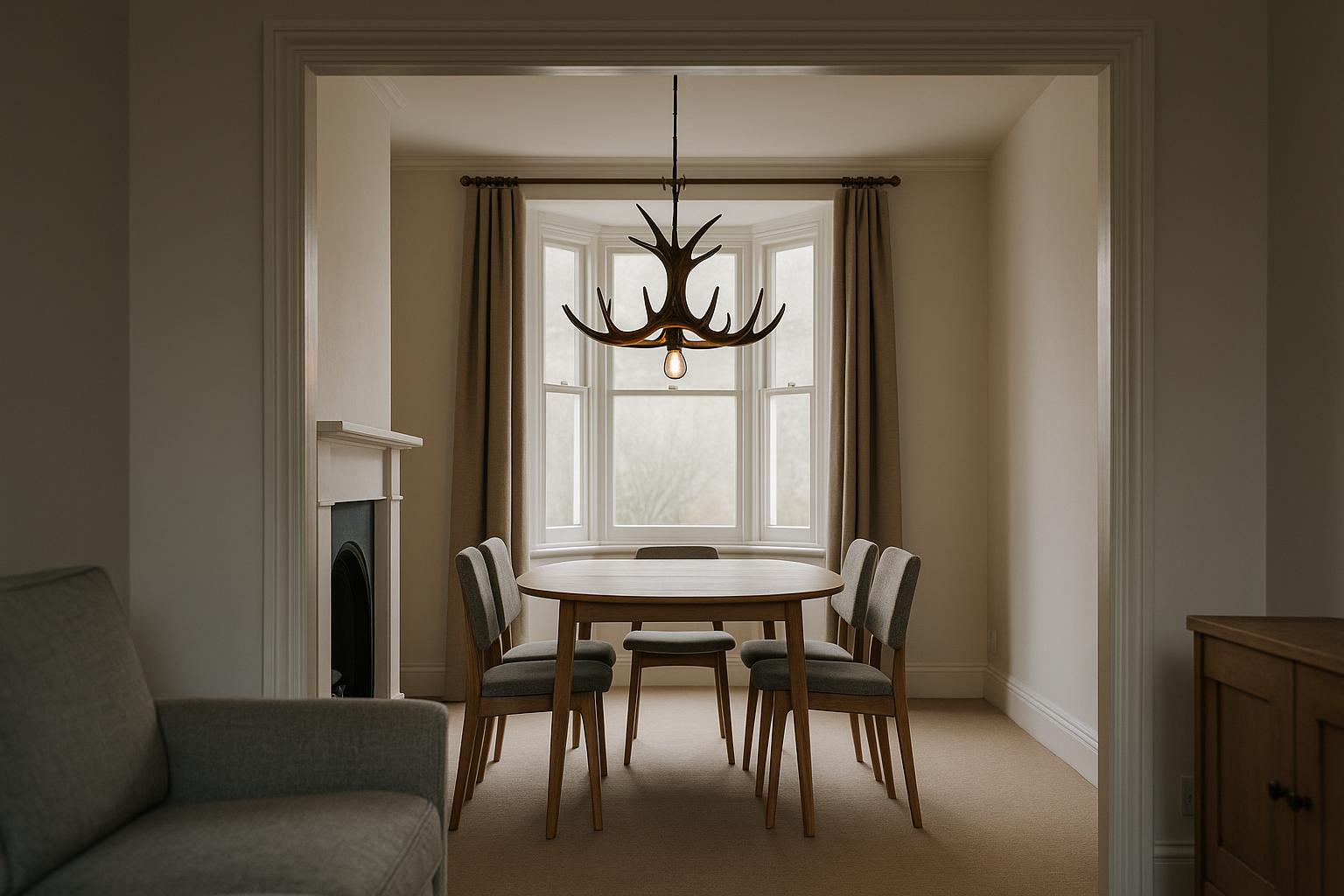
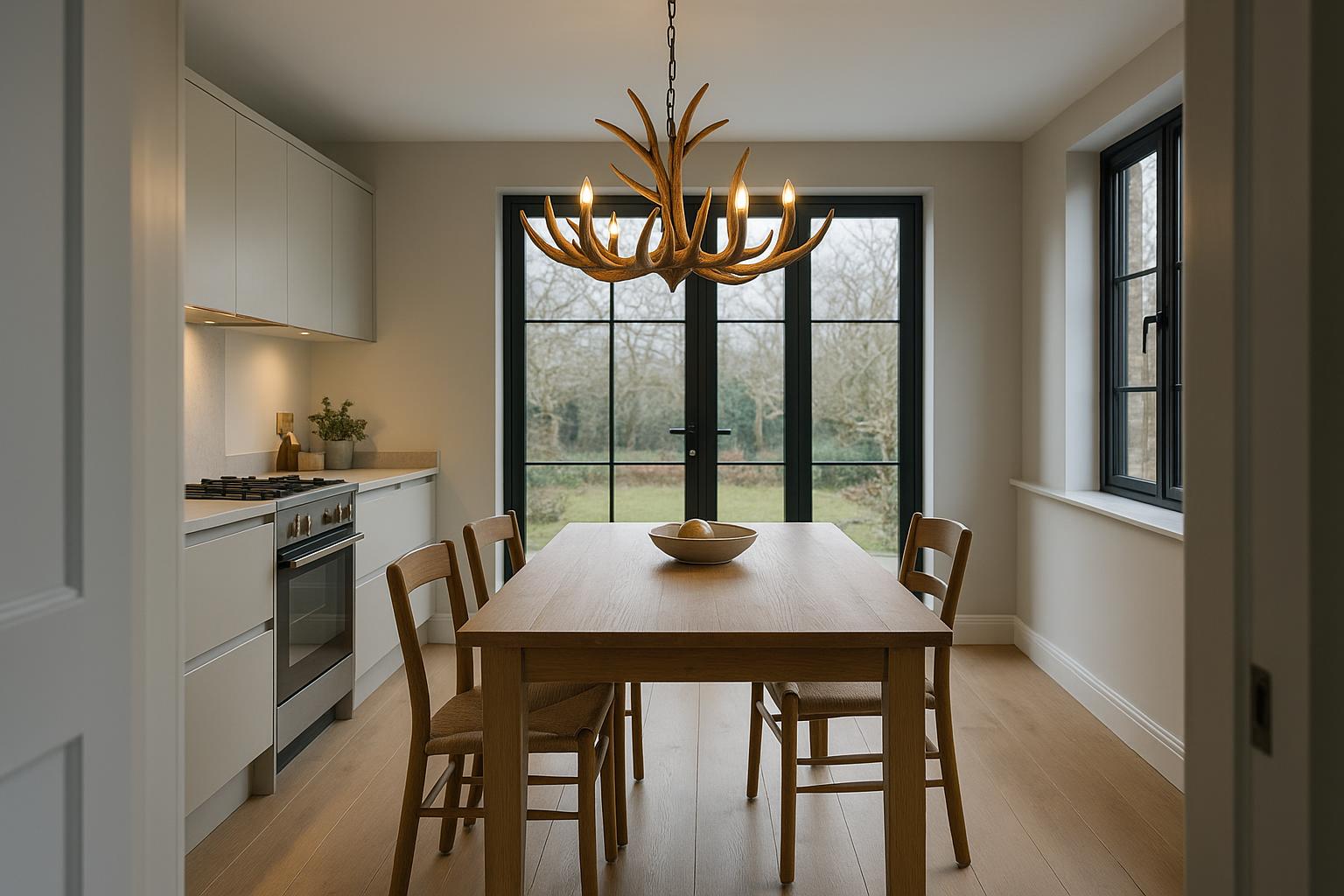
A ceiling light is seldom experienced only from directly below. In a Victorian terrace, it may first be seen through the opening between the front and back rooms. In a kitchen-diner, the important view might run from the island towards the garden. Branching shapes command more attention than plain shades, so the background becomes part of the composition.
Stand in the doorway, at the kitchen worktop and beside the main seats before deciding where the pendant should hang. An intricate outline can become indistinct against open shelving, roof timbers or strongly patterned curtains. The same fitting will read more clearly against plain plaster, a quiet painted wall or an uncluttered section of glazing.
Consider what the branches might obscure. A pendant over a dining table can mark that zone effectively in an open-plan room, but a wide design above an island may cut across faces and interrupt the view between cooking and seating areas. Raising it may help, although that can weaken its relationship with the surface below. Sometimes the better answer is a narrower fitting rather than a shorter drop.
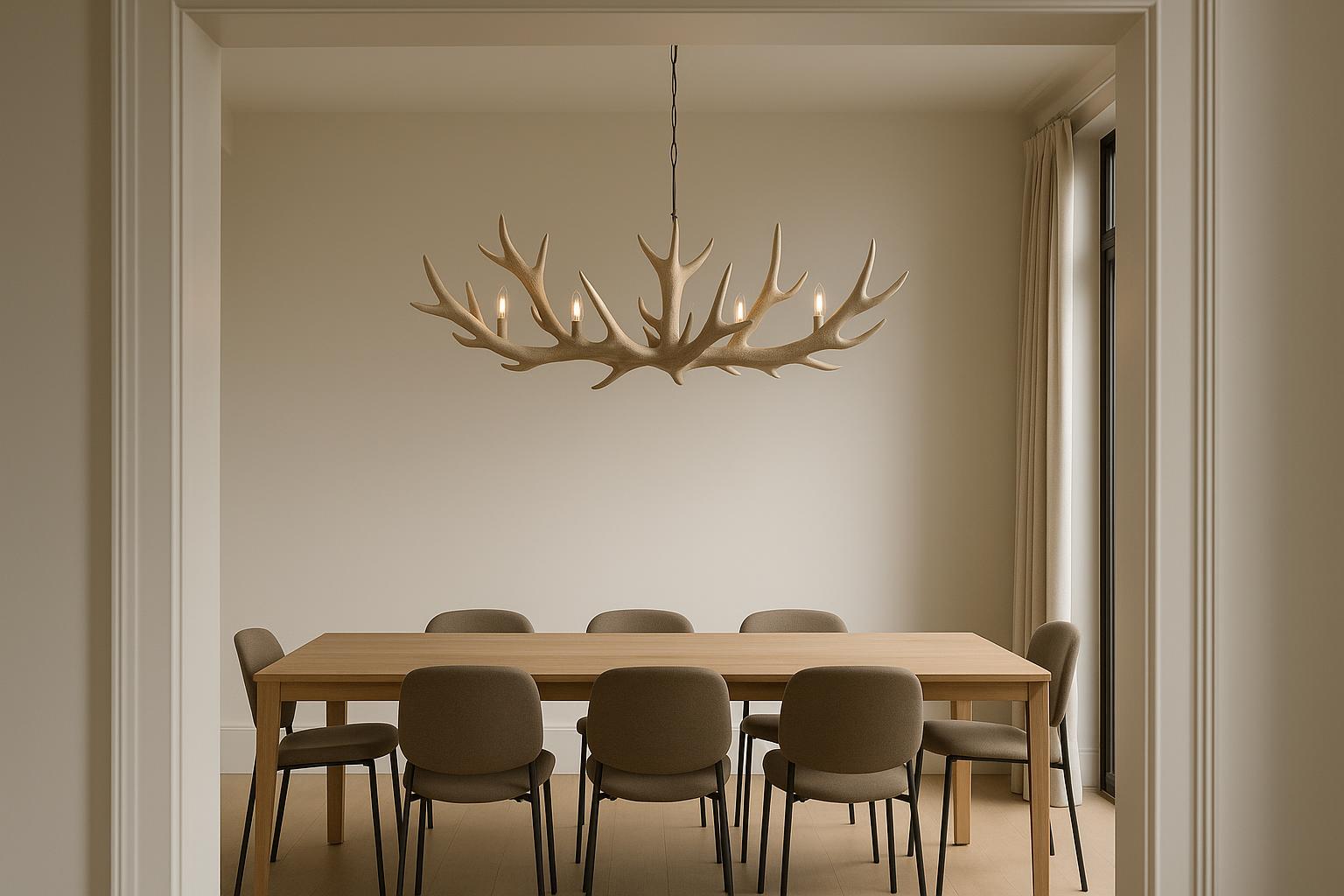
Room measurements alone do not reveal how a pendant will feel once the space is furnished. Compare its stated width and depth with the table, island or seating group beneath it. The fitting should appear connected to that occupied area without extending awkwardly towards a route used for walking or pulling out chairs.
A simple full-size mock-up is more reliable than guesswork. Mark the maximum width on lightweight card or join sheets of paper, then suspend or hold the outline at the intended height. View it while seated and from adjoining rooms. This test can expose branches that appear uncomfortably close, a drop that dominates the eye line or a fitting that looks too small beneath a large ceiling.
Take the ceiling canopy and suspension into account as well as the decorative body. Product photographs often concentrate on the antler form, while the cable, chain, rod and canopy receive less attention. Their combined length determines whether the listed fitting can achieve the position shown in your mock-up. If the suspension is adjustable, confirm the available range in the product information rather than assuming it can be shortened indefinitely.
Low ceilings do not necessarily rule out antler lighting, but they leave less room for error. A compact, shallow design is usually easier to place than a broad multi-tier arrangement. Clearance should be assessed where people actually move; a fitting over a table can hang lower than one crossing an open route because nobody normally walks beneath its outer branches.
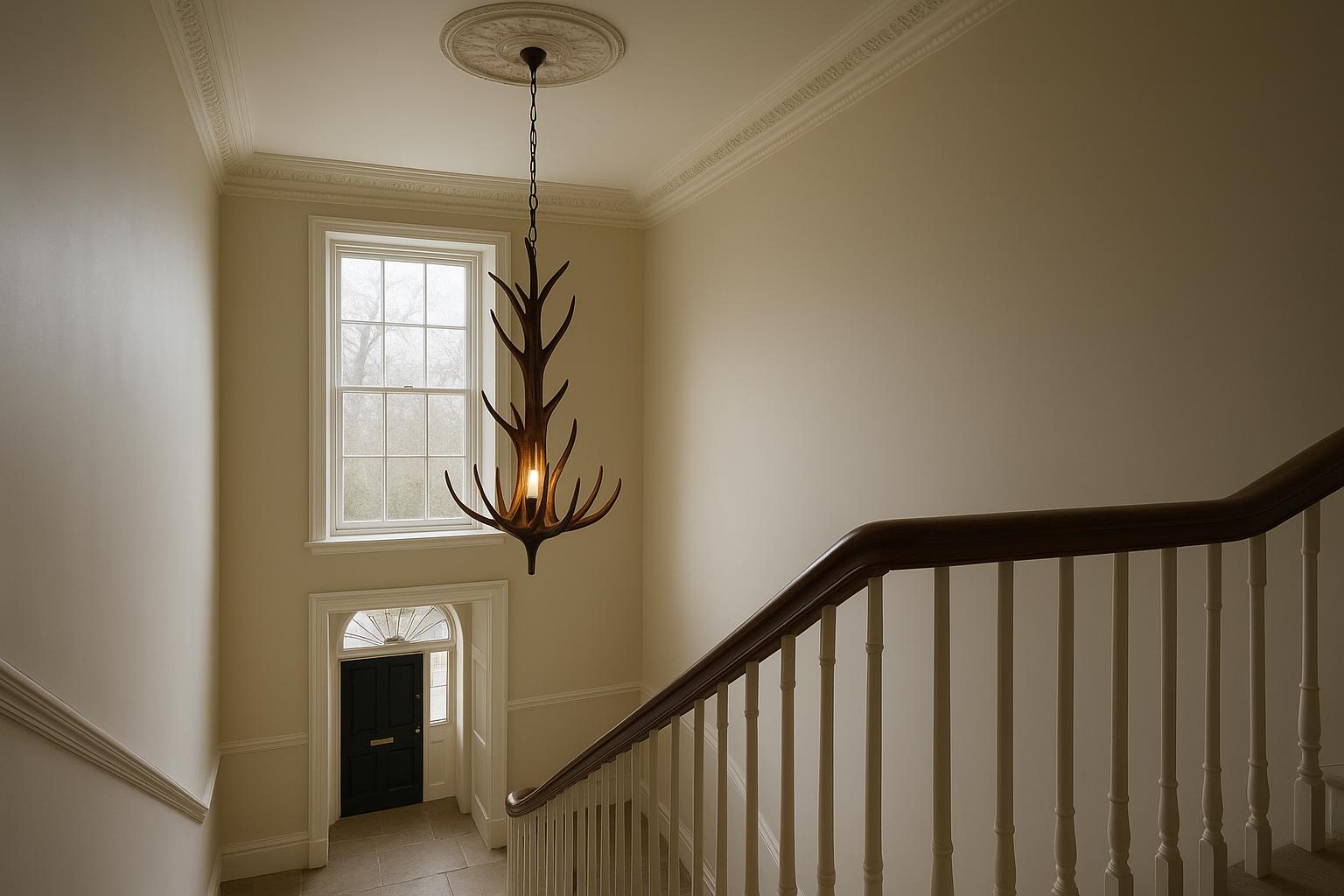
Tall spaces create a different problem. A modest pendant can become visually lost in a vaulted extension, stairwell or double-height entrance. A deeper arrangement or longer suspension may suit the volume, provided the light remains accessible for cleaning and lamp replacement. Intricate antler forms collect dust on more surfaces than a simple shade, so maintenance access deserves attention before a large fitting is placed over a void.

Period plasterwork also affects the installation. A ceiling rose may offer an attractive setting, but the fitting's canopy needs to sit properly within it rather than covering moulded detail awkwardly. The architectural centre of a room may not match the centre of a dining table, especially where a chimney breast, bay window or later kitchen extension has changed the layout. Off-centre positioning can look intentional when it follows the furniture, but the cable route, ceiling support and existing wiring must be considered.
Check the stated weight, fixing requirements and installation instructions before work starts. Decorative plaster is not structural support, and larger fittings need an appropriate fixing into suitable ceiling construction. A suitably qualified electrician should assess the connection and mounting point, particularly where the position is being moved or the installation involves a high ceiling.
A finish seen on a bright screen can behave quite differently in a north-facing room on a winter afternoon. Pale antler tones may blend softly with chalky paint, light oak and plaster, reducing the visual weight of the fitting. Dark brown, black or strongly variegated finishes produce a clearer outline against a pale ceiling but may feel heavier in a compact room with limited daylight.
Compare the likely finish with nearby samples of paint, timber and fabric in daylight and after dark. It does not need to match the table or floor exactly. Slight variation often looks more natural than a close imitation of every wooden surface. One repeated tone elsewhere in the room—a dark handle, warm rug or timber tabletop—is usually enough to establish a connection.
Visible bulbs form part of the finish. Check the required cap type, maximum permitted wattage and recommended lamp shape. Select brightness according to the room's wider lighting plan rather than choosing the most powerful compatible bulb. Where dimming is required, the bulbs, fitting and control must all be suitable for use together.
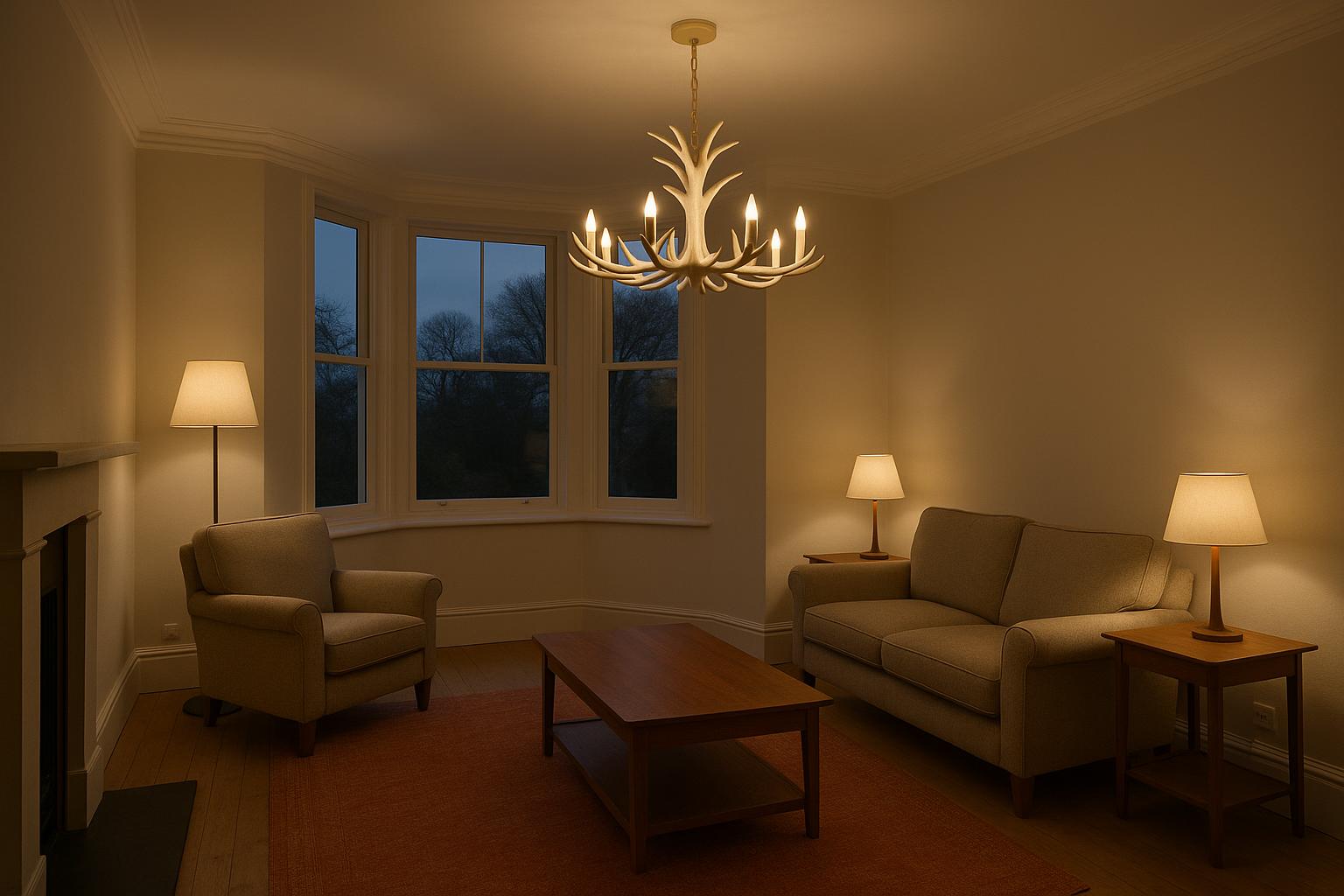
An antler pendant may have several lamps, but it should not be asked to provide every kind of light. Its strongest roles are usually decorative and ambient. Task lighting is more effective when placed close to the work, while lower-level lamps make sitting areas comfortable without forcing the ceiling fitting to operate at an unpleasant brightness.

Separate circuits or compatible dimming can make this layering more flexible, although the available controls will depend on the property and installation. During darker British afternoons, several modest pools of light often create a calmer room than one very bright central source. This approach retains some of the warmth associated with lodge lighting without turning the whole interior into a lodge set.
An antler fitting already supplies pattern, texture and an organic reference. Repeating those ideas through animal motifs, heavily distressed furniture and several rustic accessories can make the room feel staged. Plain curtains, simple upholstery and furniture with a clear outline give the pendant space to register.
Contemporary elements can be useful rather than contradictory. Smooth cabinetry, black-framed doors, pale stone and modern dining chairs sharpen the irregular silhouette. In a cottage that already has beams, uneven plaster and a substantial fireplace, a cleaner pendant may be more successful than an elaborate country-style chandelier. The aim is not to remove character, but to avoid making every object compete for attention.
Restraint also helps in mixed-use rooms. If the dining area shares a space with the kitchen and sitting room, allow the pendant to be the main sculptural gesture in its zone. Other light fittings can be quieter in shape while still relating through colour temperature or a small repeated finish.
Bring the decisions together in a short room-specific check: maximum width, intended drop, views from adjoining spaces, clearance around furniture, ceiling construction, cleaning access and the tasks handled by other lights. Compare these points with the published dimensions and instructions for each fitting. This is more dependable than choosing solely from a styled photograph.
Once the suitable scale and suspension are clear, browse Lighting Go's antler pendant lights and compare the available shapes and finishes with your mock-up. A measured choice can provide a distinctive focal point while leaving the wider room practical, balanced and recognisably your own.
Will It Fit the View? Choosing Antler Pendants for a Country Home
Will It Work Over Dinner? A Practical Antler Pendant Guide
Room First, Antlers Second: Placing a Sculptural Pendant
The Room Test for Antler Pendant Lights: Scale, Drop and Glare
Room to Breathe: Siting a Large Antler Pendant
Hot Tags: Wood Lights, Glass Pendant Lights, Discount Pendant Lights, Pendant Lights UK, Pendant Drop Lights, Discount Chandeliers UK, Flush Mount Fans, Huge Chandeliers, Ceiling Lights Sale, Glass Wall Sconces, Antler Chandeliers, Modern Bathroom Design, Dimmable Ceiling Lights, Bedroom Lights, Bathroom Lights, Kitchen Lighting, Modern Chandeliers, Lighting Ideas
Copyright © 2030 LightingGo. All rights reserved.